Host-Adaptive Divergence Shapes the Genetic Architecture of Magnaporthe oryzae in Southern China’s Rice Agroecosystems
Xin Liu, Jun Fu, Zhao Deng, Xinwei Chen, Xiaochun Hu, Zhouyi Tu, Qiuyi Wang, Yuxuan Zhu, Pengcheng Chen, Zhenan Bai, Tiangang Liu, Xuanwen Zhang, Peng Qin, Kai Wang, Nan Jiang, Yuanzhu Yang

TL;DR
This study explores the genetic diversity of a rice blast fungus in Southern China, revealing distinct lineages adapted to different rice types and regions.
Contribution
The study identifies three clonal lineages of Magnaporthe oryzae with host-adaptive divergence and spatial genetic heterogeneity in Southern China.
Findings
Three distinct clonal lineages (I, II, III) were identified with lineage I being the most widespread.
Lineage III is predominantly associated with japonica rice regions, while lineages I and II are linked to indica rice regions.
Genetic diversity varies significantly across regions, with evidence of recent population expansion or selective sweeps.
Abstract
Rice blast disease, caused by the ascomycete fungus Magnaporthe oryzae (syn. Pyricularia oryzae), poses a severe threat to global rice production. Southern China, a major rice-growing region characterized by diverse agroecological conditions, faces substantial challenges from blast disease, yet our understanding of the genetic structure of M. oryzae populations in this region remains limited. Here, we analyzed 885 M. oryzae strains from 18 nurseries across four rice ecological regions in Southern China using a panel of genome-wide SNP markers. Phylogenetic and principal component analyses revealed three distinct clonal lineages: lineage I (58.19%), lineage II (21.36%), and lineage III (20.45%). Lineage I exhibited a broader geographic distribution compared to the other two lineages. Host-adapted divergence was observed across rice subspecies, with lineage III predominantly associated…
Genes, proteins, chemicals, diseases, species, mutations and cell lines named across the full text — each resolved to its canonical identifier and authoritative record.
Click any figure to enlarge with its caption.
 Figure 1
 Figure 2
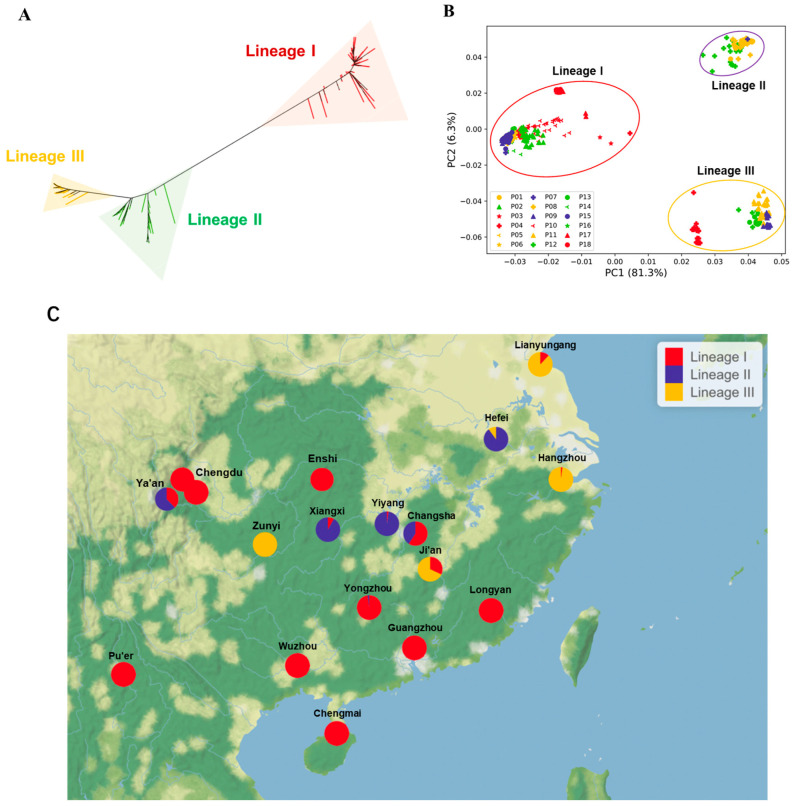 Figure 3
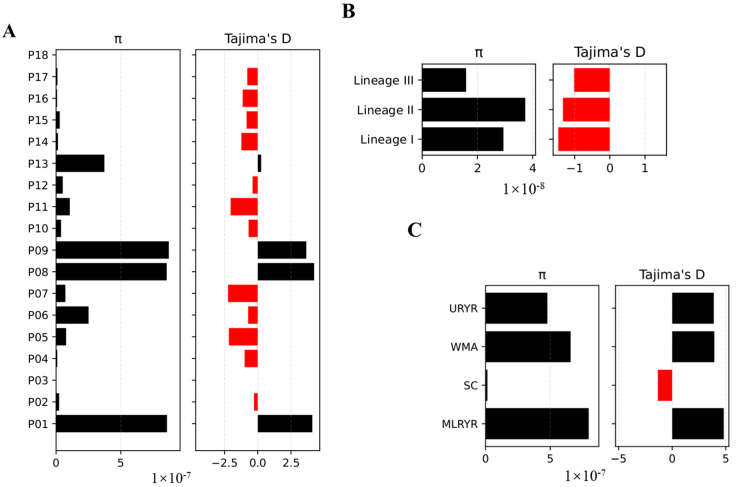 Figure 4
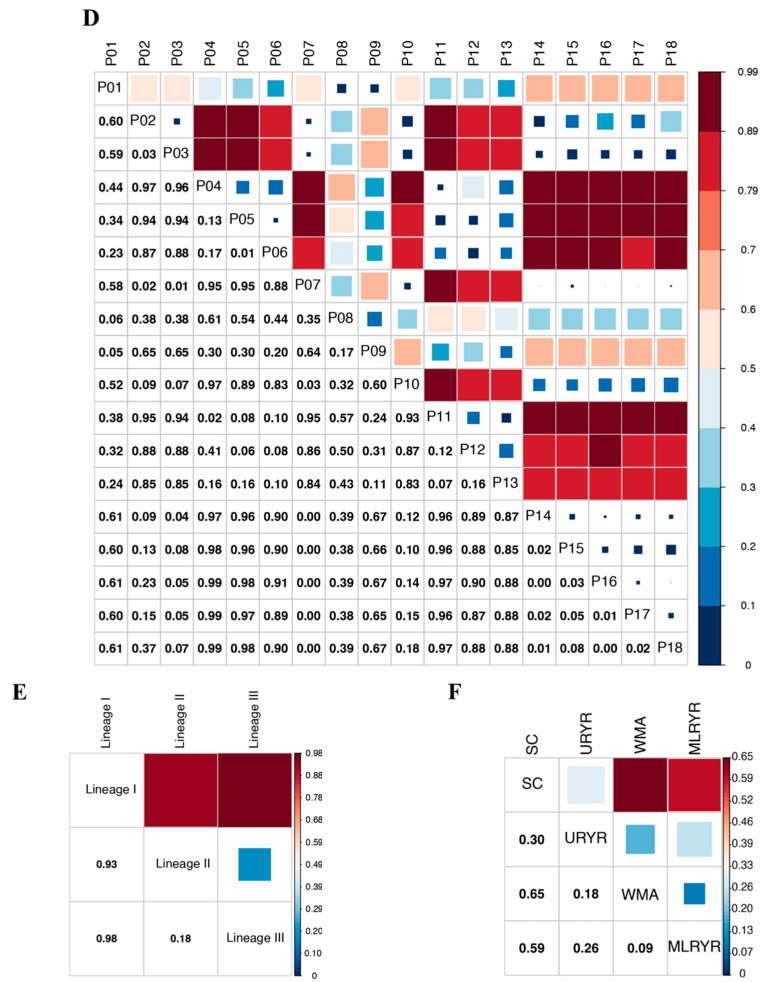 Figure 5
Peer Reviews
No public reviews on file for this paper yet. If you reviewed it on a platform where reviews are public (OpenReview, ICLR, NeurIPS, ICML), you can paste yours below so the community can read it here.
Videos
No videos yet. Explain this paper in a talk, walkthrough, or lecture? Add one.
Taxonomy
TopicsPlant Pathogens and Fungal Diseases · Fermentation and Sensory Analysis · Fungal and yeast genetics research