Droplet Digital PCR Improves Detection of BRCA1/2 Copy Number Variants in Advanced Prostate Cancer
Phetploy Rungkamoltip, Natthapon Khongcharoen, Natakorn Nokchan, Zaukir Bostan Ali, Mooktapa Plikomol, Tanan Bejrananda, Sarayuth Boonchai, Sarawut Chamnina, Waritorn Srakhao, Pasarat Khongkow

TL;DR
Droplet digital PCR improves detection of BRCA1/2 copy number variants in advanced prostate cancer compared to MLPA.
Contribution
Droplet digital PCR provides more precise classification of BRCA1/2 CNVs in heterogeneous prostate cancer samples.
Findings
ddPCR effectively classified normal and deletion CNV groups in prostate cancer samples.
ddPCR reclassified ambiguous MLPA cases using optimal cutoff values of 1.35 for BRCA1 and 1.55 for BRCA2.
ddPCR shows potential as a more sensitive biomarker tool for targeted therapy in advanced prostate cancer.
Abstract
BRCA1 and BRCA2 are associated with advanced prostate cancer progression and poor prognosis. Copy number variants (CNVs) of these genes play a crucial role in guiding targeted treatments, particularly for patients receiving PARP inhibitors. However, CNV detection using multiplex ligation-dependent probe amplification (MLPA) is often limited by tumor heterogeneity, leading to ambiguous results. This study therefore aimed to evaluate BRCA1/2 CNVs in advanced prostate cancer patients using droplet digital PCR (ddPCR) and compare the results with MLPA. DNA from 11 advanced prostate cancer tissues was analyzed using both methods, in parallel with four cell lines and seven healthy volunteers. Our findings revealed that ddPCR effectively classified normal CNV groups—including normal control cell lines, healthy volunteers, and samples with normal MLPA final ratios—from deletion groups, which…
Genes, proteins, chemicals, diseases, species, mutations and cell lines named across the full text — each resolved to its canonical identifier and authoritative record.
Click any figure to enlarge with its caption.
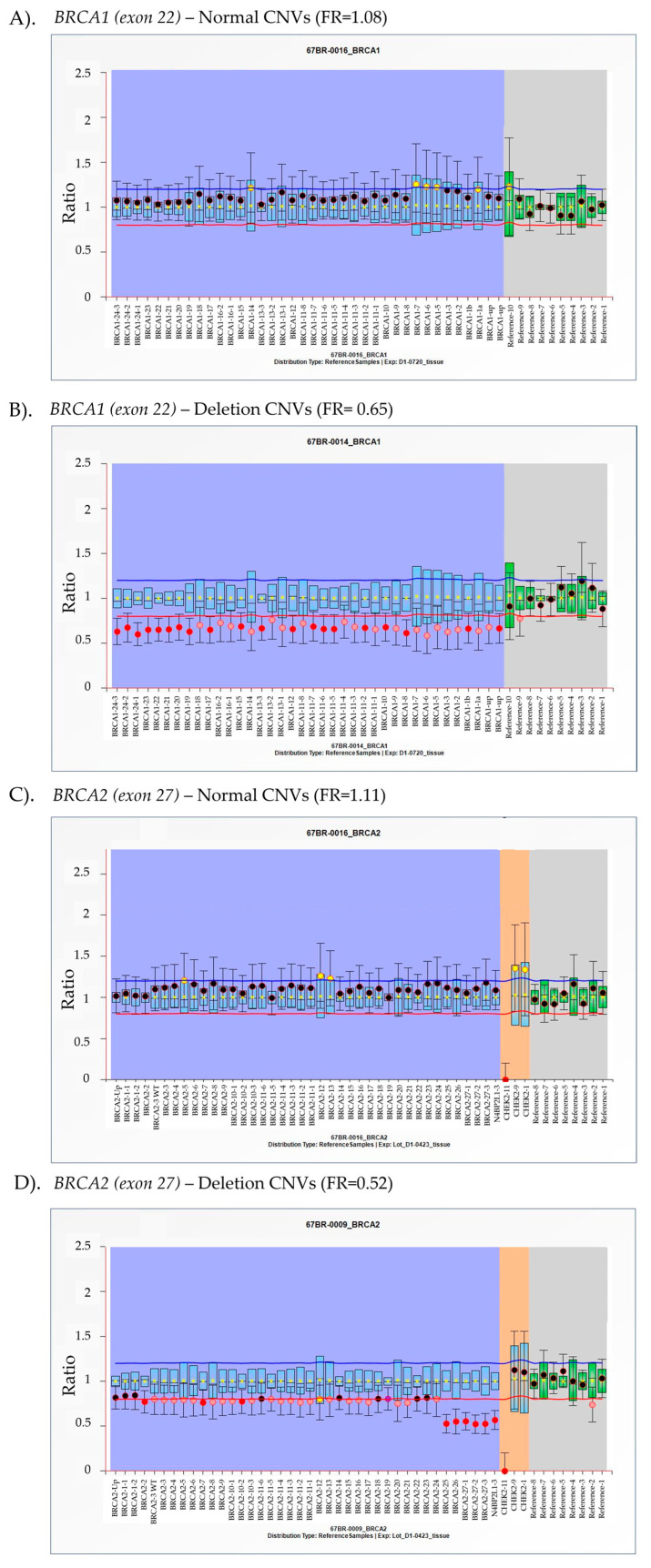 Figure 1
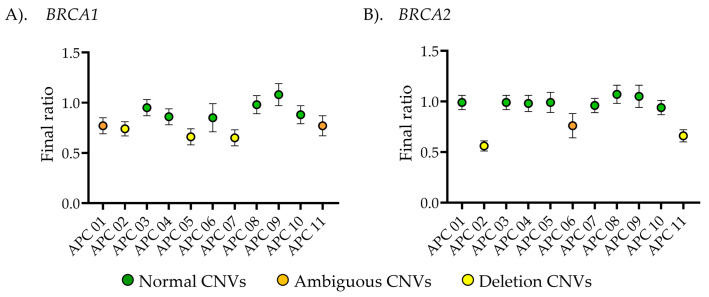 Figure 2
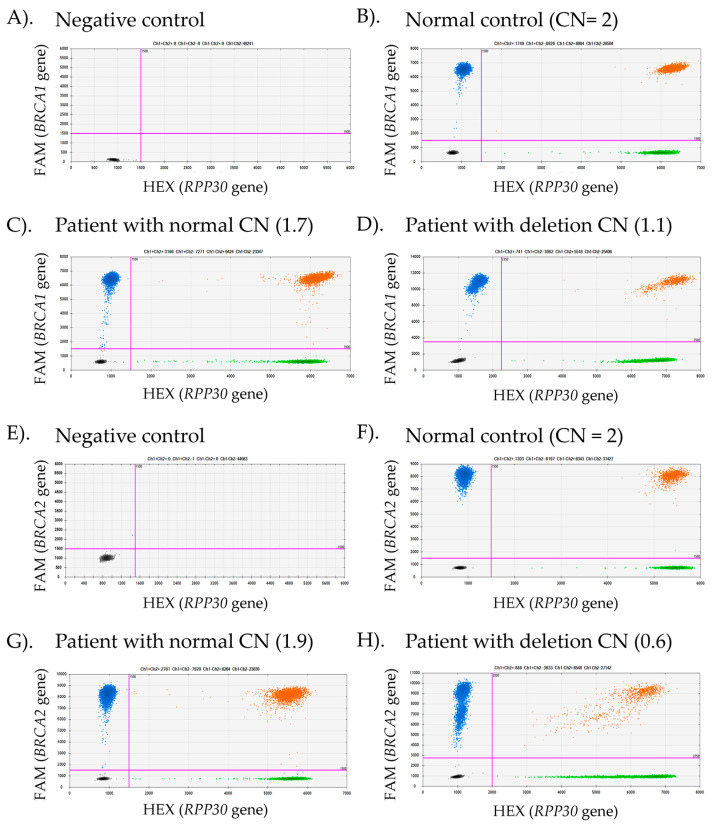 Figure 3
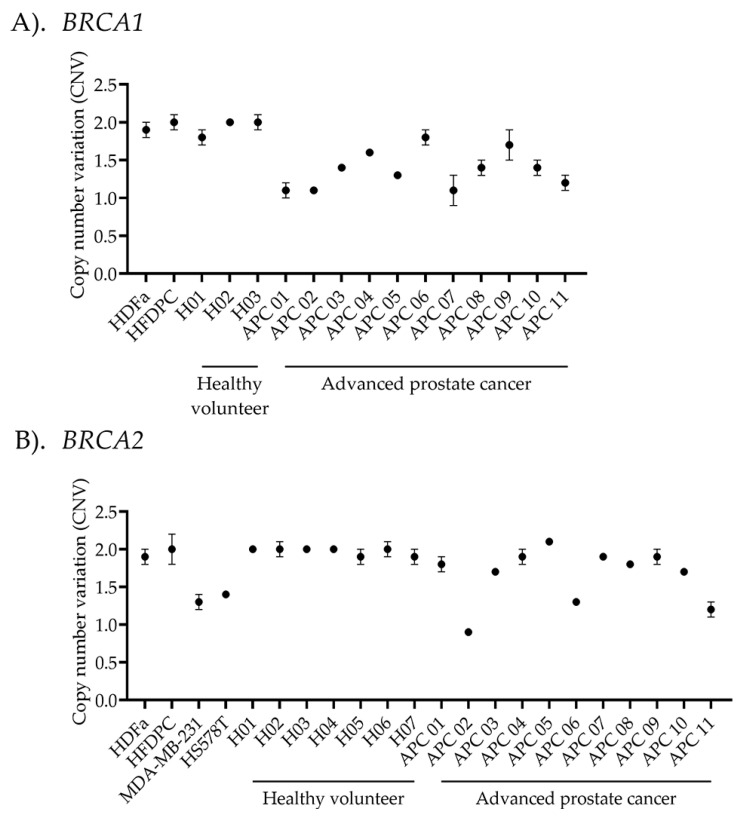 Figure 4
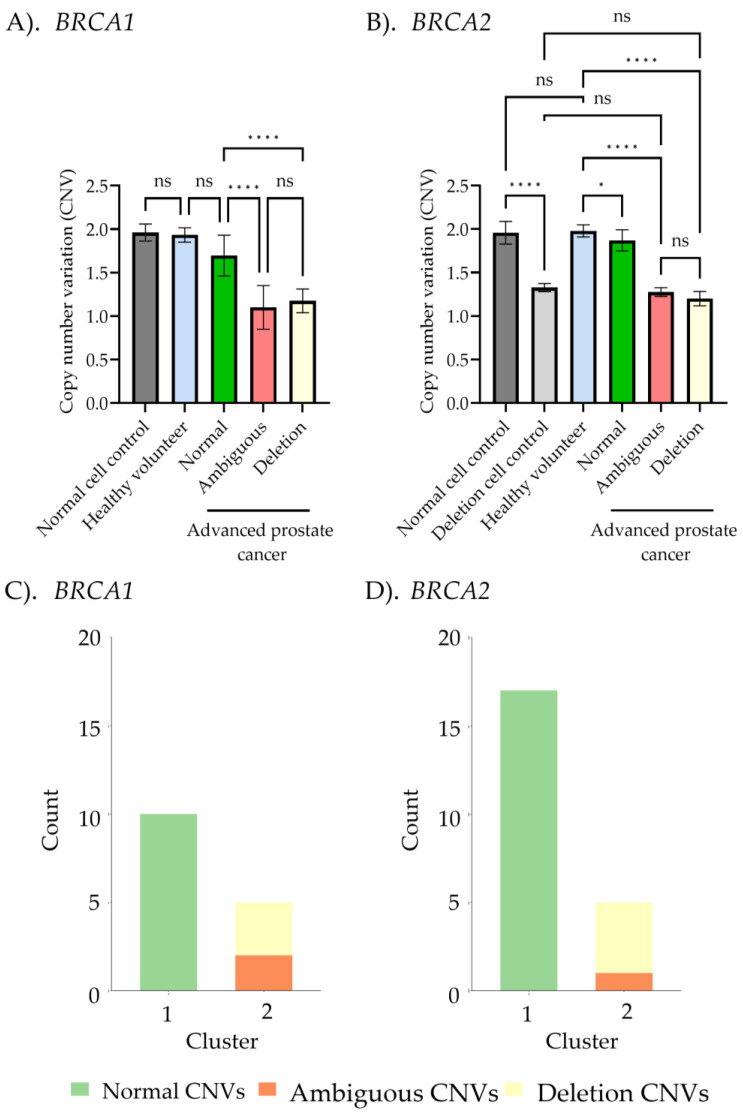 Figure 5
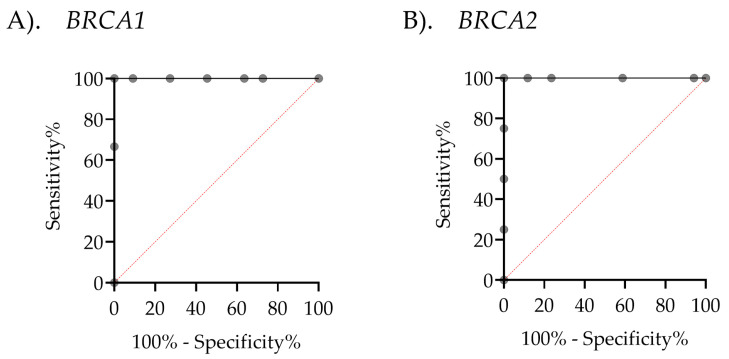 Figure 6
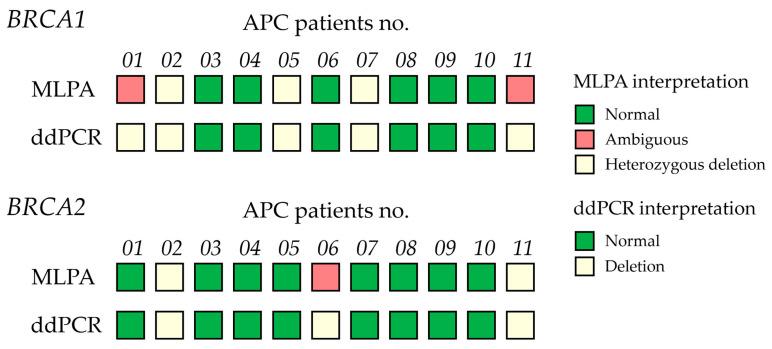 Figure 7
Peer Reviews
No public reviews on file for this paper yet. If you reviewed it on a platform where reviews are public (OpenReview, ICLR, NeurIPS, ICML), you can paste yours below so the community can read it here.
Videos
No videos yet. Explain this paper in a talk, walkthrough, or lecture? Add one.
Taxonomy
TopicsCRISPR and Genetic Engineering · Molecular Biology Techniques and Applications · Genetics, Bioinformatics, and Biomedical Research