In Situ Electrochemical Atomic Force Microscopy Study of Interfacial Reactions on a Graphite Negative Electrode for Magnesium-Ion Batteries
Sungjae Yoon, Paul Maldonado Nogales, Sangyup Lee, Seunga Yang, Soon-Ki Jeong

TL;DR
This study uses advanced imaging to show that magnesium ions can be reversibly inserted into graphite electrodes, which is important for developing better magnesium-ion batteries.
Contribution
The study demonstrates stable co-intercalation of solvated Mg2+ ions in graphite through in situ electrochemical atomic force microscopy.
Findings
A reversible capacity of 158 mAh g−1 was observed in a triglyme-based electrolyte.
Nanoscale surface structures formed during initial cycles showed partial reversibility and correlated with redox peaks.
A passivating surface film enabled Mg2+ transport while reducing electrolyte decomposition.
Abstract
The cointercalation of solvated Mg2+ ions into graphite has typically been considered challenging because of concerns regarding the instability of the electrolyte and the potential for structural degradation. However, recent developments in electrolyte design suggest that this process may be reversible under appropriate conditions. In this study, the interfacial behavior of graphite in a magnesium-ion system was investigated using in situ electrochemical atomic force microscopy. Electrochemical tests in a triglyme-based electrolyte revealed a reversible capacity of 158 mAh g−1, attributed to the insertion of triglyme-solvated Mg2+ ions. Real-time surface imaging of highly oriented pyrolytic graphite revealed the formation of a passivating surface film during the initial cycle, along with nanoscale hill-like (~1 nm) and blister-like (~5 nm) structures, which were partially reversible and…
Genes, proteins, chemicals, diseases, species, mutations and cell lines named across the full text — each resolved to its canonical identifier and authoritative record.
Click any figure to enlarge with its caption.
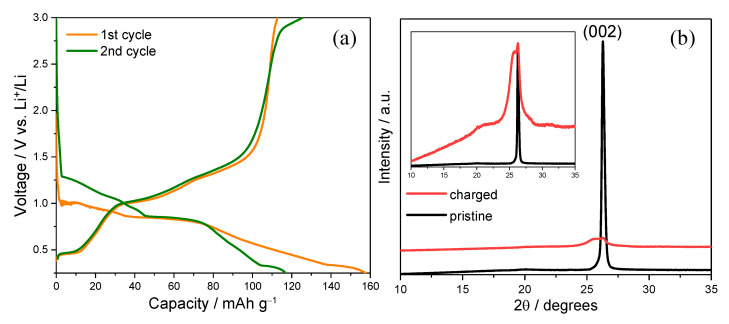 Figure 1
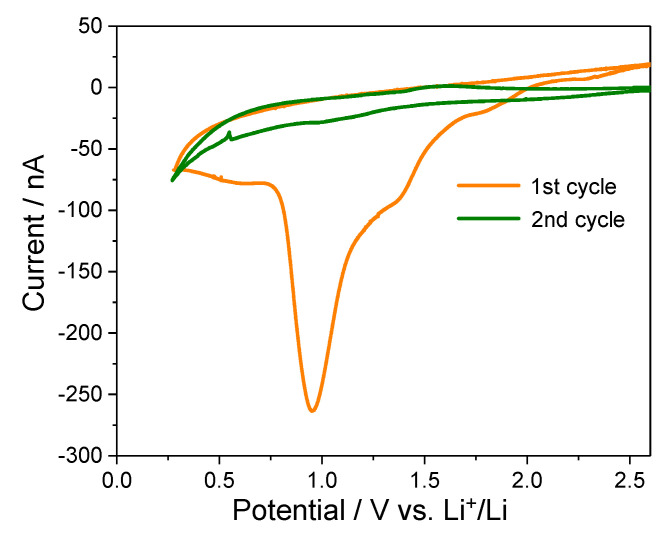 Figure 2
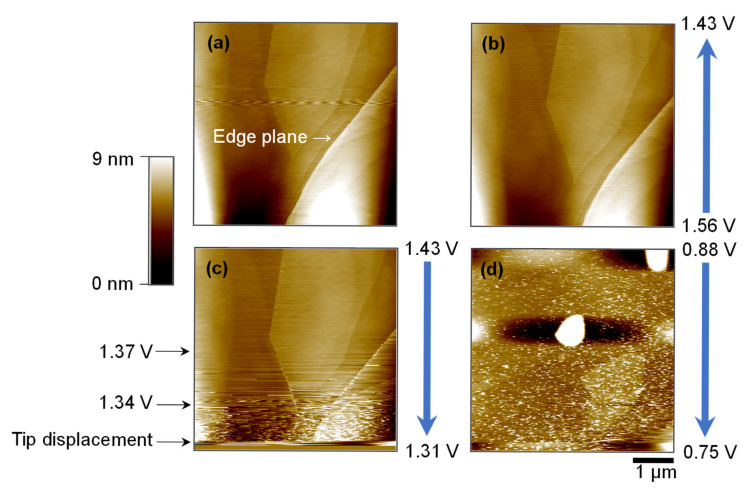 Figure 3
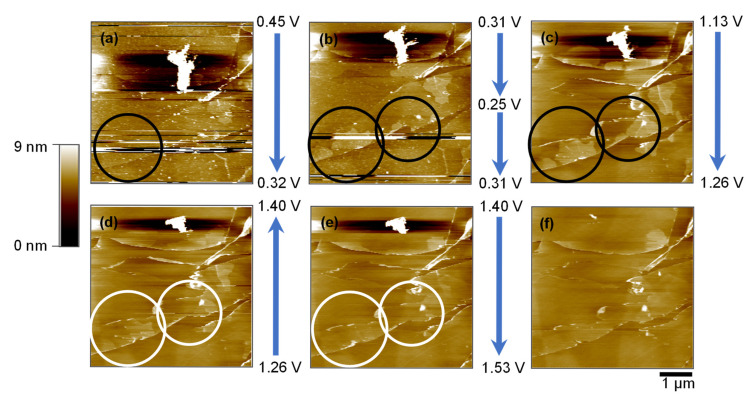 Figure 4
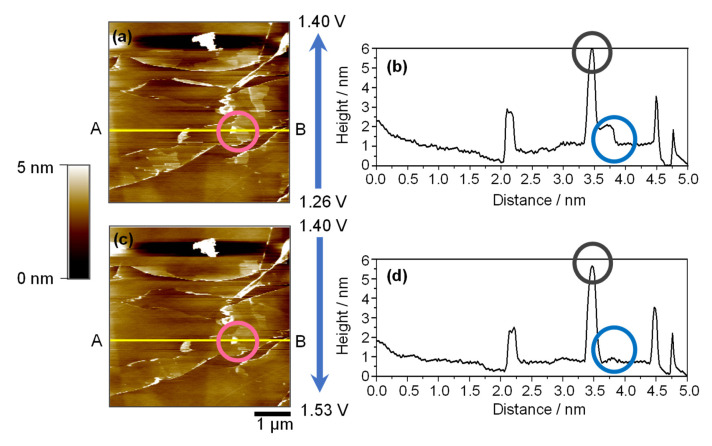 Figure 5
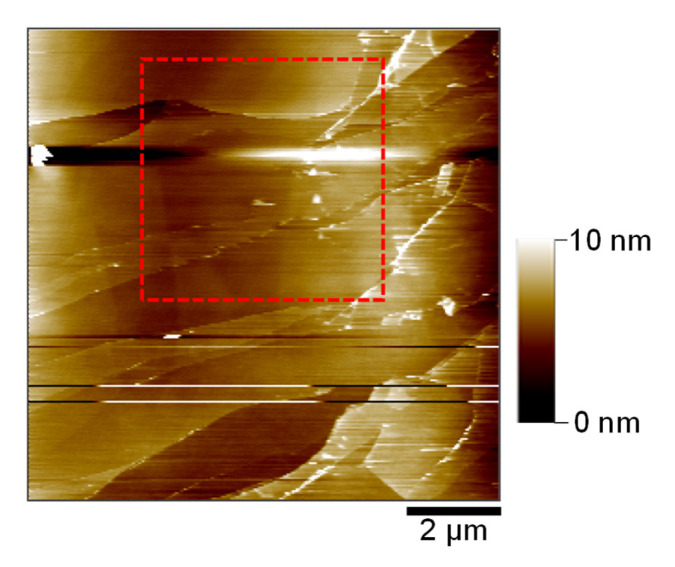 Figure 6
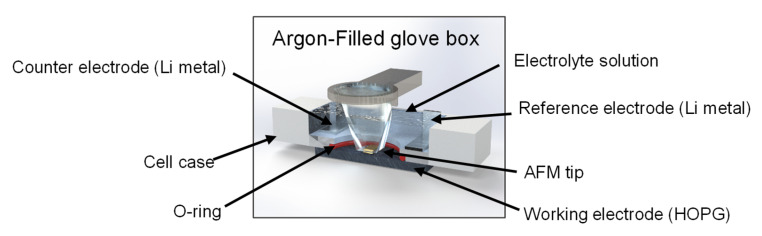 Figure 7
Peer Reviews
No public reviews on file for this paper yet. If you reviewed it on a platform where reviews are public (OpenReview, ICLR, NeurIPS, ICML), you can paste yours below so the community can read it here.
Videos
No videos yet. Explain this paper in a talk, walkthrough, or lecture? Add one.
Taxonomy
TopicsAdvancements in Battery Materials · Extraction and Separation Processes · Advanced battery technologies research