Pyrroloquinoline Quinone (PQQ) Attenuates Hydrogen Peroxide-Induced Injury Through the Enhancement of Mitochondrial Function in Human Trabecular Meshwork Cells
Sabrina Petricca, Antonio Matrone, Daria Capece, Irene Flati, Vincenzo Flati, Enrico Ricevuto, Giuseppe Celenza, Nicola Franceschini, Mirco Mastrangelo, Cristina Pellegrini, Loredana Cristiano, Giuseppe Familiari, Benedetta Cinque, Giovanna Di Emidio, Carla Tatone, Roberto Iorio

TL;DR
PQQ helps protect human eye cells from oxidative stress by improving mitochondrial function, which could lead to new treatments for glaucoma.
Contribution
This study is the first to show PQQ's protective effects on human trabecular meshwork cells under oxidative stress.
Findings
PQQ improves mitochondrial respiration and ATP production in HTM cells.
PQQ reduces H2O2-induced damage and preserves mitochondrial function.
PQQ partially restores mitochondrial structure and reduces cell death.
Abstract
Mitochondrial metabolism in the trabecular meshwork (TM) plays a critical role in maintaining intraocular pressure homeostasis by supporting the energy-demanding processes involved in aqueous humour outflow. In primary open-angle glaucoma, oxidative stress impairs mitochondrial function, leading to TM dysfunction. Therefore, understanding and targeting mitochondrial health in TM cells could offer a novel therapeutic strategy. Pyrroloquinoline quinone (PQQ) is a redox cofactor with antioxidant and mitochondrial-enhancing properties. However, its effects on human TM (HTM) cells remain largely unexplored. This study examined PQQ cytoprotective effects against H2O2-induced oxidative stress in HTM cells. Seahorse analyses revealed that PQQ alone improves mitochondrial respiration and ATP production. Moreover, PQQ mitigates H2O2-induced cellular damage and preserves mitochondrial function by…
Genes, proteins, chemicals, diseases, species, mutations and cell lines named across the full text — each resolved to its canonical identifier and authoritative record.
Click any figure to enlarge with its caption.
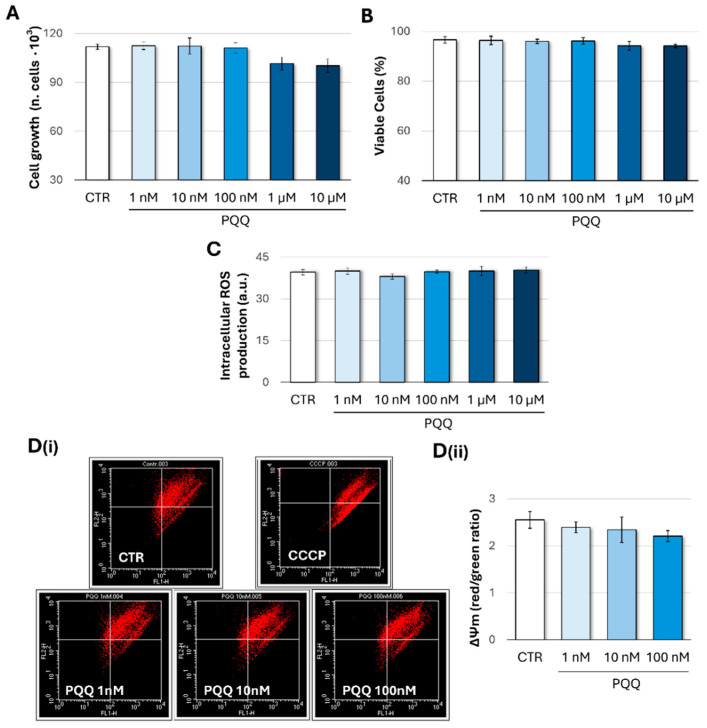 Figure 1
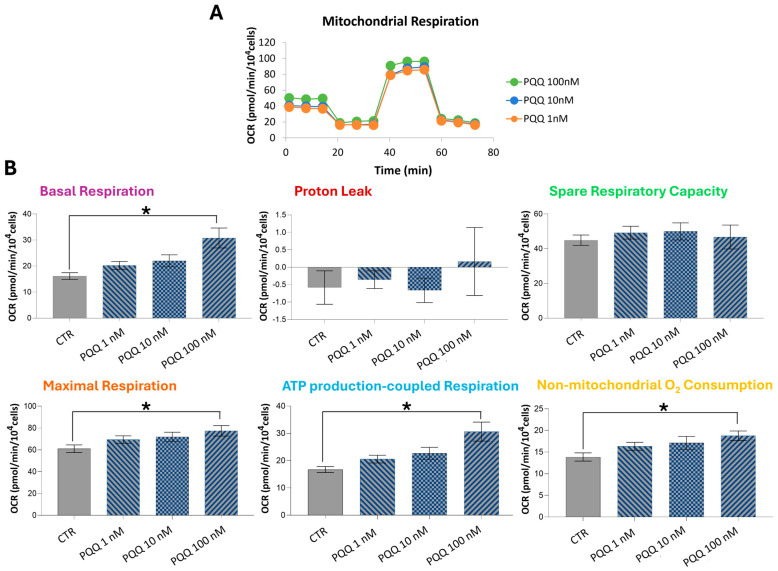 Figure 2
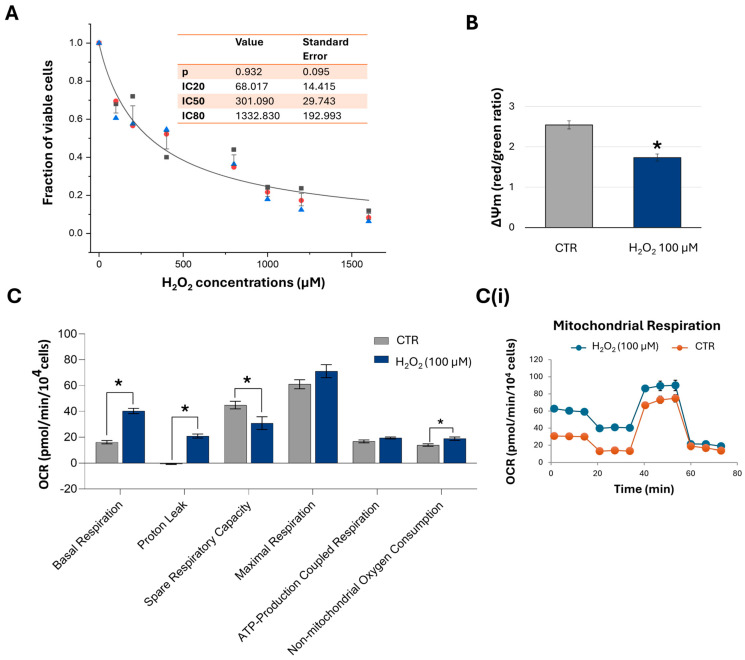 Figure 3
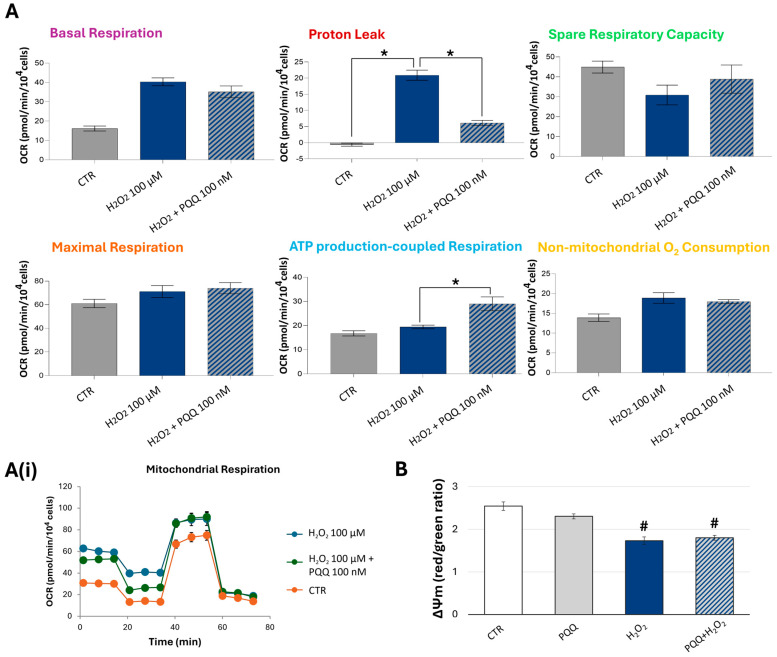 Figure 4
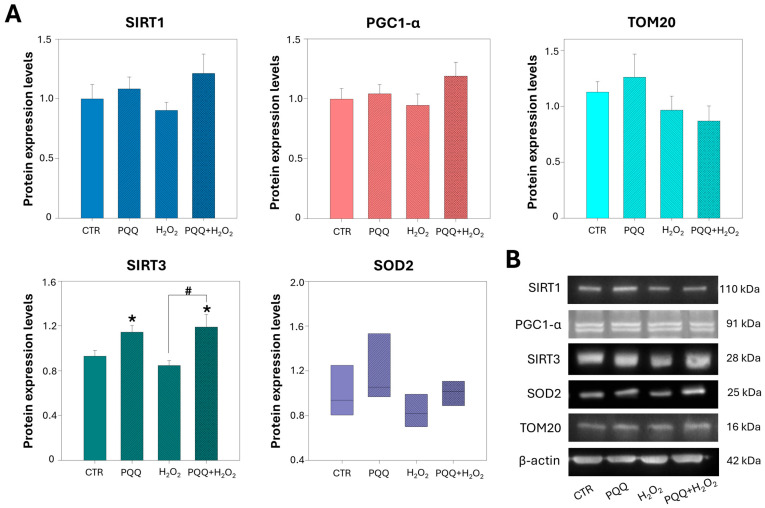 Figure 5
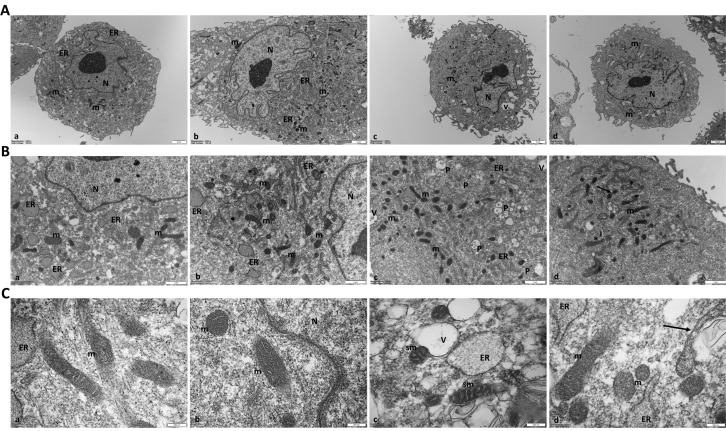 Figure 6
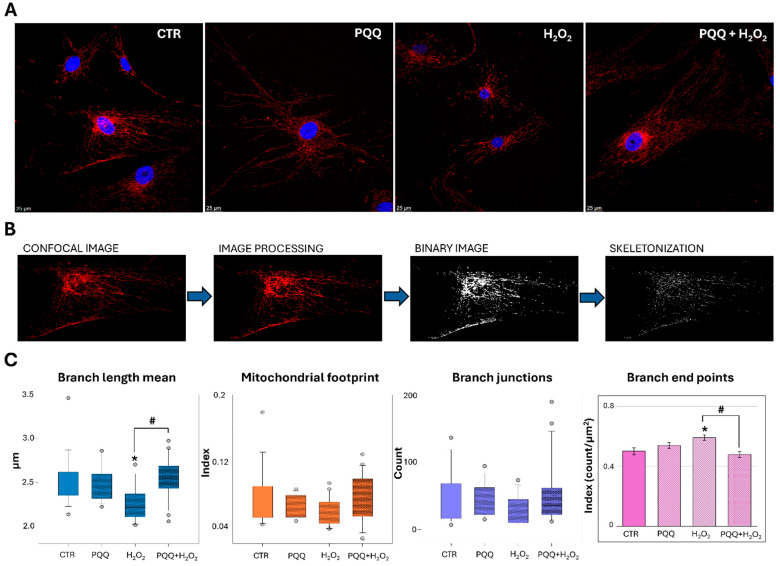 Figure 7
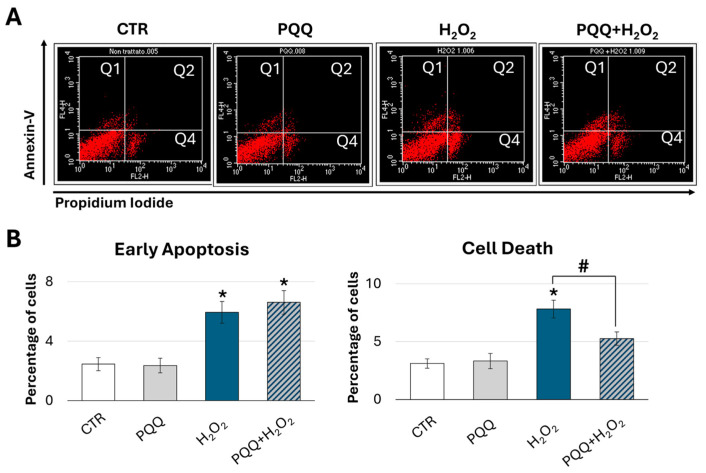 Figure 8
Peer Reviews
No public reviews on file for this paper yet. If you reviewed it on a platform where reviews are public (OpenReview, ICLR, NeurIPS, ICML), you can paste yours below so the community can read it here.
Videos
No videos yet. Explain this paper in a talk, walkthrough, or lecture? Add one.
Taxonomy
TopicsNeutrophil, Myeloperoxidase and Oxidative Mechanisms · Nitric Oxide and Endothelin Effects · Microbial metabolism and enzyme function