Exploring the Therapeutic Potential of Estrogen-Related Receptor γ Inverse Agonists in Atopic Dermatitis-like Lesions
Ju Hyeon Bae, Sijoon Lee, Jae-Eon Lee, Sang Kyoon Kim, Jae-Han Jeon, Yong Hyun Jeon

TL;DR
This study shows that DN200434, an ERRγ inverse agonist, reduces symptoms of atopic dermatitis in mice by suppressing inflammation and immune responses.
Contribution
The study demonstrates that DN200434 is a potential therapeutic agent for atopic dermatitis by targeting ERRγ.
Findings
DN200434 reduced epidermal thickness, spleen index, and serum IgE levels in AD mice.
DN200434 inhibited phosphorylation of AKT, ERK, p38, and NFκB in HaCaT cells.
Treatment with DN200434 lowered mast cell infiltration and inflammatory cytokine levels in AD lesions.
Abstract
Estrogen-related receptor γ (ERRγ) has been reported to regulate various inflammation-related diseases. Herein, we attempted to evaluate the effects of DN200434 as a modulator for ERRγ in mice with atopic dermatitis (AD). Levels of mRNA and protein expression for ERRγ were evaluated in normal and DNCB-induced AD-diagnosed skin. The effects of DN200434 on the chemokines, inflammatory cytokines, and AKT/MAPK/NFκB pathway signaling were investigated in TNF-α/IFN-γ-treated HaCaT cells. DNCB-induced AD mice received DN200434 intraperitoneally for 10 days. Epidermal thickness at the dorsal aspect of the inflamed skin, spleen index, serum IgE levels, and proinflammatory cytokine levels in the skin lesions were measured. Histopathological evaluations, including assessments of epidermal hyperplasia, dermal inflammation, hyperkeratosis, folliculitis, and mast cell counts, were performed to…
Genes, proteins, chemicals, diseases, species, mutations and cell lines named across the full text — each resolved to its canonical identifier and authoritative record.
Click any figure to enlarge with its caption.
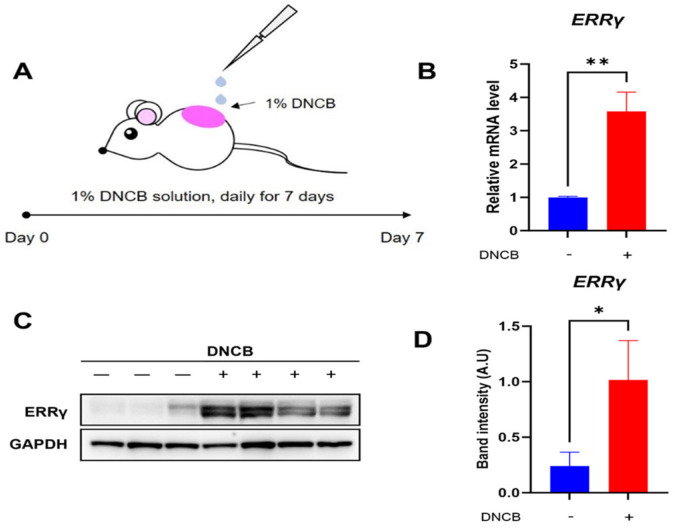 Figure 1
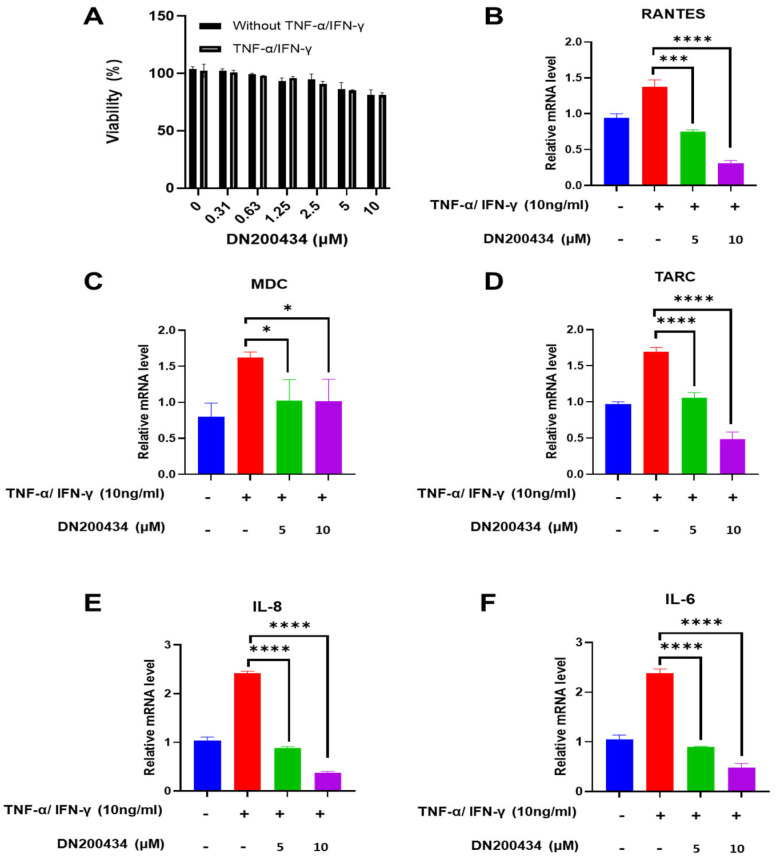 Figure 2
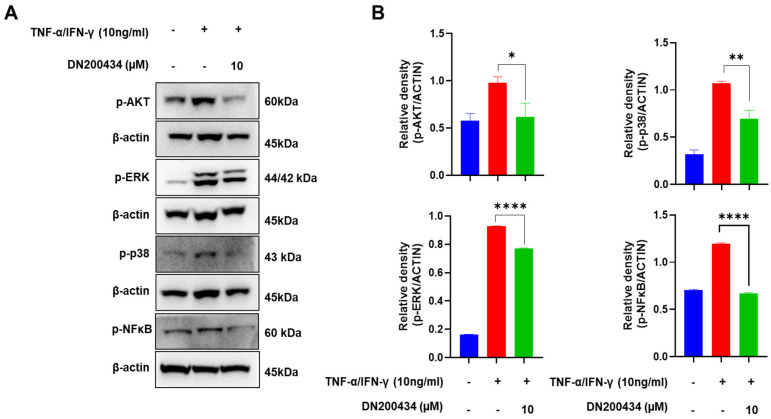 Figure 3
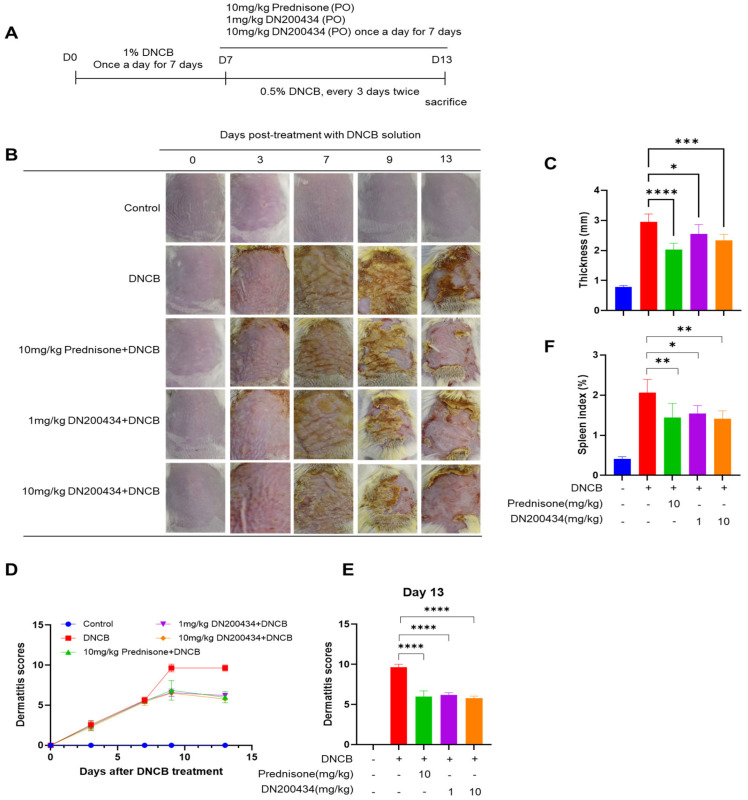 Figure 4
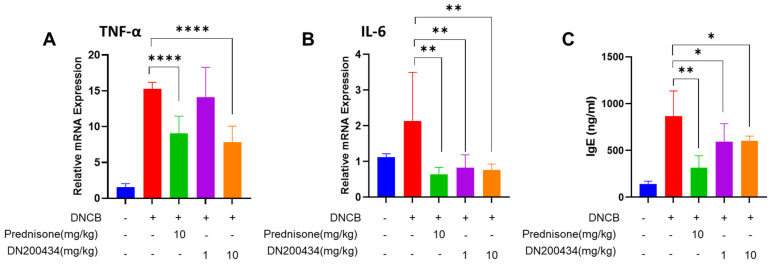 Figure 5
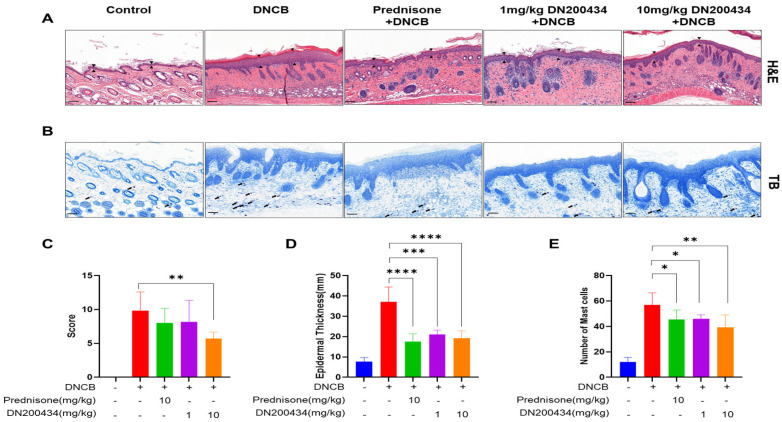 Figure 6
Peer Reviews
No public reviews on file for this paper yet. If you reviewed it on a platform where reviews are public (OpenReview, ICLR, NeurIPS, ICML), you can paste yours below so the community can read it here.
Videos
No videos yet. Explain this paper in a talk, walkthrough, or lecture? Add one.
Taxonomy
TopicsDermatology and Skin Diseases · Urticaria and Related Conditions · Contact Dermatitis and Allergies