Phenotypic and Genotypic Characterization of 171 Patients with Syndromic Inherited Retinal Diseases Highlights the Importance of Genetic Testing for Accurate Clinical Diagnosis
Sofia Kulyamzin, Rina Leibu, Hadas Newman, Miriam Ehrenberg, Nitza Goldenberg-Cohen, Shiri Zayit-Soudry, Eedy Mezer, Ygal Rotenstreich, Iris Deitch, Daan M. Panneman, Dinah Zur, Elena Chervinsky, Stavit A. Shalev, Frans P. M. Cremers, Dror Sharon, Susanne Roosing, Tamar Ben-Yosef

TL;DR
This study shows that genetic testing is crucial for accurately diagnosing rare inherited eye diseases that also affect other body systems.
Contribution
The study highlights how genetic testing can revise clinical diagnoses in syndromic inherited retinal diseases.
Findings
Genetic analysis led to revised diagnoses in 29% of families.
Novel genotype–phenotype correlations were found, such as KATNIP variants causing kidney disease and IRD.
The most common causative gene was USH2A, and the most common condition was Usher syndrome.
Abstract
Background: Syndromic inherited retinal diseases (IRDs) are a clinically and genetically heterogeneous group of disorders, involving the retina and additional organs. Over 80 forms of syndromic IRD have been described. Methods: We aimed to phenotypically and genotypically characterize a cohort of 171 individuals from 140 Israeli families with syndromic IRD. Ophthalmic examination included best corrected visual acuity, fundus examination, visual field testing, retinal imaging and electrophysiological evaluation. Most participants were also evaluated by specialists in fields relevant to their extra-retinal symptoms. Genetic analyses included haplotype analysis, homozygosity mapping, Sanger sequencing and next-generation sequencing. Results: In total, 51% of the families in the cohort were consanguineous. The largest ethnic group was Muslim Arabs. The most common phenotype was Usher…
Genes, proteins, chemicals, diseases, species, mutations and cell lines named across the full text — each resolved to its canonical identifier and authoritative record.
Click any figure to enlarge with its caption.
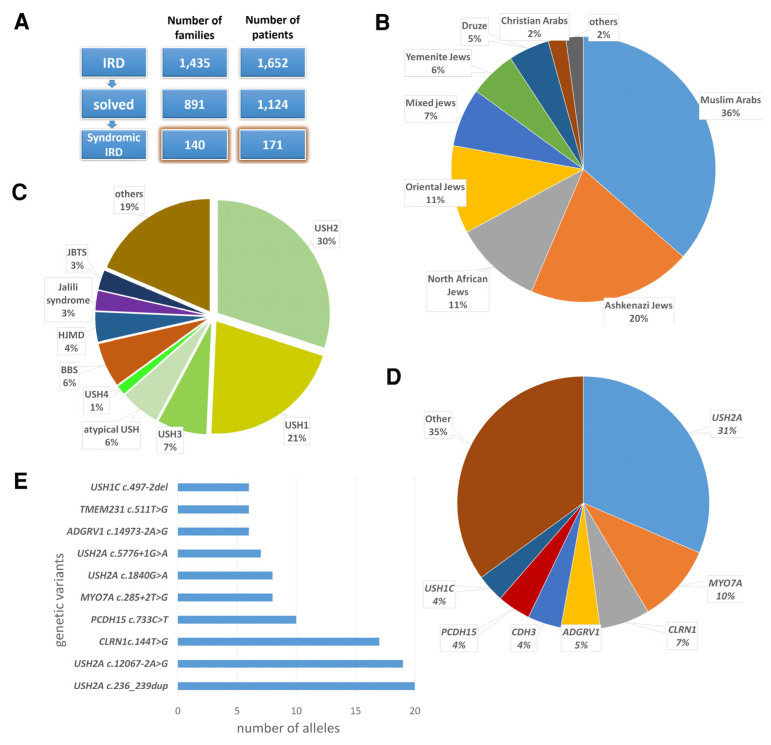 Figure 1
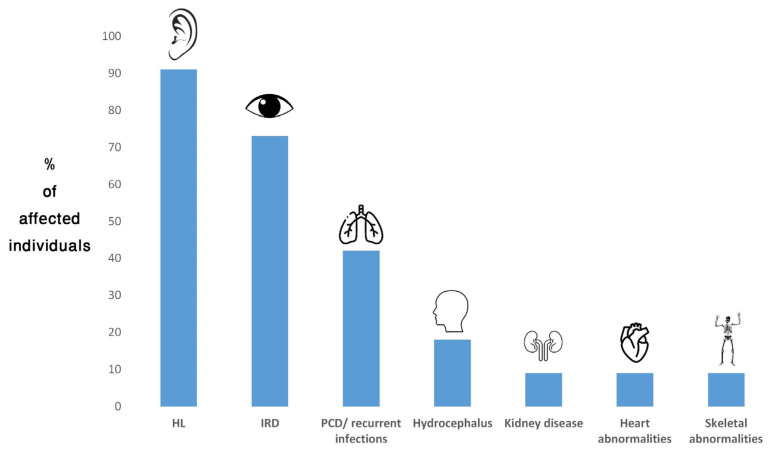 Figure 2
Peer Reviews
No public reviews on file for this paper yet. If you reviewed it on a platform where reviews are public (OpenReview, ICLR, NeurIPS, ICML), you can paste yours below so the community can read it here.
Videos
No videos yet. Explain this paper in a talk, walkthrough, or lecture? Add one.
Taxonomy
TopicsGenetic and Kidney Cyst Diseases · Retinal Development and Disorders · Genomics and Rare Diseases