Viability and Longevity of Human Miniaturized Living Myocardial Slices
Ziyu Zhou, Yvar P. van Steenis, Surya Henry, Elisa C. H. van Doorn, Jorik H. Amesz, Pieter C. van de Woestijne, Natasja M. S. de Groot, Olivier C. Manintveld, Beatrijs Bartelds, Yannick J. H. J. Taverne

TL;DR
Researchers created small human heart tissue slices that remain functional for several days, enabling patient-specific studies when tissue is limited.
Contribution
The first demonstration that miniaturized living myocardial slices are viable for short-term functional and pharmacological studies.
Findings
Mini-LMSs as small as 2 mm² remained viable and functional for up to six days.
Peak twitch force was size-independent, but time-to-peak shortened with smaller slice areas.
Functional decline and micro-architectural changes occurred after five to six days in mini-LMSs.
Abstract
Living myocardial slices (LMSs) have shown great promise in cardiac research, allowing multicellular and complex interplay analyses with disease and patient specificity, yet their wider clinical use is limited by the large tissue sizes usually required. We therefore produced mini-LMSs (<10 mm2) from routine human cardiac surgery specimens and compared them with medium (10–30 mm2) and large (>30 mm2) slices. Size effects on biomechanical properties were examined with mathematical modeling, and viability, contraction profiles, and histological integrity were followed for 14 days. In total, 34 mini-, 25 medium, and 30 large LMS were maintained viable, the smallest measuring only 2 mm2. Peak twitch force proved to be size-independent, whereas time-to-peak shortened as slice area decreased. Downsized LMSs displayed excellent contractile behavior for five to six days, after which a gradual…
Genes, proteins, chemicals, diseases, species, mutations and cell lines named across the full text — each resolved to its canonical identifier and authoritative record.
Click any figure to enlarge with its caption.
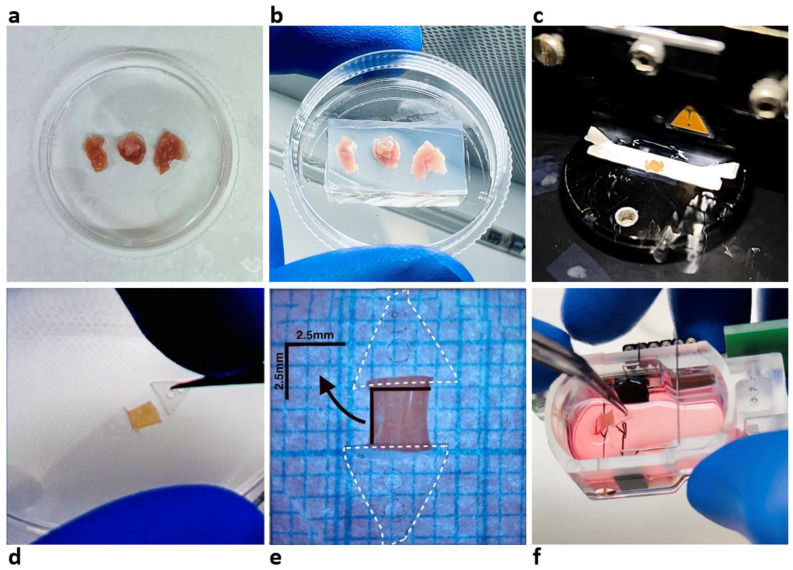 Figure 1
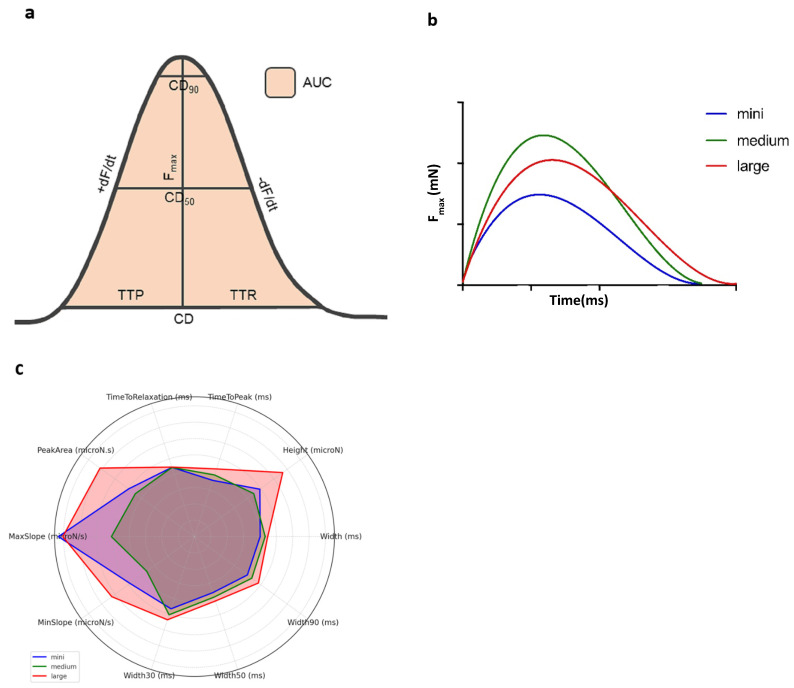 Figure 2
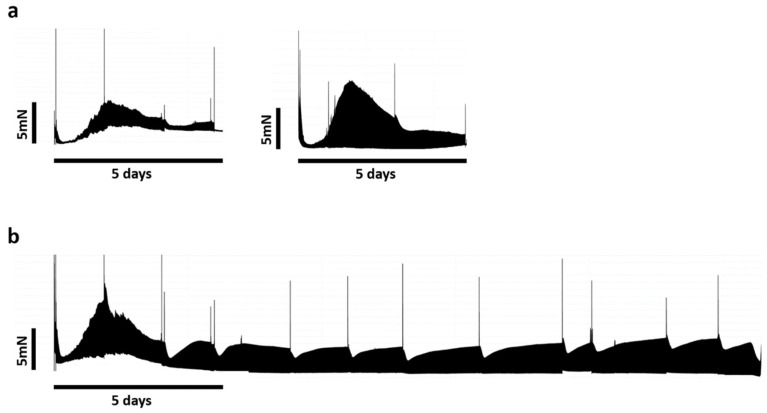 Figure 3
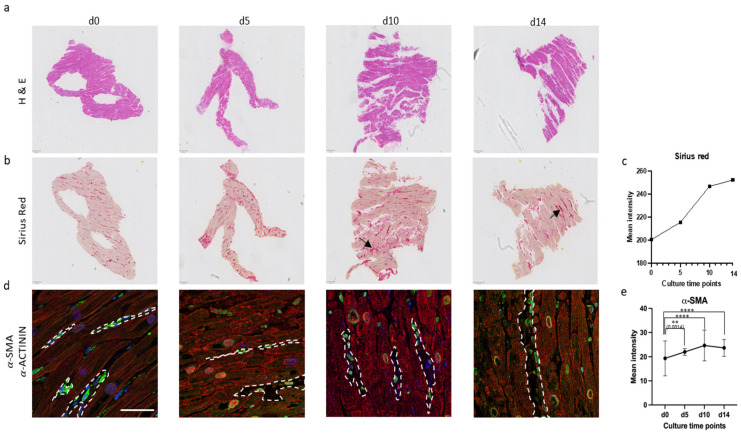 Figure 4
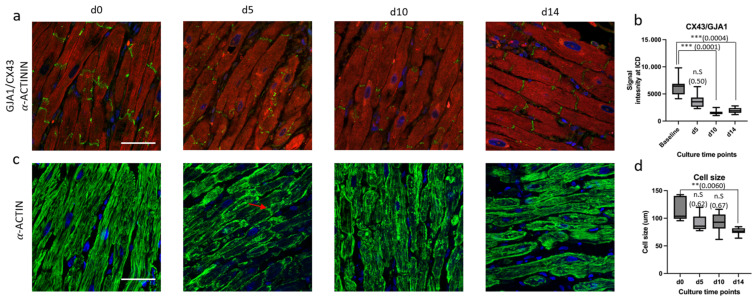 Figure 5
Peer Reviews
No public reviews on file for this paper yet. If you reviewed it on a platform where reviews are public (OpenReview, ICLR, NeurIPS, ICML), you can paste yours below so the community can read it here.
Videos
No videos yet. Explain this paper in a talk, walkthrough, or lecture? Add one.
Taxonomy
TopicsTissue Engineering and Regenerative Medicine · Neuroscience and Neural Engineering · Cardiomyopathy and Myosin Studies