Detection of Feline Coronavirus Membrane Gene Based on Conventional Revere Transcription-Polymerase Chain Reaction, Nested Reverse Transcription-Polymerase Chain Reaction, and Reverse Transcription-Quantitative Polymerase Chain Reaction: A Comparative Study
Chiraphat Kopduang, Witsanu Rapichai, Chalandhorn Leangcharoenpong, Piyamat Khamsingnok, Thanapol Puangmalee, Siriluk Ratanabunyong, Amonpun Rattanasrisomporn, Thanawat Khaoiam, Hieu Van Dong, Kiattawee Choowongkomol, Jatuporn Rattanasrisomporn

TL;DR
This study compares different PCR methods for detecting feline coronavirus, finding that RT-qPCR is the most sensitive and reliable for diagnosing feline infectious peritonitis.
Contribution
The study introduces novel primers targeting the FCoV membrane gene and compares their performance across multiple PCR techniques.
Findings
RT-qPCR detected 93.75% of positive samples with a sensitivity of 9.14 × 101 copies/µL.
Nested RT-PCR and RT-qPCR outperformed conventional RT-PCR in sensitivity and diagnostic accuracy.
All assays showed 100% specificity with no cross-reactivity to other feline viruses.
Abstract
Feline coronavirus (FCoV) is a major pathogen causing feline infectious peritonitis (FIP), a lethal disease in cats, necessitating accurate diagnostic methods. This study developed and compared novel primers targeting the FCoV membrane (M) gene for enhanced detection. Specific primers were designed for the M gene and their performance evaluated using reverse transcription-PCR (RT-PCR), nested RT-PCR, and reverse transcription-quantitative PCR (RT-qPCR) on 80 clinical effusion samples from cats suspected of FIP. Specificity of assays was tested against other feline viruses, with sensitivity being assessed via serial dilutions of FCoV RNA. RT-qPCR had the highest sensitivity, detecting 9.14 × 101 copies/µL, identifying 93.75% of positive samples, followed by nested RT-PCR (87.50%, 9.14 × 10⁴ copies/µL) and RT-PCR (61.25%, 9.14 × 10⁶ copies/µL). All assays had 100% specificity, with no…
Genes, proteins, chemicals, diseases, species, mutations and cell lines named across the full text — each resolved to its canonical identifier and authoritative record.
Click any figure to enlarge with its caption.
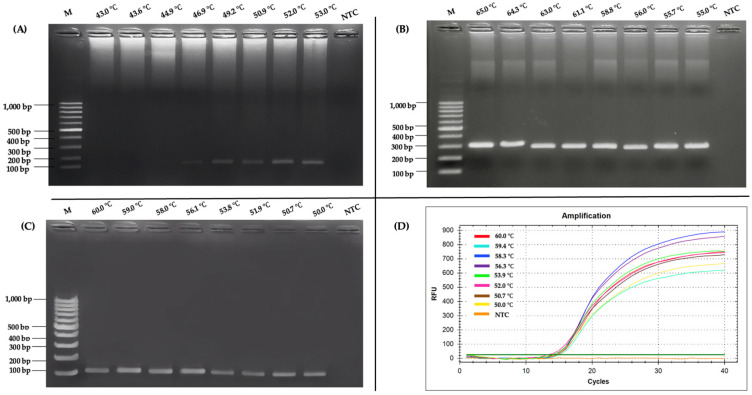 Figure 1
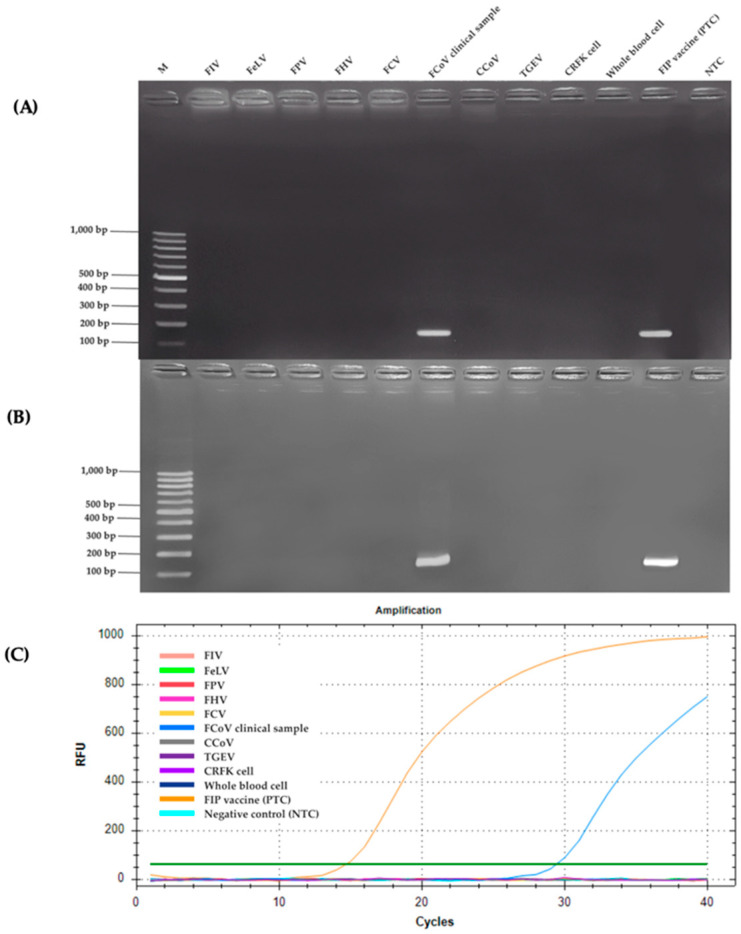 Figure 2
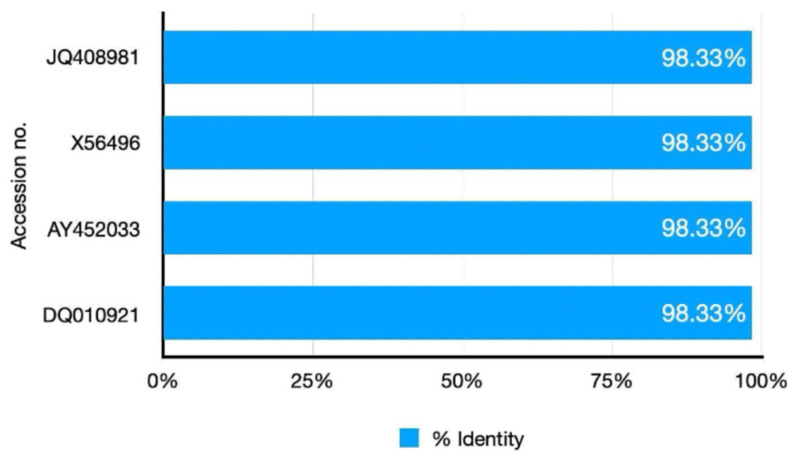 Figure 3
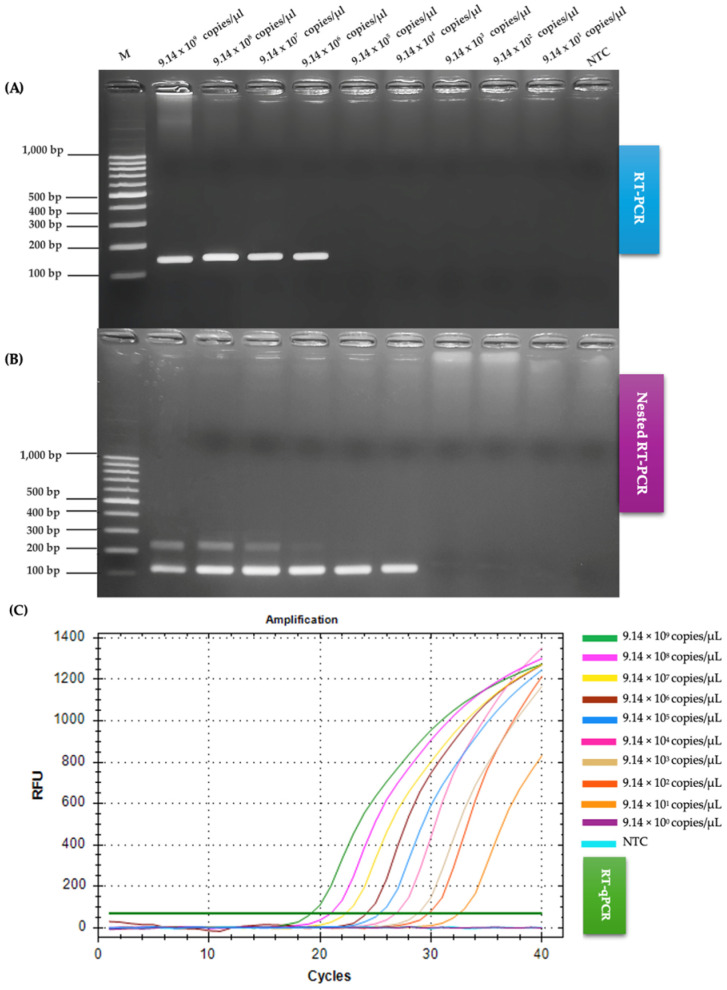 Figure 4
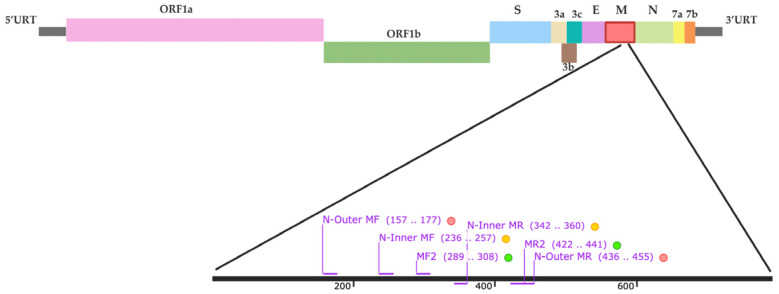 Figure 5
Peer Reviews
No public reviews on file for this paper yet. If you reviewed it on a platform where reviews are public (OpenReview, ICLR, NeurIPS, ICML), you can paste yours below so the community can read it here.
Videos
No videos yet. Explain this paper in a talk, walkthrough, or lecture? Add one.
Taxonomy
TopicsAnimal Virus Infections Studies · Viral gastroenteritis research and epidemiology · Virus-based gene therapy research