Function of Vivid Coloration of Terrestrial Isopods from the Point of View of an Avian Predator
Barbora Ďurajková, Petr Veselý, Ivan Hadrián Tuf

TL;DR
This study explores how terrestrial isopods protect themselves from bird predators, finding that isopods are better protected than roaches, but their coloration does not influence this protection.
Contribution
The study is the first to test how terrestrial isopods defend against bird predation and reveals that isopods are better protected than roaches.
Findings
Isopods were better protected from bird attacks than roaches.
Birds hesitated longer when presented with both isopods and roaches.
Some isopods caused more discomfort in birds, suggesting chemical defense differences.
Abstract
The ability of terrestrial isopods to protect themselves effectively from predation by birds has never been tested. Some species show conspicuous coloration, which might suffice as an aposematic signal. We tested the responses of Great Tits captured in the wild to five isopod species prey, we compared bird responses to isopods with reactions to the Guyana Spotted Roach, very similar to isopods in size and appearance. Isopods were generally better protected from bird attacks than roaches; however, their color pattern did not affect the level of protection. Birds were able to differentiate isopods from the roach, very likely using detailed features like antennae shape or manner of locomotion as a cue. In experiments, where we presented isopod and roach individuals together, the birds hesitated longer in attacking and observed both prey items for a longer time. The ability of terrestrial…
Genes, proteins, chemicals, diseases, species, mutations and cell lines named across the full text — each resolved to its canonical identifier and authoritative record.
Click any figure to enlarge with its caption.
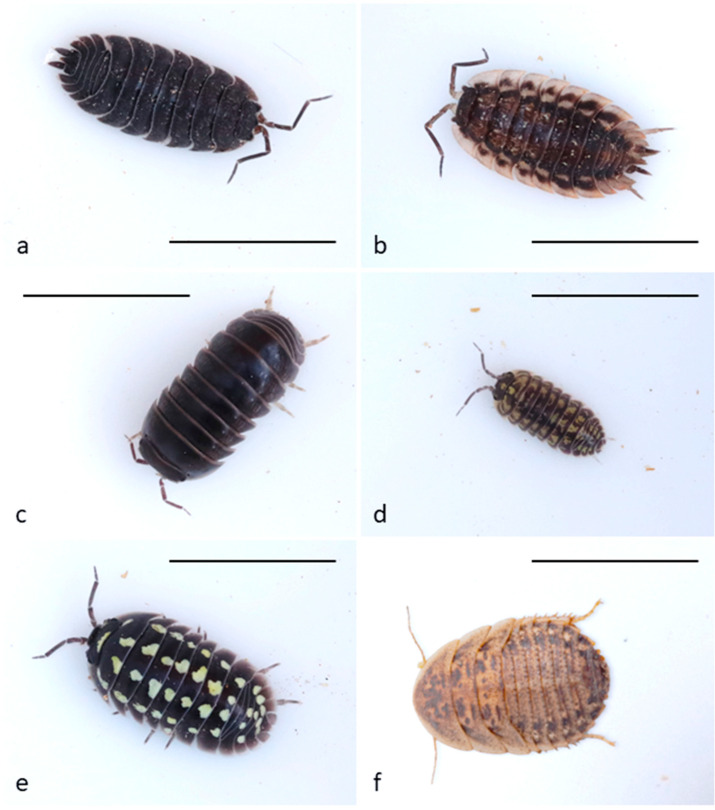 Figure 1
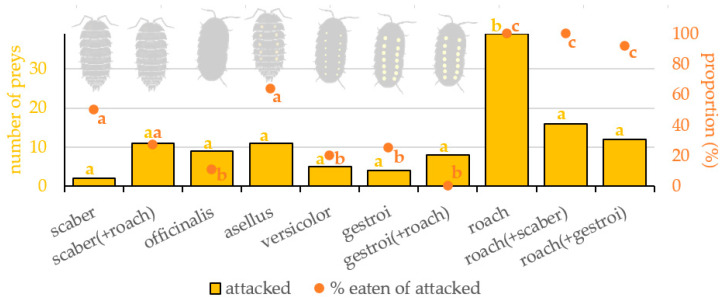 Figure 2
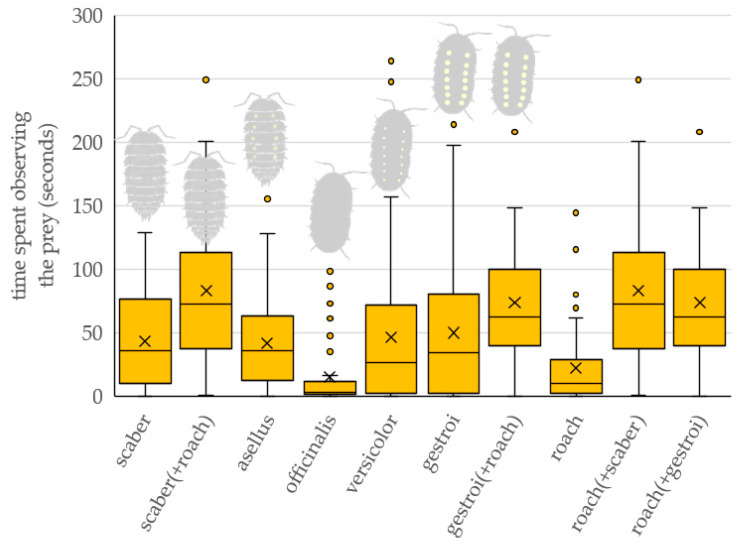 Figure 3
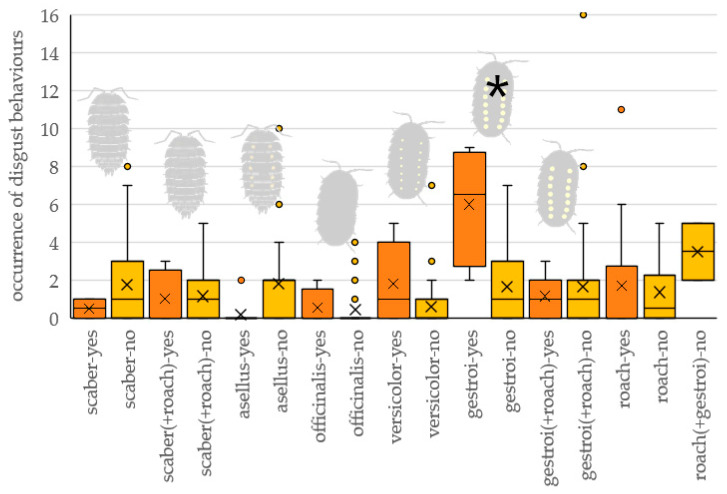 Figure 4
Peer Reviews
No public reviews on file for this paper yet. If you reviewed it on a platform where reviews are public (OpenReview, ICLR, NeurIPS, ICML), you can paste yours below so the community can read it here.
Videos
No videos yet. Explain this paper in a talk, walkthrough, or lecture? Add one.
Taxonomy
TopicsPlant and animal studies · Insect and Arachnid Ecology and Behavior · Animal Behavior and Reproduction