Fine Structure and Optical Features of the Compound Eyes of Adult Female Ceratosolen gravelyi (Hymenoptera: Agaonidae)
Hua Xie, Yan Shi, Shouxian Zhang, Yonghui Zhu, Subo Shao, Yuan Zhang, Pei Yang, Zongbo Li

TL;DR
This study explores the eye structure of female Ceratosolen gravelyi wasps to understand how vision helps them find their host fig trees.
Contribution
The paper provides the first detailed structural and optical analysis of the compound eyes of Ceratosolen gravelyi wasps.
Findings
The wasps' eyes have 228–263 ommatidia with specific optical features suited for diurnal activity.
The eye structure supports efficient light collection and processing of visual cues during host interactions.
The findings suggest vision works alongside smell and touch in guiding wasps to their host trees.
Abstract
Fig wasps and fig trees depend on each other to survive, and wasps locate their host trees with their sense of smell. However, the role that vision plays in locating host trees remains unclear. Here, we examined the eye structure of female Ceratosolen gravelyi wasps (which only pollinate Ficus semicordata) using scanning/transmission electron microscopy. Their oval-shaped eyes have 228–263 tiny eye units (ommatidia). Each unit has a clear lens, a four-part light-focusing structure, and light-sensing cells wrapped in pigment cells. The retinula cells form a rhabdom with nine cells per unit. Eight photoreceptors (R1–R8) form the rhabdom from the cone base to the basal matrix, and a ninth cell replaces R8 in the apical third of the rhabdom. Various optical measurements revealed that their eyes collect light efficiently. These features are consistent with their daytime activity, suggesting…
Genes, proteins, chemicals, diseases, species, mutations and cell lines named across the full text — each resolved to its canonical identifier and authoritative record.
Click any figure to enlarge with its caption.
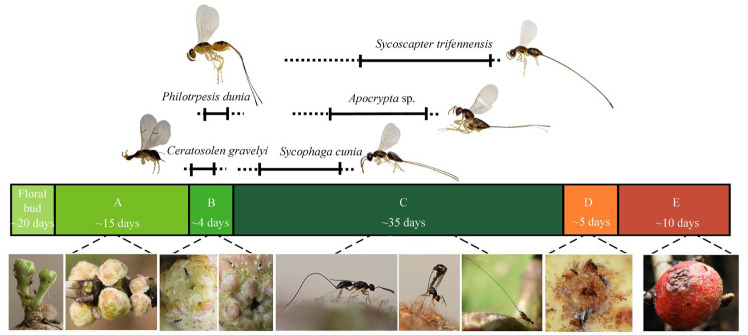 Figure 1
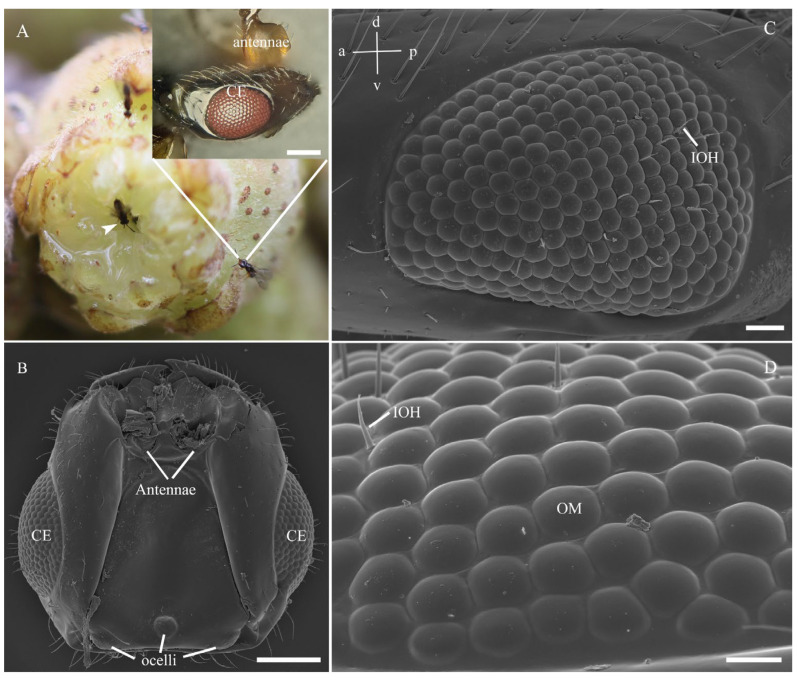 Figure 2
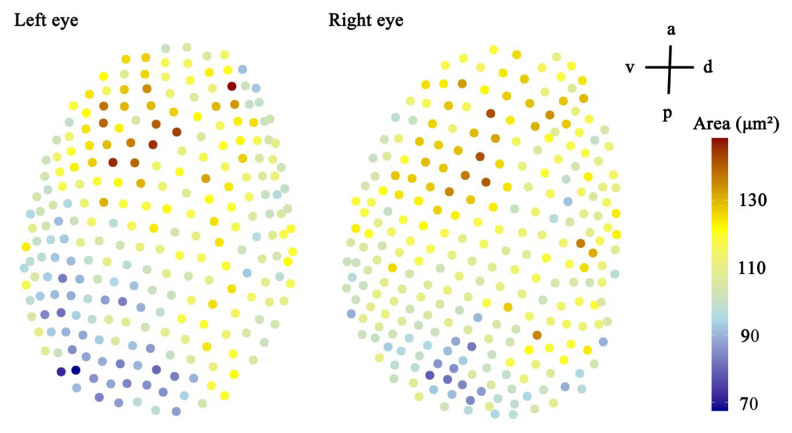 Figure 3
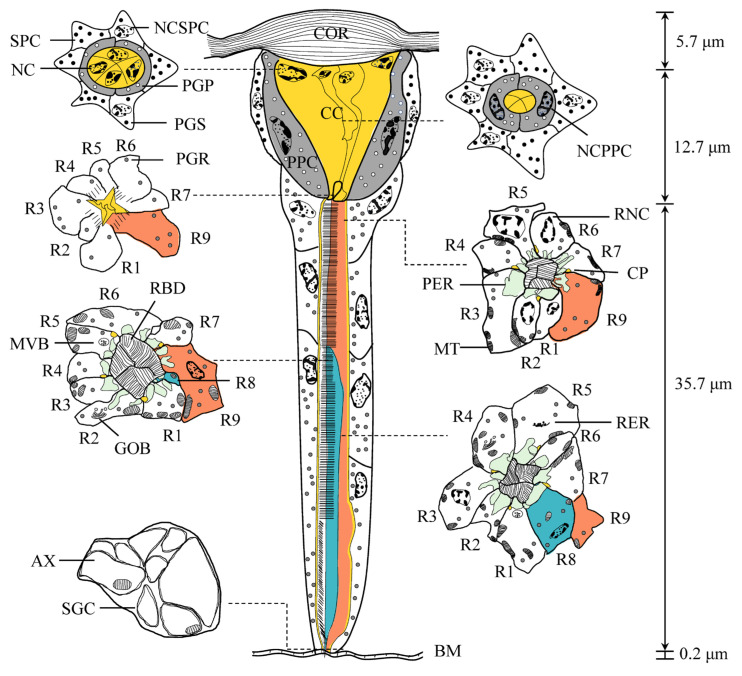 Figure 4
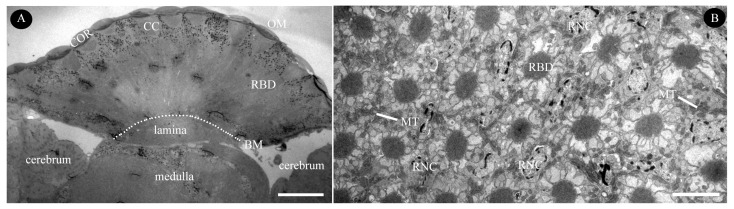 Figure 5
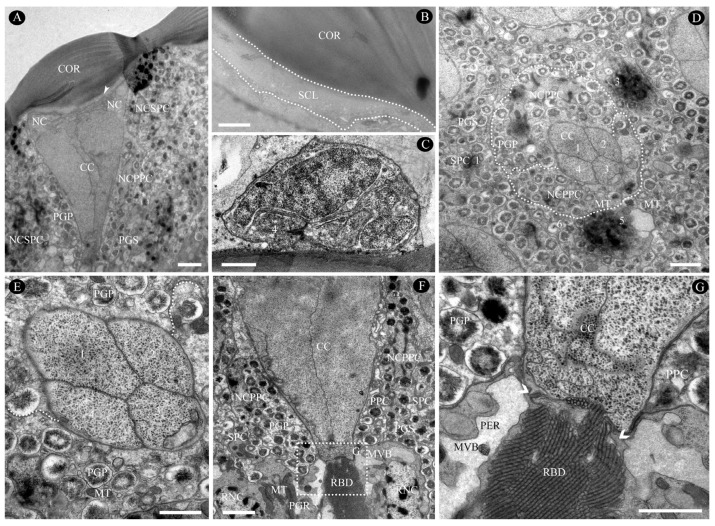 Figure 6
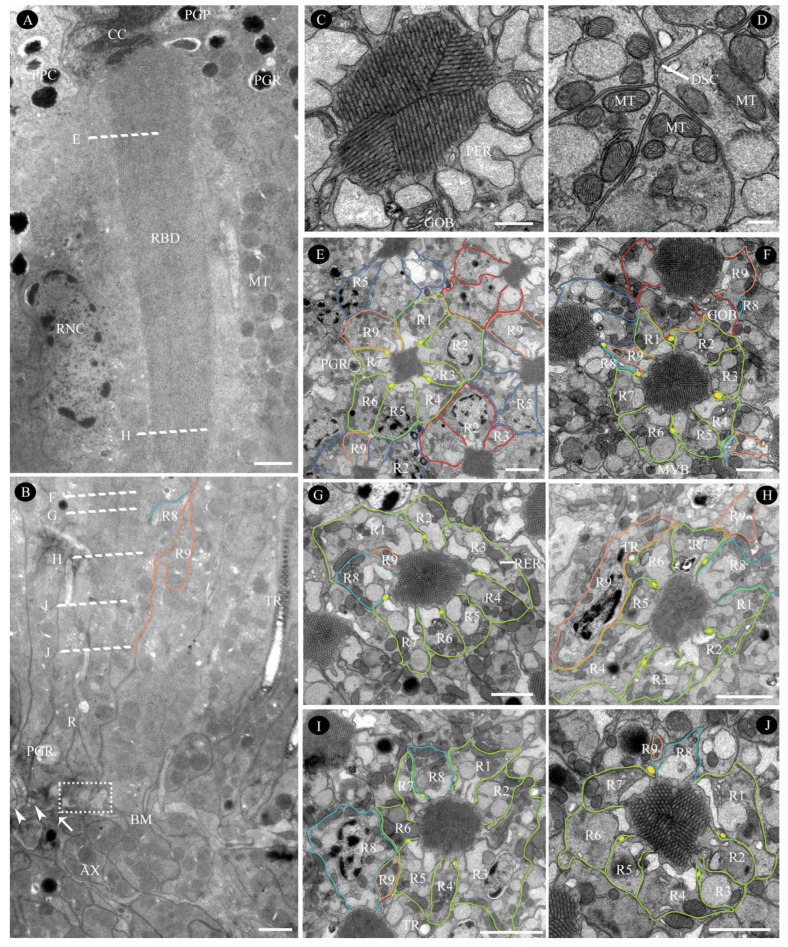 Figure 7
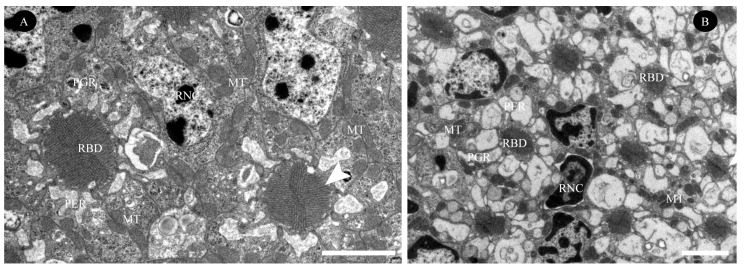 Figure 8
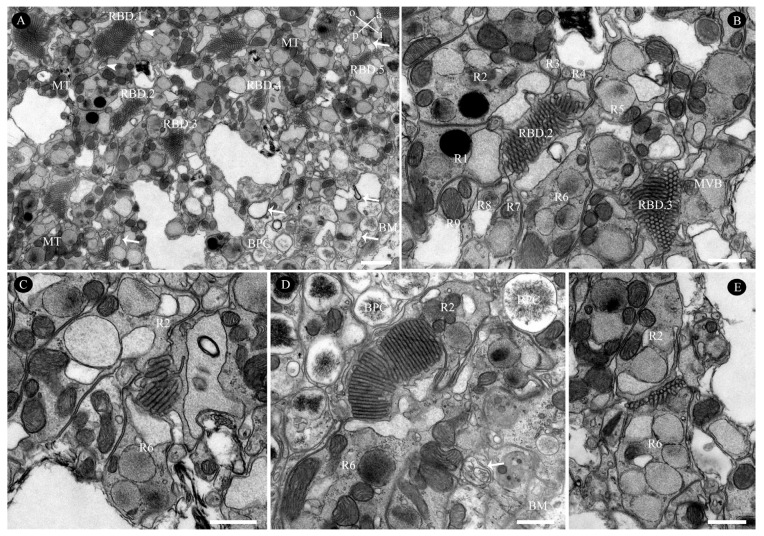 Figure 9
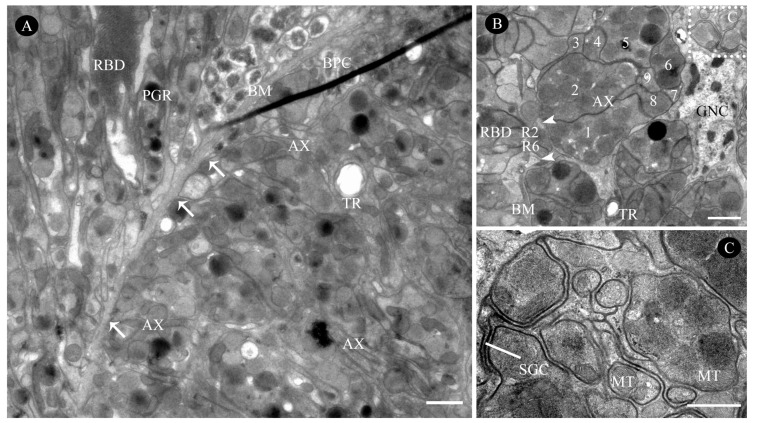 Figure 10
Peer Reviews
No public reviews on file for this paper yet. If you reviewed it on a platform where reviews are public (OpenReview, ICLR, NeurIPS, ICML), you can paste yours below so the community can read it here.
Videos
No videos yet. Explain this paper in a talk, walkthrough, or lecture? Add one.
Taxonomy
TopicsPlant and animal studies · Insect and Arachnid Ecology and Behavior · Insect and Pesticide Research