Listening Until the End: Best Practices and Guidelines for Auditory Care in Palliative Sedation in Europe
Ismael Rodríguez-Castellanos, María Isabel Ortega González-Gallego, Alberto Bermejo-Cantarero, Raúl Expósito-González, Julián Rodríguez-Almagro, Sandra Martínez-Rodríguez, Andrés Redondo-Tébar

TL;DR
This paper reviews European guidelines for palliative sedation to improve auditory care practices at the end of life, emphasizing the importance of preserving hearing even when patients appear unconscious.
Contribution
The paper proposes new humanization strategies for integrating auditory care into palliative sedation protocols in Europe.
Findings
Current guidelines lack explicit protocols for auditory care despite acknowledging the importance of environmental sound management.
There is limited consensus on whether hearing is preserved during unconsciousness in palliative sedation.
The paper suggests family education, therapeutic sound protocols, and staff training to address these gaps.
Abstract
Background/Objectives: Auditory capacity plays a fundamental role in human emotional development from prenatal stages and persists as the last sensory modality to fade during terminal phases. In palliative sedation, uncertainty about preserved hearing—despite potential unconsciousness—underscores the need to evaluate current care recommendations for this critical sensory dimension. This review examines European guidelines to (i) assess auditory care integration in palliative sedation protocols and (ii) propose humanization strategies for sensory-preserving end-of-life care. Methods: Narrative review of evidence from the European Palliative Sedation Repository and the European Association for Palliative Care (EAPC). Results: Three key findings emerged: (i) lack of explicit protocols for auditory care despite acknowledging environmental sound management (e.g., music, family…
Genes, proteins, chemicals, diseases, species, mutations and cell lines named across the full text — each resolved to its canonical identifier and authoritative record.
Click any figure to enlarge with its caption.
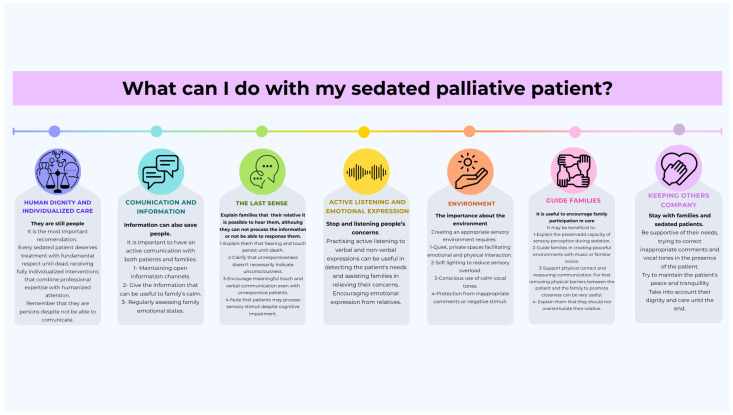 Figure 1
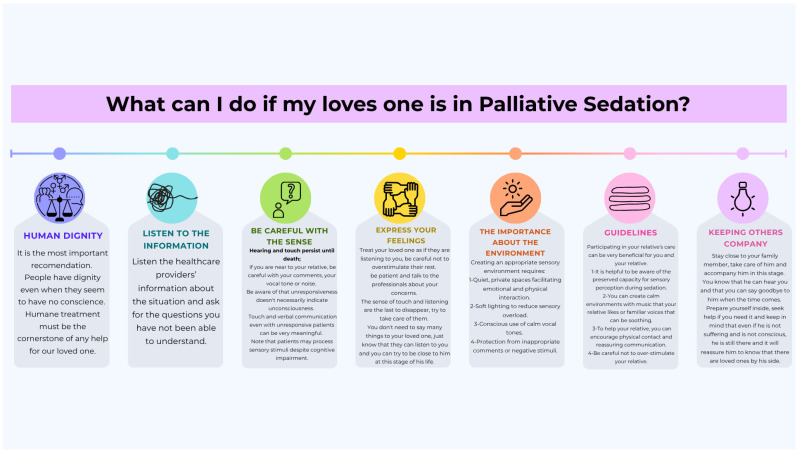 Figure 2
Peer Reviews
No public reviews on file for this paper yet. If you reviewed it on a platform where reviews are public (OpenReview, ICLR, NeurIPS, ICML), you can paste yours below so the community can read it here.
Videos
No videos yet. Explain this paper in a talk, walkthrough, or lecture? Add one.
Taxonomy
TopicsMusic Therapy and Health · Intensive Care Unit Cognitive Disorders · Hearing Loss and Rehabilitation