Recombinant human alpha-N-acetylglucosamine-6-sulfatase delivered to Sanfilippo D mice with repeated intracerebroventricular injections corrects CNS pathology
Grant L. Austin, Feng Wang, Steven Q. Le, Alexander Sorensen, Shan Li, Lai C. Foong, Srikanth Singamsetty, Jill Wood, Tsui-Fen Chou, Patricia I. Dickson

TL;DR
Repeated brain injections of a human enzyme in mice with Sanfilippo D disease reduced brain pathology and inflammation, showing potential for treating this condition.
Contribution
Demonstrates preclinical efficacy of repeated intracerebroventricular enzyme replacement therapy in adult Sanfilippo D mice.
Findings
Dose-dependent reductions in heparan sulfate and neuroinflammation markers were observed in treated mice.
Proteomic perturbations associated with the disease were corrected by rhGNS treatment.
CNS pathology was restored even with 14-day treatment intervals in adult mice.
Abstract
Mucopolysaccharidosis type IIID (MPS IIID; Sanfilippo D) is caused by biallelic pathogenic variants in N-acetylglucosamine-6-sulfatase (GNS), which participates in catabolism of heparan sulfate (HS) glycosaminoglycans. Characterization of MPS IIID disease at a cellular level has not been robustly achieved. We used unbiased quantitative proteomics to establish a cellular phenotype for MPS IIID mice. Recombinant human GNS (rhGNS), a variant of which previously demonstrated single dose efficacy in MPS IIID human fibroblasts and in MPS IIID neonatal mice, was used to establish a repeat dosing schedule to treat MPS IIID mice. Adult Gns KO mice or heterozygous carriers were treated via intracerebroventricular (ICV) injections and received 3, 30, or 200 μg rhGNS in 4 doses over 2 weeks or vehicle. Twenty-four hours after the final dose, HS in brain and CSF showed dose-dependent reductions,…
Genes, proteins, chemicals, diseases, species, mutations and cell lines named across the full text — each resolved to its canonical identifier and authoritative record.
Click any figure to enlarge with its caption.
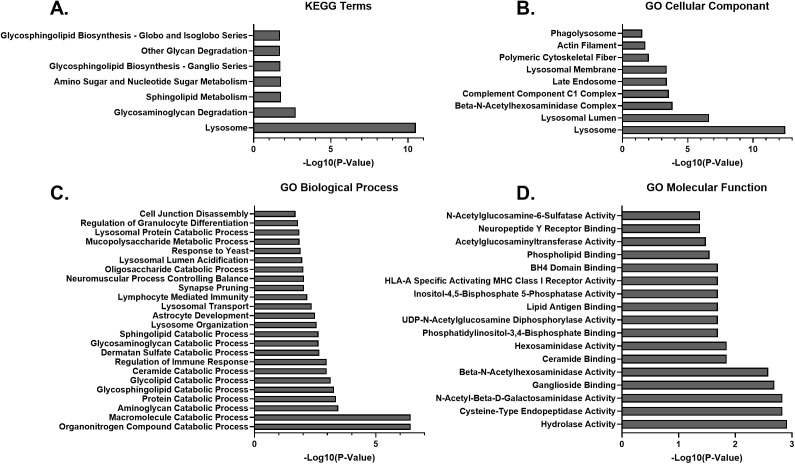 Figure 1
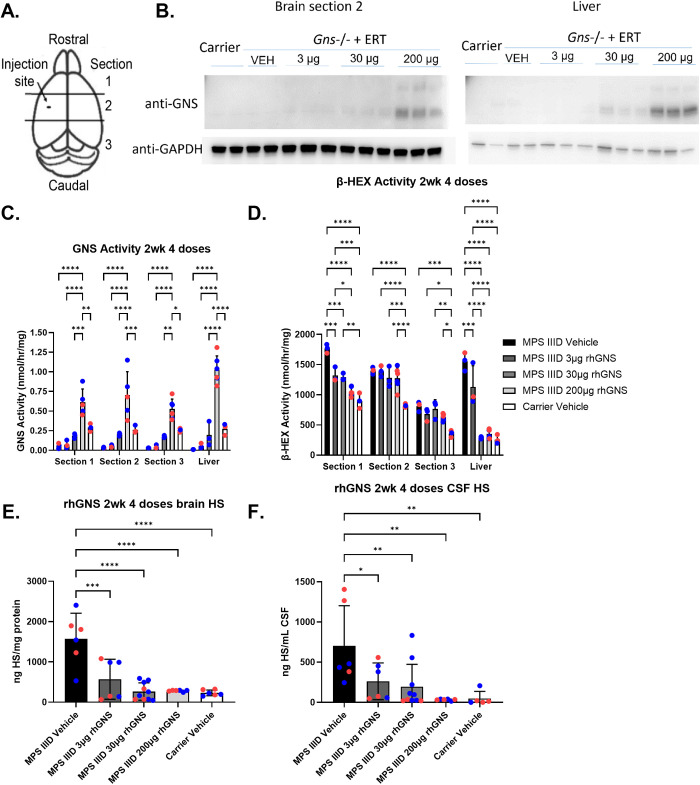 Figure 2
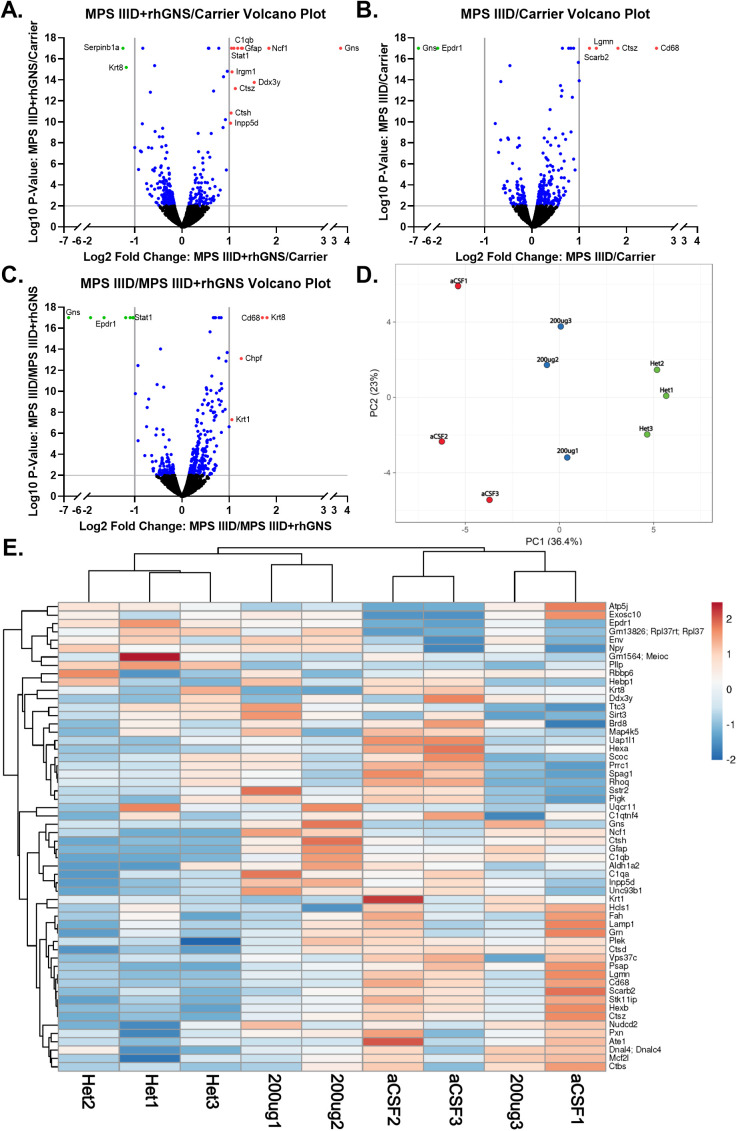 Figure 3
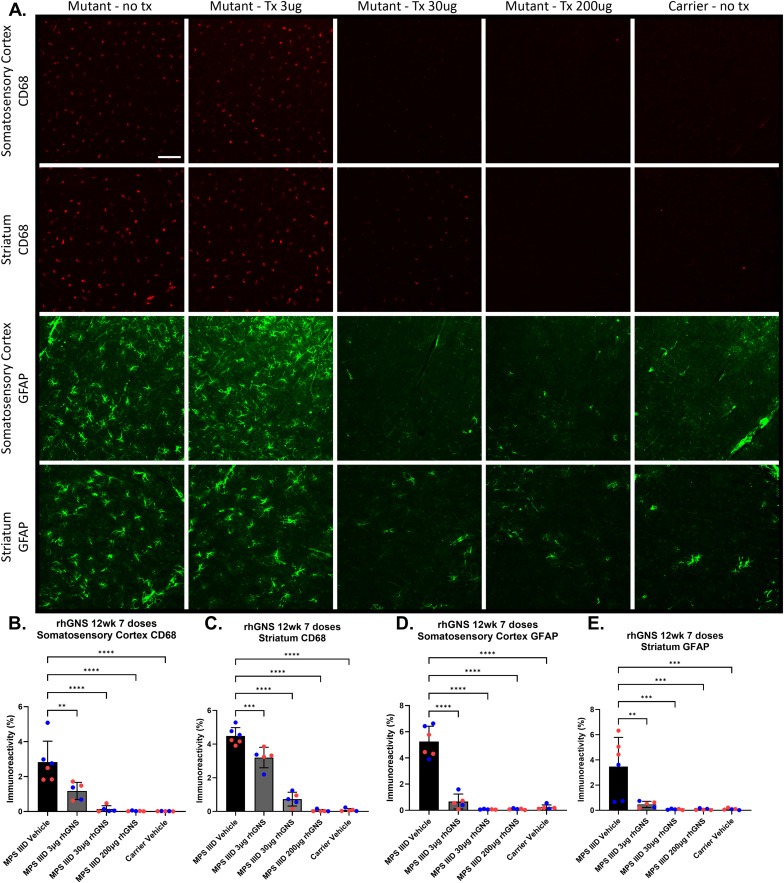 Figure 4
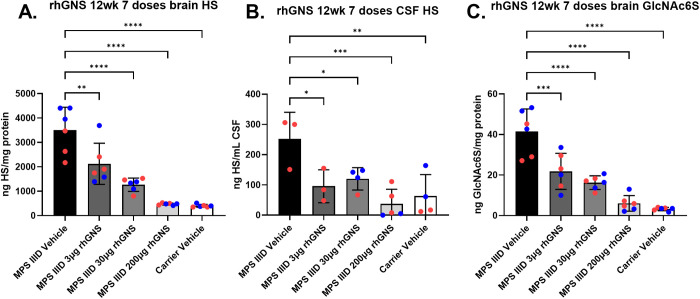 Figure 5
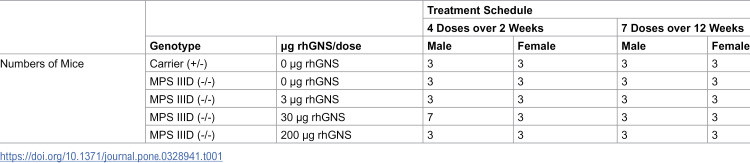 Figure 6
Peer Reviews
No public reviews on file for this paper yet. If you reviewed it on a platform where reviews are public (OpenReview, ICLR, NeurIPS, ICML), you can paste yours below so the community can read it here.
Videos
No videos yet. Explain this paper in a talk, walkthrough, or lecture? Add one.
Taxonomy
TopicsLysosomal Storage Disorders Research · Trypanosoma species research and implications · Research on Leishmaniasis Studies