Eight New Sedum Plastomes: Comprehensive Analyses and Phylogenetic Implications
Liying Xu, Shiyun Han, Yingying Xiao, Mengsa Zhang, Xianzhao Kan

TL;DR
This study analyzes the plastomes of eight Sedum species to better understand their evolution and phylogenetic relationships within the Crassulaceae family.
Contribution
The study identifies a unique IR extension in Sedum and provides a more comprehensive phylogenetic analysis using a larger dataset of plastomes.
Findings
A unique 110 bp IR extension into rps19 was found in Sedum, a feature conserved across Crassulaceae.
S. emarginatum is more closely related to S. makinoi than to S. alfredii, which is sister to S. plumbizincicola.
The study confirms the polyphyly of Sedum and contributes to the understanding of Saxifragales evolution.
Abstract
Background: Sedum, with the largest number of species in the family Crassulaceae, is a taxonomically complex genus and an important group of horticultural plants within this family. Despite extensive historical research using diverse datasets, the branching patterns within this genus and the family remain debatable. Methods: In this study, we conducted sequencing and comparative analyses of plastomes from eight Sedum species, focusing on the diversities in nucleotide, microsatellite repeats, putative RNA editing, and gene content at IR junctions. The phylogenetic inferences were further conducted at the order level—Saxifragales. Results: Our IR junction analyses of the eight investigated Sedum species detected a unique 110 bp IR extension into rps19, a feature highly conserved across Crassulaceae species, indicating a remarkably family-specific pattern. Additionally, we obtained 79 PCGs…
Genes, proteins, chemicals, diseases, species, mutations and cell lines named across the full text — each resolved to its canonical identifier and authoritative record.
Click any figure to enlarge with its caption.
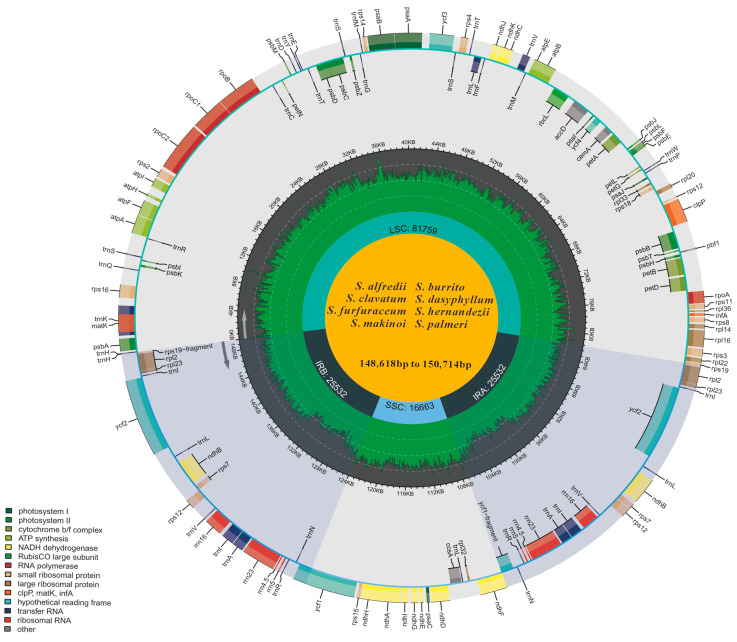 Figure 1
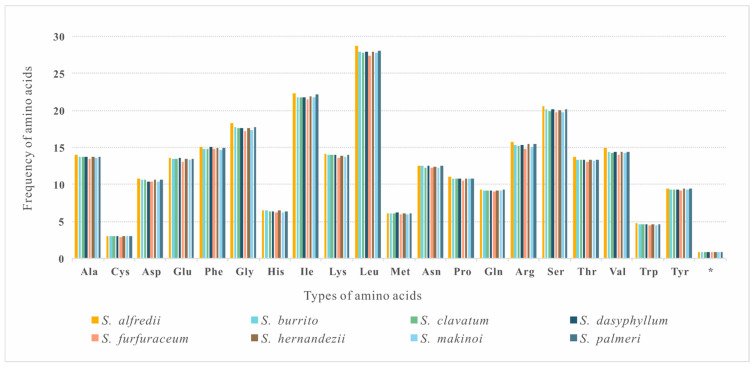 Figure 2
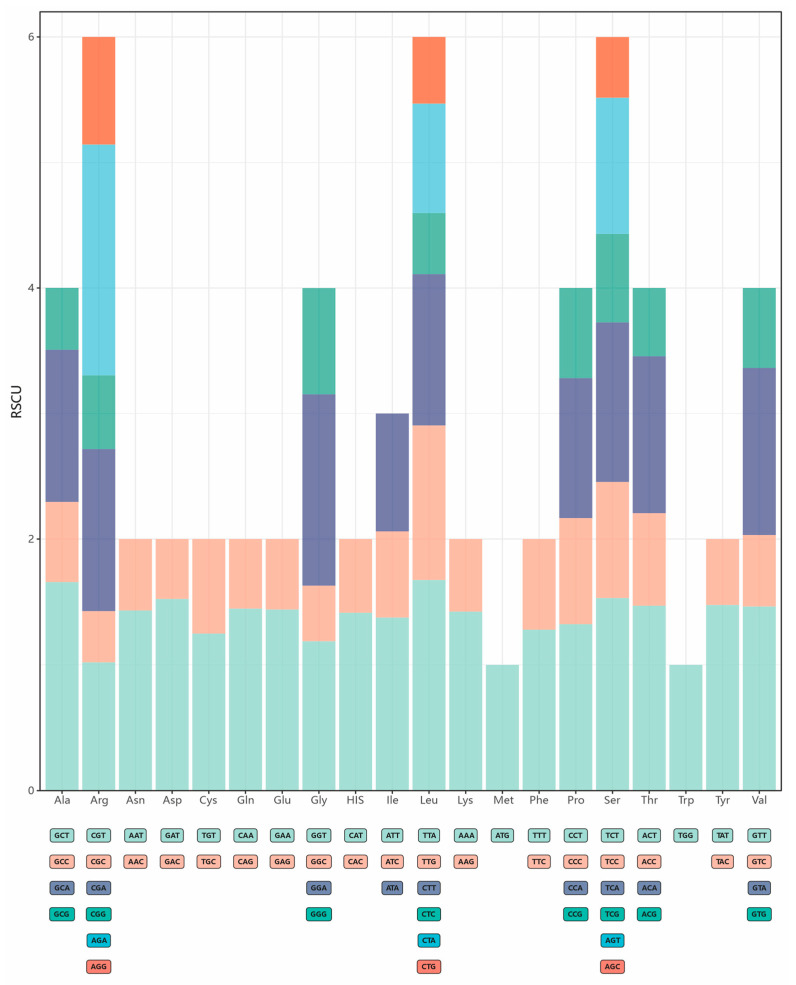 Figure 3
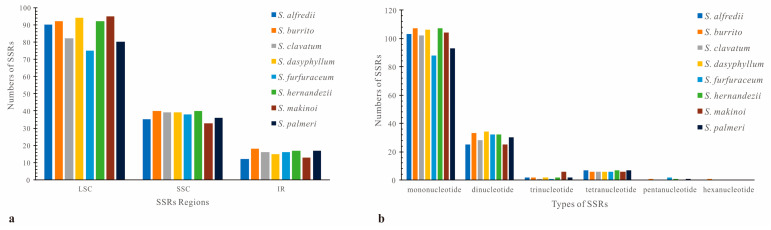 Figure 4
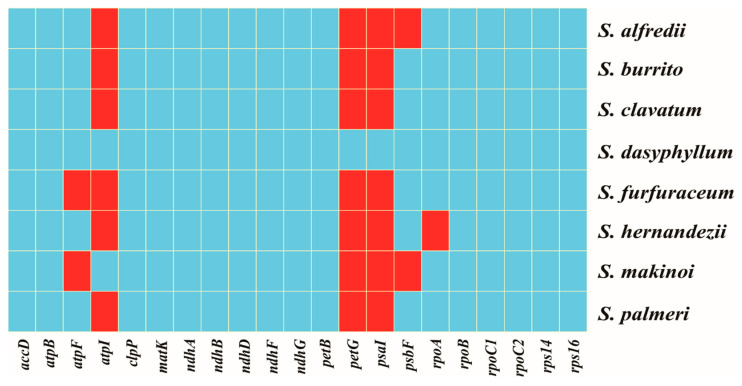 Figure 5
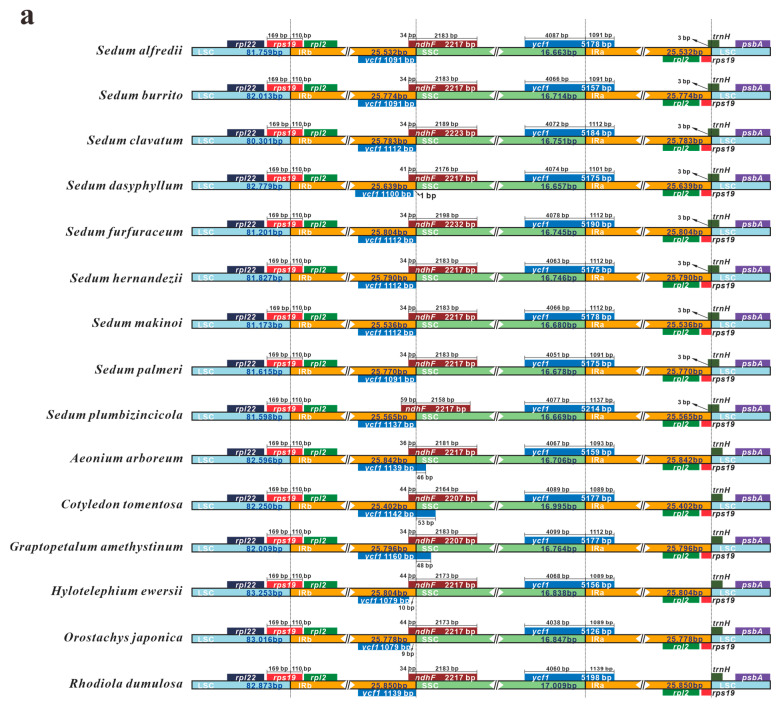 Figure 6
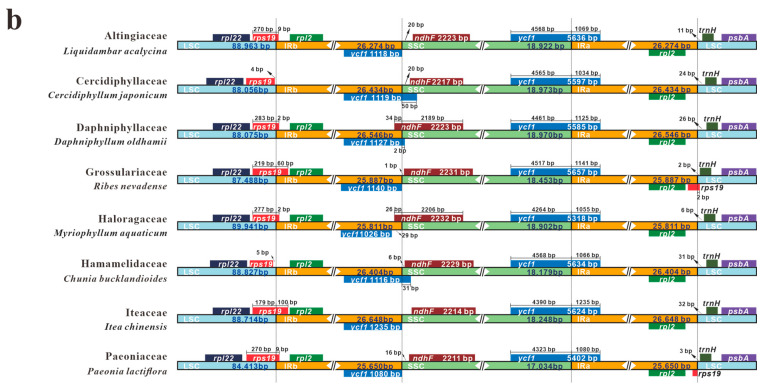 Figure 7
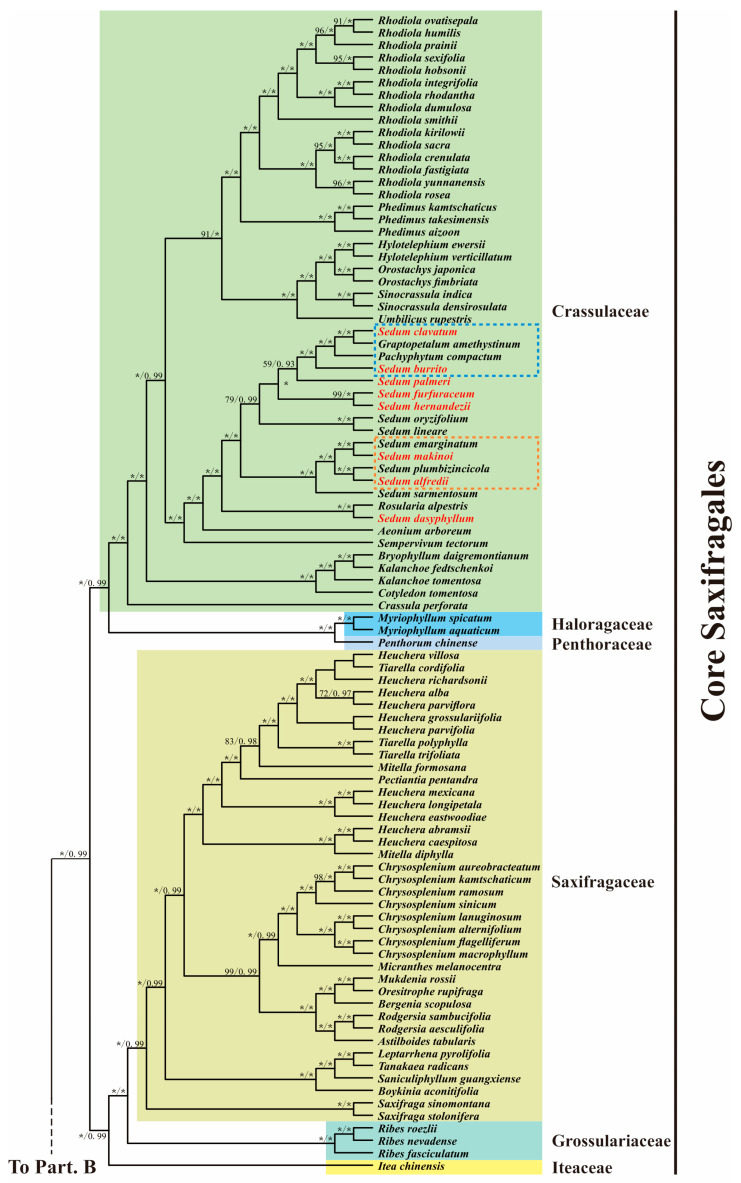 Figure 8
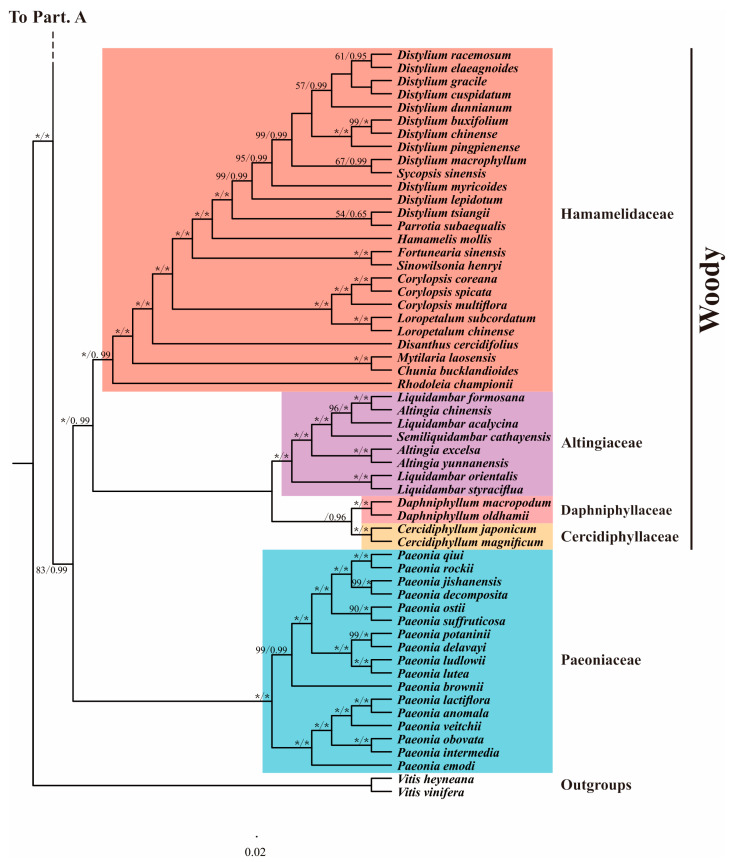 Figure 9
- —Wuhu Functional Agriculture Technology R&D Center
- —Science and Technology Innovation Team of Wuhu Institute of Technology
- —2024 Annual Open Research Topics of Anhui Provincial Rural Revitalization Collaborative Technical Service Center, China
- —2024 Open Fund Projects of the National and Local Joint Engineering Laboratory for Crop Stress Resistance Breeding and Disaster Mitigation
Peer Reviews
No public reviews on file for this paper yet. If you reviewed it on a platform where reviews are public (OpenReview, ICLR, NeurIPS, ICML), you can paste yours below so the community can read it here.
Videos
No videos yet. Explain this paper in a talk, walkthrough, or lecture? Add one.
Taxonomy
TopicsPlant Diversity and Evolution · Genomics and Phylogenetic Studies · Plant Ecology and Taxonomy Studies
1. Introduction
Sedum, the most species-rich genus of the family Crassulaceae (Saxifragales), consists of approximately 470 divergent species [1], accounting for one-third of the whole family [2]. This genus has a long and complicated taxonomic history, with Sedum morphology being particularly difficult to distinguish [2]. At first, Sedum was placed in the subfamily Sedoideae according to a previously widely accepted classification [3,4]. Later, with improvements in phylogenetic inference methods, it was reclassified into Sempervivoideae [5,6], which is now widely accepted. This genus has been widely perceived as complex in taxonomy. Sedum was first considered polyphyletic by Van Ham in 1998 [7]. Over time, many research efforts have been devoted to exploring the phylogenetic affinities within Sedum [8,9,10,11,12]. However, the polyphyletic nature of this genus consistently poses an obstacle to elucidating its internal branching patterns. To date, based on limited published data, the evolutionary relationships with this genus remain controversial and poorly understood [1,2,13], requiring more data and further investigation.
The plastid plays a pivotal role in photosynthesis as well as plant growth and the synthesis of essential metabolites [14]. Although linear plastomes have also been reported [15,16], land plant plastomes generally possess remarkably conserved structures, and mostly display a circular quadripartite structure [17,18,19,20]. The plastome not only evolves slowly [14,19] but also is mostly single-parent inherited, making it an ideal candidate for phylogenetic research [14,21,22,23]. More significantly, our previous works have revealed several plastomic features possessing significant phylogenetic implications, such as gene content adjacent to IR junctions [24,25] and unique codon usage patterns [26,27]. Currently, despite its sufficiently meaningful status in Crassulaceae as well as high research value and taxonomic complexity, the available plastome resources of Sedum remain surprisingly limited. Therefore, a comprehensive plastomic investigation and phyloplastomic inferences based on more samples are urgently required. These will shed light not only on the internal relationships of Sedum and Crassulaceae but also their plastomic evolution.
Here, we newly sequenced the complete plastomes of eight species of Sedum and report them herein. This work can supplement existing data resources and will be advantageous in terms of gaining insight into the evolution of this genus with relatively wide sampling. Notably, this study aimed to (1) explore the plastomic evolution and inter-species diversity of Sedum, (2) compare the characteristic patterns of gene content at the IR boundaries in Sedum and the family Crassulaceae, and (3) promote the understanding of phylogenetic affinities under a rather wide sampling scale.
2. Materials and Methods
2.1. Sample Material, DNA Extraction, and Sequencing
Fresh leaf samples from eight Sedum species, namely, S. alfredii, S. burrito, S. clavatum, S. dasyphyllum, S. furfuraceum, S. hernandezii, S. makinoi, and S. palmeri, were collected from the greenhouse of Anhui Normal University (Wuhu, Anhui, China). All eight species are included in the largest major clade of Crassulaceae, the Acre clade. We used the CTAB method for genomic DNA extraction. A TruSeq DNA PCR-Free Library Prep Kit (Illumina, San Diego, CA, USA) was used to construct the library, and then sequencing was performed through an Illumina HiSeq X Ten (Novogene Co., Ltd., Beijing, China) with a 150 paired-end strategy.
2.2. Genome Assembly and Annotation
After the quality checking of raw reads with FastQC v.0.12.1 [28], the sequenced high-quality clean reads were assembled in GetOrganelle v.1.7.7.1 [29], taking the plastome of S. plumbizincicola (MN185459.1) [30] as a reference. The generated assembly results were then annotated using GeSeq v.2.03 [31], and the junctions of quadripartite regions were verified. The annotation results were further checked and modified manually. We subsequently visualized these plastomes using Chloroplot [32].
2.3. Codon Usage, Putative RNA Editing Sites, and IR Junction Analysis
In the codon usage analysis, we used MEGA 12 [33] to determine the relative synonymous codon usage (RSCU) values of protein coding genes (PCGs). For the presumptive RNA editing sites, PREP-Cp [34] was applied with a 0.8 cutoff. An overall comparison of the quadripartite boundary sites among the eight plastomes was performed with IRscope [35], which was further corrected and plotted manually. Moreover, we conducted larger-scale IR junction analyses, including six Crassulaceae plastomes from different genera and eight Saxifragales plastomes covering multiple families (marked in Table S1).
2.4. Microsatellite Repeat Analysis
With the removal of one copy of the IR regions, we used MISA-web (a tool for microsatellite prediction) [36] to investigate potential simple sequence repeats (SSRs) in the eight plastomes. The criteria for SSR identification included thresholds of 8, 4, and 3 repeats for mono-, di-/tri-, and tetra-/penta-/hexanucleotide SSRs, respectively.
2.5. Phylogenetic Analysis
To gain insights into the phylogeny of Sedum and Crassulaceae, we conducted phylogenetic inferences using a broad sampling scale across the order Saxifragales. We downloaded 140 plastomes of Saxifragales species from the NCBI database, along with 2 Vitales species as outgroups (see Table S1 for details). Generally, we extracted 79 PCGs from a total of 150 species and multiply aligned them with MAFFT v.5.3 [37]. To infer phylogeny of Saxifragales, we employed two different methods for tree reconstruction: (1) RAxML v.8.2.12 [38] using the maximum likelihood (ML) method, with the GTRCAT model and a bootstrap analysis of 50 runs and 1000 replicates; and (2) MrBayes v.3.2.6 [39] using the Bayesian inference (BI) method, calculating the best-fit models for each gene with ModelTest-NG v.0.1.7 [40], with four Markov chains running twice for 10 million generations.
3. Results
3.1. Plastid Genome Organization and Features
The assembled plastomes of eight Sedum species ranged in size from 148,618 to 150,714 bp, displaying typical quadripartite structures containing LSC regions (80,301–82,779 bp) and SSC regions (16,657–16,751 bp), which were flanked by a pair of IR regions (25,532–25,804 bp for single IR copy) (Figure 1). All species displayed similar GC content, with IR regions having the highest GC content, followed by SSC and LSC (Table 1). Found to be extremely conserved, the gene content exhibited strong similarities among the eight Sedum species. The sampled plastomes all harbored 133 genes, comprising 85 PCGs, 8 rRNAs, 36 tRNAs, and 4 pseudogenes (Table S2). There were 17 genes containing introns, involving 12 CDSs and 5 tRNAs. Of these, 14 genes had one intron, and 2 genes (ycf3 and clpP) each harbored two introns. The two 3′-end exons of the trans-splicing rps12 gene are located within the IR region, while the 5′-end exon is present in the LSC region. Furthermore, owing to the location of the ycf1 gene, at the IRa-SSC boundary, a truncated copy was found in the corresponding IRb region. A similar case was observed in the rps19 gene.
3.2. Comparative Analyses of Nucleotide Composition, Codon Usage, and Amino Acid Frequencies
The nucleotide composition was compared among the eight Sedum species, showing high similarity. The eight plastomes all showed an AT bias, ranging from 62.04% to 62.25%, with a slight T-skew (AT-skew ranges from −0.00853 to −0.00708) and C-skew (GC-skew ranges from −0.01908 to −0.01745) (Table 2). In the protein coding sequences (CDSs), Thymine and Adenine tend to be remarkably uniform, with occurrences of 54.5% (position 1), 62.2% (position 2), and 70.2% (position 3) in codons. Detailed results for each plastome are shown in Table S3. Further analysis of the amino acid frequency among the eight plastomes revealed a highly analogous pattern, in which Leucine was the most abundant amino acid, while Cysteine was detected as the rarest (Figure 2).
Within the protein coding regions of the eight plastomes, sixty-four synonymous codons were found. Compared to codons that ended with G/C, those consisting of A/T at the third position showed a higher frequency and encoded most of the amino acids. To gain better insight into the synonymous codon usage pattern, we determined the RSCU values of the eight plastomes (Figure 3, Table S4a–h). In this analysis, the codons ATG and TGG were found to be unbiased, and all eight plastomes preferred A/T-ending codons to G/C-ending ones. Moreover, the most frequent initial codon was investigated and found to be ATG, whereas other types were also identified in some genes, including ACG and GTG.
In addition to these conserved codon usage patterns, we discovered several interspecific heterogeneities. An innovative comparison tool, significantly variable codons (SVCs), was developed here to compare RSCU patterns among species. The SVCs represented codons with a distinct bias (preferred when RSCU > 1; unpreferred when RSCU ≤ 1) between taxa. A total of 16 SVCs were identified (Table S4i). Notably, these codons might potentially serve as unique markers for two Sedum species: S. burrito and S. palmeri. Nine of the sixteen SVCs were exclusively possessed by S. burrito, while S. burrito and S. palmeri shared the remaining seven.
3.3. Microsatellite Repeat Polymorphisms
In these eight Sedum plastomes, we detected abundant SSRs (129 to 150 per genome), with several variations in both repeat types and numbers. The majority of the whole SSRs across these plastomes were universally composed of mononucleotide repeats (Figure 4b). Their occurrence rates typically ranged from 68.2% to 75.2%. For instance, S. alfredii showed a rate of 75.2%, S. burrito was 71.3%, and S. furfuraceum was 68.2%. In contrast, penta- and hexanucleotides were rarely identified. Additionally, the overwhelming majority of these mono-SSRs in all eight plastomes were of the A/T type. As shown in Figure 4a, most SSR loci among the eight Sedum species were located in the LSC region, followed by the SSC and then the IR regions. Detailed information on the types and frequencies of the SSRs is displayed in Table S5.
Despite these similarities, several variations were also found. Among all eight plastomes, S. makinoi contained the most trinucleotide SSRs (six, while the others only had one to two). Furthermore, no hexanucleotide SSRs were detected, except for S. burrito. In summary, the SSRs among the eight Sedum plastomes presented abundant diversity.
3.4. Prediction of RNA Editing Sites
RNA editing events represent an important mechanism for altering RNA sequences to ensure the essential synthesis of proteins. To the best of our knowledge, RNA editing is widespread in land plant plastids [41,42]. The analysis conducted on PREP-Cp revealed putative RNA editing sites in the protein coding sequences of the eight Sedum plastomes. These sites exhibited a certain level of similarity, with the most abundant RNA editing sites predicted in ndhB (9–11) and rpoC2 (4–6) in all eight plastomes. Notably, one consistent pattern across all eight Sedum plastomes was that nearly half of the RNA editing sites (43.9–56.1%) occurred in codons encoding Serine. Of these, the most frequent amino acid conversion type was Serine to Leucine. In all these plastomes, RNA editing events mostly occurred at the second nucleotide (73.2–80.5%), followed by the first position (19.5–26.8%). Moreover, almost all the other amino acids had a single kind of conversion, with the exception of Proline, which converted to Serine via first-position editing and to Leucine via second-position editing (Table S6).
With an overview of the specific distribution of putative editing sites in the eight plastomes (Figure 5), two remarkable results were observed. First, S. dasyphyllum had conspicuously more editing sites in more genes (52 sites in 21 genes) than the other species, including unique sites in petG and psaI. Second, RNA editing loci were predicted in rpoA in all plastomes except S. hernandezii.
3.5. IR Contraction and Expansion
A comparative analysis of IR contraction and expansion was performed on the eight Sedum plastomes, together with other species belonging to Crassulaceae (Figure 6a) and Saxifragales (Figure 6b). The Crassulaceae species showed both similarities and unique features. For instance, due to the functional ycf1 gene occupying the IRa region, all these plastomes contain a complete ycf1^Ψ^ (a pseudo-copy of ycf1) within the IRb region, extending to the SSC/IRb boundary. Furthermore, the ndhF gene typically extended across the SSC region (largely) and into the IRb region (partially). Overlaps of 34–59 bp were detected between the ycf1^Ψ^ and ndhF genes in all Crassulaceae plastomes.
Strikingly, a unique feature was discovered in Crassulaceae plastomes when compared with representative plastomes from other families within the order Saxifragales. In Crassulaceae species, the rps19 gene is situated at the LSC/IRb junction, with the IRb region extending 110 bp into this gene. However, our results indicate that this extension was absent in the other examined families of Saxifragales.
3.6. Phylogenetic Analysis
In addition to our eight Sedum species, we obtained 140 Saxifragales species plastomes, representing 11 of the 15 families [43], along with two Vitales taxa used for outgroup comparison. After alignment and concatenation, the sequence matrix length was 73,719 bp. Our phylogenetic analyses revealed nearly identical tree topologies between the ML and BI approaches (Figure 7). In general, the order Saxifragales comprised two major clades. The woody clade (containing Altingiaceae, Cercidiphyllaceae, Hamamelidaceae, and Daphniphyllaceae), alongside Paeoniaceae, clusters into a specific clade, which is the sister group to the core Saxifragales clade. The core clade further divides into two distinct lineages: a Crassulaceae + (Haloragaceae + Penthoraceae) clade sister to the Saxifragaceae alliance (comprising (Saxifragales + Grossulariaceae) + Iteaceae), which is in agreement with previous research based on fewer taxa [30,44] or other types of datasets [44,45].
The polyphyly of Sedum is well captured by our cladogram (Figure 7). The phylogenetic analysis based on the matK gene by Mort et al. [9] indicated that S. clavatum is sister to (Pachyphytum compactum + S. burrito). However, in our study, the cladogram strongly supported a closer placement of P. compactum with S. clavatum than S. burrito (ML bootstrap = 100 and BI probability = 1.0). Furthermore, we found, with strong support, that S. emarginatum was more closely related to S. makinoi than to S. alfredii. This finding differs from that of Messerschmid et al. [1], who reported S. alfredii as sister to S. plumbizincicola [30].
4. Discussion
In this study, we newly report the plastomes of eight species of the genus Sedum and present comparative plastome analyses. To gain insight into evolutionary relationships at both the genus and family (Crassulaceae) levels, phylogenetic analysis was performed at the order level, Saxifragales. Given the important role of Sedum in the family Crassulaceae, we believe that this study will contribute to expanding knowledge about its evolutionary history.
Plastomes have been widely used for phylogenetic analyses [23,46,47,48,49,50], as they usually have conserved genome structures and gene contents. However, gene loss events have also been reported in some lineages [30,51,52,53]. In this study, the eight Sedum plastomes all possessed 133 genes, comprising 85 PCGs, 8 rRNAs, 36 tRNAs, and 4 pseudogenes. This pattern of gene content is conserved across four other previously published Sedum plastomes. Furthermore, we analyzed the plastome structures and gene properties of all 148 Saxifragales species, covering 11 different families. The loss events of infA and rpl32 were detected in all 17 plastomes of Paeoniaceae, reinforcing Ding et al.’s conclusions [30]. These specific gene losses can serve as potential phylogenetic markers in Paeoniaceae.
Codon usage bias (CUB) is a well-established ideal candidate for investigating the evolution of different organisms [54,55]. It is also widely employed to comprehend evolutionary patterns in genes [56,57]. The codon usage patterns of the eight Sedum species reported here exhibited a high degree of similarity, indicating strong conservation at the genetic level during plastid evolution. Regarding the RSCU values of each plastome, a consistent trend was observed in the eight Sedum species we investigated: they all obviously preferred codons ending with A/T over G/C. This finding supports previous reports on angiosperm plastids [23,46]. In terms of start codon selection, besides the most common one (ATG), occurrences of a few other types have been found in some plastid genes, including ACG and GTG (in ndhD, psbC, and rps19). Similar cases can be found in many studies [23,58,59]. Interestingly, the performance of these non-ATG start codons usually involves two strategies: using them directly or converting them back to ATG through RNA editing. Based on transcriptome data, Wang et al. [58] observed that some alternative start codons in certain genes underwent such editing events, while others remained unedited. This implies that unedited transcripts may have distinct functions. Further attention should be paid to understanding the underlying mechanisms of these editing events, with future studies investigating their potential phylogenetic implications. We additionally explored the SVCs among our eight plastomes. Remarkably, nine unique SVCs could act as potential markers for S. burrito. However, no significant phylogenetic implications were observed in SVC distributions, especially for the relationship between S. burrito and S. palmeri, which were not the most closely related sister group. This phenomenon potentially indicates that, despite several divergences observed, the codon usage of plastid PCGs is still conserved; however, using only limited samples meant that we could not clearly infer the relationships between these very closely related species. Therefore, a wider sampling scale and in-depth exploration remain crucial.
Repetitive DNA is widely recognized as a fundamental component in genomes that plays a dominant role in evolution [60]. Furthermore, because strong selection on a gene also reduces polymorphism in adjacent, genetically linked regions, the variation patterns of repetitive DNA serve as a useful tool for identifying these precise genomic loci [61]. Simple sequence repeats (SSRs) are important molecular markers that are widely used in genetic mapping, population structure, and phylogenetic study [62,63,64]. The MISA analysis identified 129 to 150 SSRs in each of the eight Sudum plastomes. The SSR patterns in these plastomes present both similarities and divergences. Among all of the plastomes, mononucleotide repeats harbored much larger quantities compared with other types. Regarding the repeat unit types, A/T SSRs and AT/TA SSRs comprised a substantial portion of mono- and dinucleotide repeats, respectively. The SSRs of these plastomes also exhibited species-specific variations. For example, trinucleotide repeats were much more numerous in S. makinoi than in the other species, while hexanucleotide SSRs were rare in S. burrito. Despite these variations, it is difficult to accurately differentiate these closely related species based solely on SSR length [58]. Notably, Schug et al. hypothesized that the mutation rate of SSRs may be directly proportional to the repeat unit lengths [65]. This indicates the importance of identifying variation in the mutation rates of SSRs when using them as markers for tracking evolutionary events [65].
Although the plastome structures of land plants are generally conservative, they still show variation. The most classic example of this is the contraction and expansion of the IR regions, which results in genome size variations. As a key feature in plant evolution [46,49,66], the boundaries of the IR regions are widely considered useful for illuminating evolutionary intricacies [23,67]. For this reason, comparisons should be conducted not only within genera but also at higher levels, such as families and orders. In this study, we compared our eight Sedum species with other species at three hierarchical levels: the genus Sedum, the family Crassulaceae, and the order Saxifragales. Remarkably, we discovered a unique pattern in the IR junctions of Crassulaceae plastomes. In all of the analyzed Crassulaceae species, the rps19 gene is located at the LSC/IRb junction, and the IRb regions all extend 110 bp into this gene. This conserved pattern could serve as a potential phylogenetic marker for the Crassulaceae family. Moreover, Han et al. [68], in a comparison within Saxifragales, also exclusively discovered the same unique pattern in Crassulaceae rps19 genes. Based on this, we presume that this special characteristic might be a plesiomorphy. This evidence contributes to a better understanding of the evolutionary history and has potential use for species identification within Crassulaceae, after further verification using more data and samples.
Our phylogenetic analysis, based on 79 plastid PCGs, robustly demonstrated the polyphyly of Sedum and shed light on relationships at deeper nodes. Within Crassulaceae, all analyzed genera (Rhodiola, Phedimus, Hylotelephium, Orostachys and Sinocrassula) were strongly supported as monophyletic, with the exception of the polyphyletic Sedum. Messerschmid et al. [1] attributed this polyphyly to “Linnaeus’s folly”—treating Sedum as a hold-all genus—and pointed out that the original circumscription of Sedum crucially needs to be reclarified. Based on both molecular (one nuclear and three plastid gene loci) and morphological considerations, they preliminarily proposed to move all species of the tribe Sedeae into Sedum. However, further verification using more samples is needed to support this solution. More importantly, multiple molecular datasets are also essential, considering that phyloplastomic construction could be easily affected by plastid capture or hemiplasy. Here, compared with the previous work, the different taxonomic relationships of S. alfredii, S. burrito, S. clavatum, S. emarginatum, and S. makinoi that were intensively supported by our inferences may be ascribed to our larger range of species and greater scale of sequence data. It is worth noting that our findings may provide new insights into resolving the confounding phylogeny within Sedum.
In summary, this study is the first to report the complete plastomes of eight Sedum species and presents a comprehensive analysis of them. The unique pattern in the IR junctions of Crassulaceae may potentially provide a new tool for species identification. Furthermore, the well-resolved phylogenetic tree based on 79 PCGs from 148 taxa has clarified taxonomic relationships within the order Saxifragales. Taken together, this work provides a valuable genomic resource and a robust phylogenetic framework that will facilitate future evolutionary studies in this group.
The reference list from the paper itself. Each links out to its DOI / PubMed record.
- 1Messerschmid T.F.E. Klein J.T. Kadereit G. Kadereit J.W. Linnaeus’s folly—phylogeny, evolution and classification of Sedum (Crassulaceae) and Crassulaceae subfamily Sempervivoideae Taxon 20206989292610.1002/tax.12316 · doi ↗
- 2Nikulin V.Y. Gontcharova S.B. Stephenson R. Gontcharov A.A. Phylogenetic relationships between Sedum L. and related genera (Crassulaceae) based on ITS r DNA sequence comparisons Flora 201622421822910.1016/j.flora.2016.08.003 · doi ↗
- 3Berger A. Crassulaceae Die Nat. Pflanzenfamilien 19302352483
- 4Ohba H. Generic and infrageneric classification of the Old World Sedoideae (Crassulaceae)J. Fac. Sci. Univ. Tokyo 3197812139198
- 5Thorne R.F. Reveal J.L. An updated classification of the class Magnoliopsida (“Angiospermae”)Bot. Rev.2007736718110.1663/0006-8101(2007)73[67:AUCOTC]2.0.CO;2 · doi ↗
- 6Thiede J. Eggli U. Crassulaceae Flowering Plants Eudicots Springer Berlin, Heidelberg 200783118
- 7Van Ham R.C. Hart H.t. Phylogenetic relationships in the Crassulaceae inferred from chloroplast DNA restriction-site variation Am. J. Bot.19988512313410.2307/244656121684886 · doi ↗ · pubmed ↗
- 8Mort M.E. Soltis D.E. Phylogenetics and evolution of the Macaronesian clade of Crassulaceae inferred from nuclear and chloroplast sequence data Syst. Bot.200227271288