Effect of Rearing, Physiological, and Processing Conditions on the Volatile Profile of Atlantic Salmon (Salmo salar) Using SIFT-MS
Manpreet Kaur, Konrad Dabrowski, Kevin J. Fisher, Md Zakir Hossain, Sheryl Barringer

TL;DR
This study shows how rearing conditions, processing methods, and fish physiology affect the freshness of Atlantic salmon by influencing volatile compounds linked to spoilage.
Contribution
The study identifies rearing temperature as the most critical factor in minimizing spoilage-related volatiles in Atlantic salmon.
Findings
Cooler rearing temperatures with a 12 h light/dark cycle reduce off-odor volatiles compared to warm, continuously lit conditions.
Fish reared longer accumulate more volatiles due to biochemical processes and environmental contaminants.
Fillets with skin have higher concentrations of spoilage-related volatiles than skinless fillets.
Abstract
This study examined the effects of rearing, physiological, and processing conditions on the volatile profile of Atlantic salmon. Fish were reared under two different temperature and light conditions, and three harvests were conducted at different time points for male and female fish. Fish were processed to yield fillets with or without skin. Volatiles were analyzed using SIFT-MS headspace analysis. Atlantic salmon reared in cooler temperatures under a 12 h light/dark cycle exhibited significantly lower concentrations of off-odor volatiles compared to those reared in warm conditions under continuous light, suggesting that cooler temperatures with a dark cycle help maintain freshness. A temperature shift from cool to warm further increased volatile accumulation. Longer rearing time resulted in higher volatile concentrations, attributed to greater biochemical products, increased…
Genes, proteins, chemicals, diseases, species, mutations and cell lines named across the full text — each resolved to its canonical identifier and authoritative record.
Click any figure to enlarge with its caption.
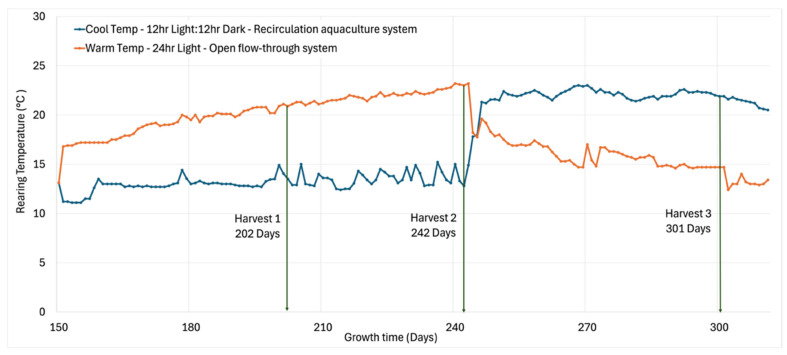 Figure 1
 Figure 2
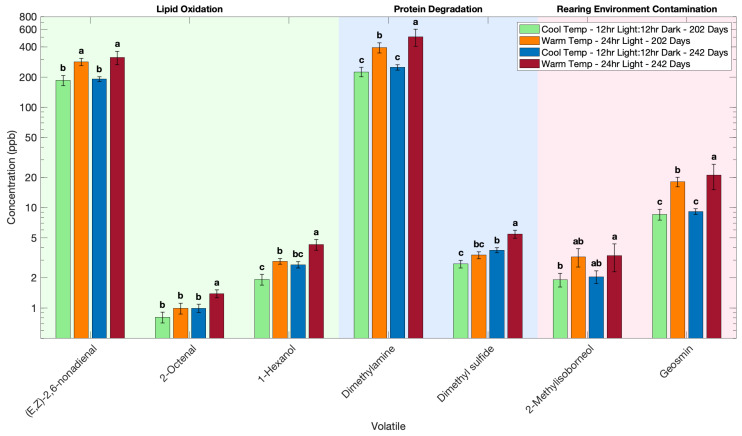 Figure 3
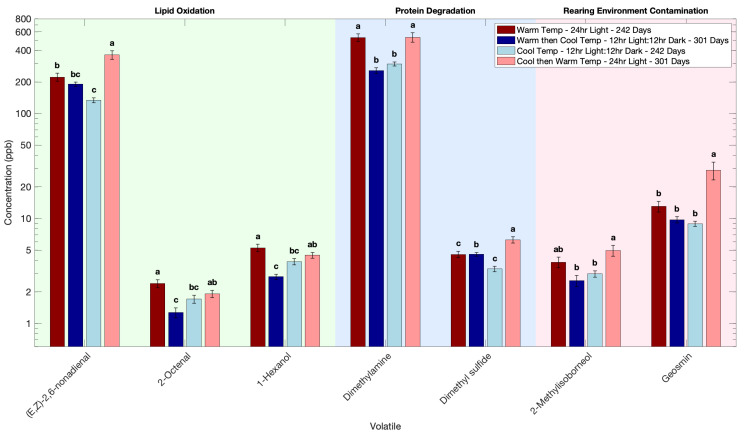 Figure 4
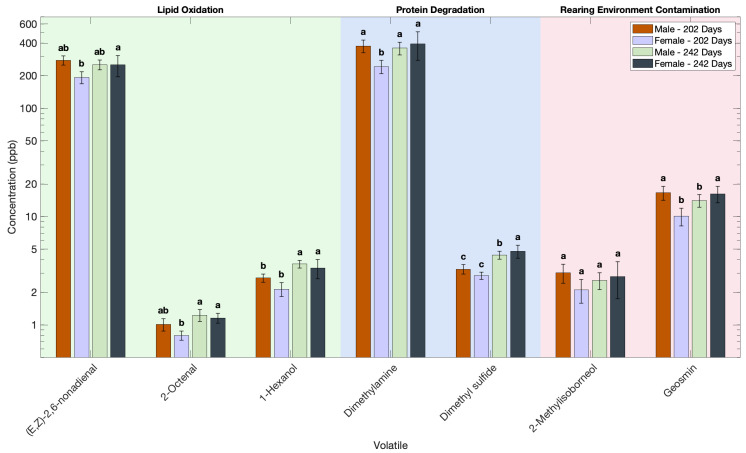 Figure 5
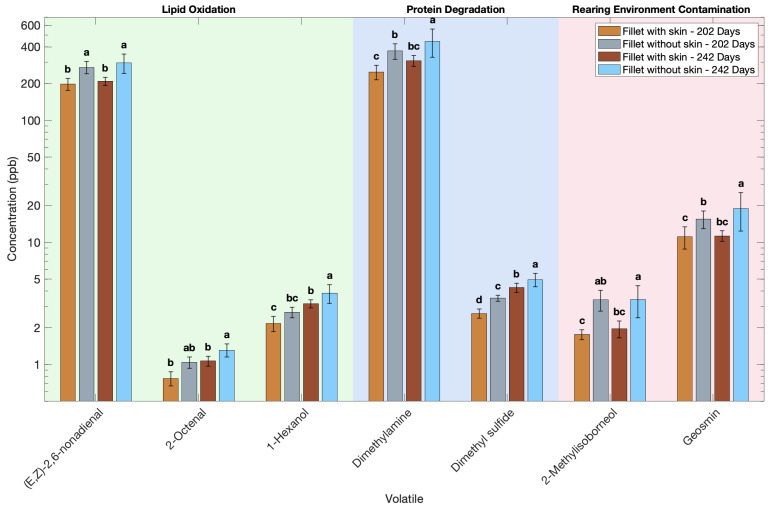 Figure 6
Peer Reviews
No public reviews on file for this paper yet. If you reviewed it on a platform where reviews are public (OpenReview, ICLR, NeurIPS, ICML), you can paste yours below so the community can read it here.
Videos
No videos yet. Explain this paper in a talk, walkthrough, or lecture? Add one.
Taxonomy
TopicsAquaculture disease management and microbiota · Aquaculture Nutrition and Growth · Meat and Animal Product Quality