Genetic, Diversity, and Muscle Quality Among Red and Green Color Morphs of Asian Swimming Crab (Charybdis japonica): Implications for Accurate Species Recognition and Sustainable Management
Bingqian Zhang, Yuhang He, Maninder Meenu, Ying Liu, Yusheng Jiang

TL;DR
This study compares red and green color morphs of Asian swimming crabs to understand their genetic and physical differences, concluding they are the same species despite variations in color and muscle quality.
Contribution
The study provides new insights into the genetic and morphological diversity of C. japonica color morphs, supporting their classification as a single species.
Findings
Red morph crabs have higher melanocyte aggregation and lower L* and b* values compared to green morph crabs.
Mitochondrial DNA analysis shows high sequence identity (98.96% COI, 99.71% ITS-1) between the two morphs, indicating they belong to the same species.
Muscle texture differs between morphs, but amino acid composition remains similar.
Abstract
In this study, two color morphs (red and green) of Asian swimming crab (Charybdis japonica) commonly distributed in the China Sea area were analyzed for their L*a*b* values, carapace and inner membrane histology, morphological characteristics, mitochondrial DNA sequences, muscle texture, and amino acid composition. The results showed that compared with the green morph group, the red morph group exhibits higher aggregation of melanocytes and fewer pigment cells in the inner membrane. In addition, L* and b* of the carapace, and L* values of the inner membrane were lower in red morph group. Both populations of C. japonica also exhibit significant differences in their morphological parameters, including carapace length, body weight, and pincer width. However, the coefficient of variation for these morphological parameters did not correspond to the subspecies level. The mitochondrial DNA…
Genes, proteins, chemicals, diseases, species, mutations and cell lines named across the full text — each resolved to its canonical identifier and authoritative record.
Click any figure to enlarge with its caption.
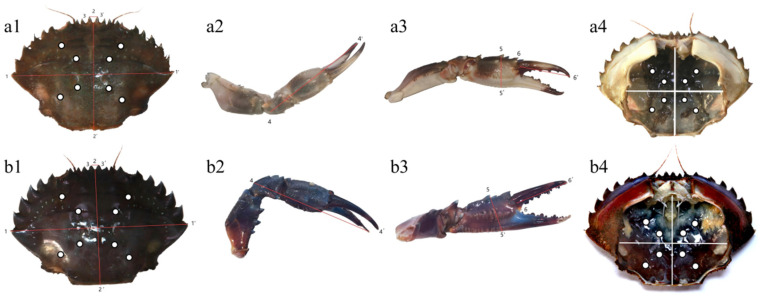 Figure 1
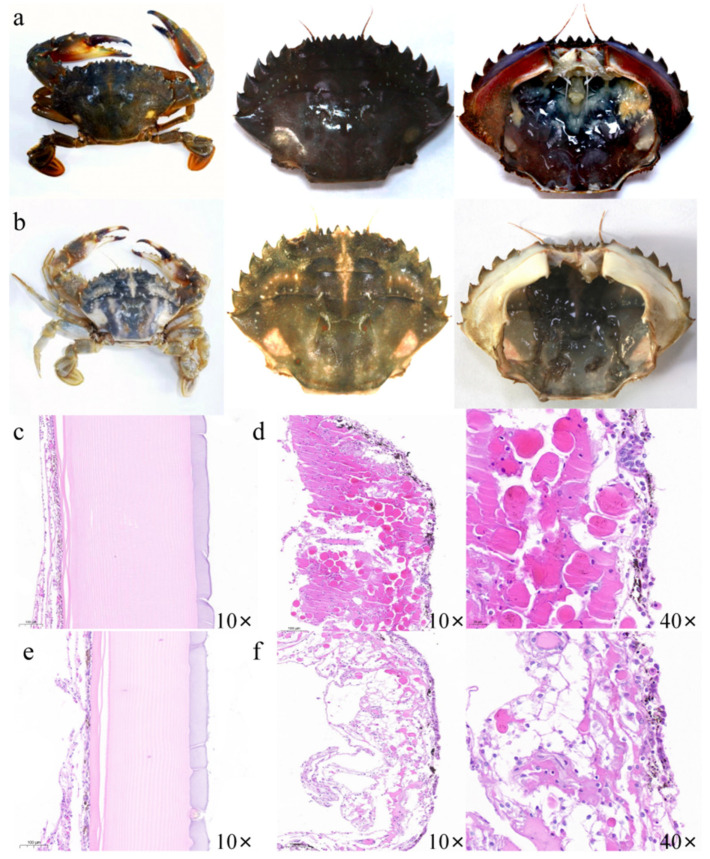 Figure 2
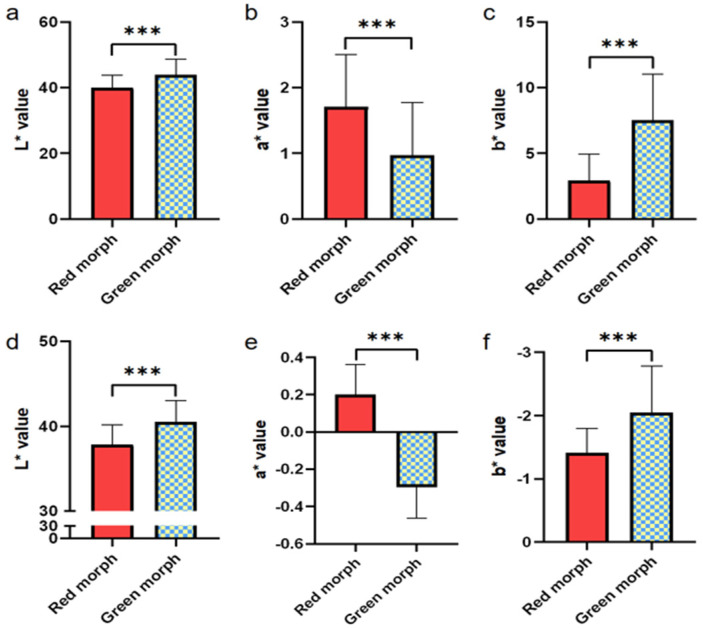 Figure 3
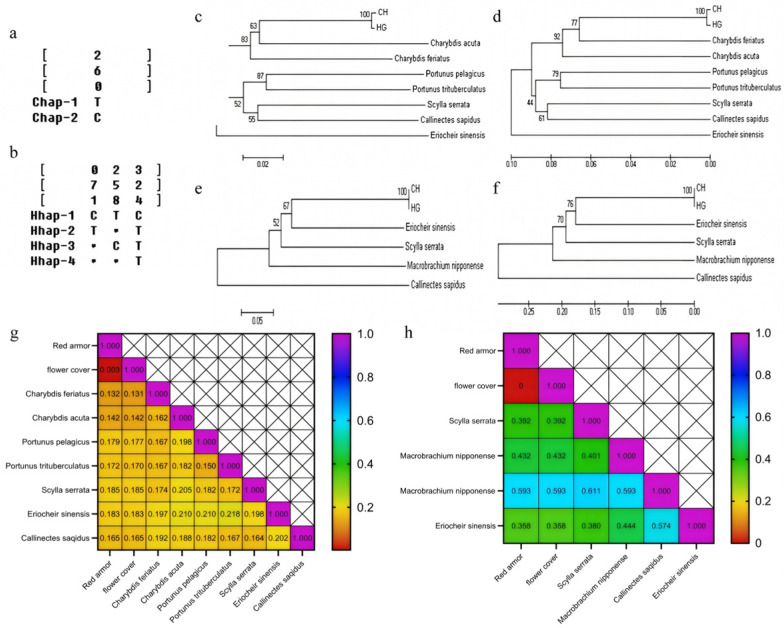 Figure 4
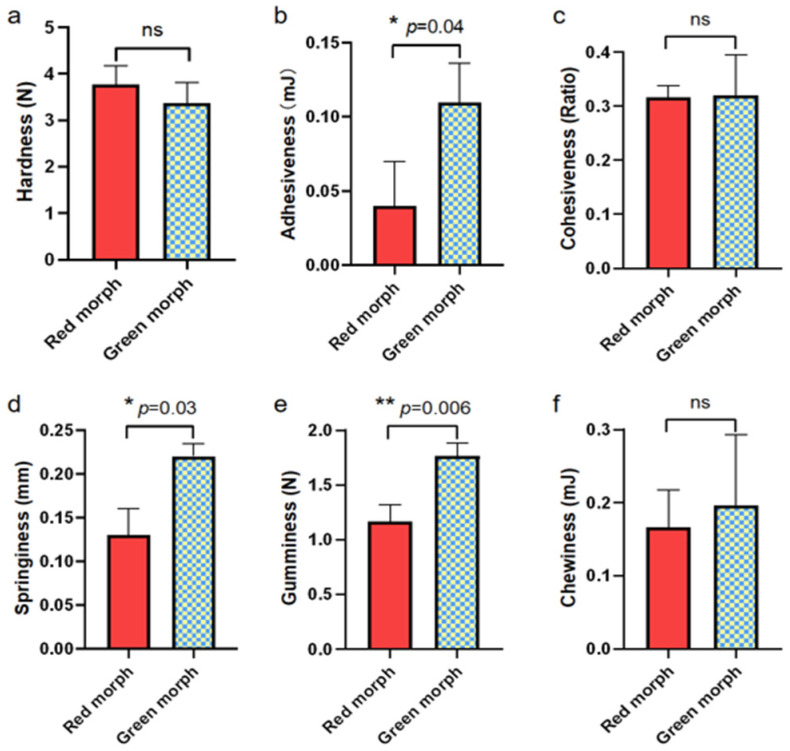 Figure 5
Peer Reviews
No public reviews on file for this paper yet. If you reviewed it on a platform where reviews are public (OpenReview, ICLR, NeurIPS, ICML), you can paste yours below so the community can read it here.
Videos
No videos yet. Explain this paper in a talk, walkthrough, or lecture? Add one.
Taxonomy
TopicsPhysiological and biochemical adaptations · Aquaculture Nutrition and Growth · Neurobiology and Insect Physiology Research