Onsager’s Non-Equilibrium Thermodynamics as Gradient Flow in Information Geometry
Tatsuaki Wada, Antonio Maria Scarfone

TL;DR
This paper explores non-equilibrium thermodynamics using gradient flow in information geometry, applying it to ideal and van der Waals gases.
Contribution
The paper introduces two new gradient-flow models derived from Onsager’s reciprocal relations in the context of information geometry.
Findings
Onsager’s equations can be interpreted as gradient-flow equations under information geometry.
Two distinct gradient-flow models are developed and compared in their features and relations.
The models are successfully applied to both ideal and van der Waals gases.
Abstract
We consider Onsager’s non-equilibrium thermodynamics from the perspective of the gradient flow in information geometry. Assuming Onsager’s reciprocal relations, we can regard his phenomenological equations as gradient-flow equations and develop two different gradient-flow models. We consider their features and their relations. Both models are applied to the ideal gas and van der Waals gas.
Genes, proteins, chemicals, diseases, species, mutations and cell lines named across the full text — each resolved to its canonical identifier and authoritative record.
Click any figure to enlarge with its caption.
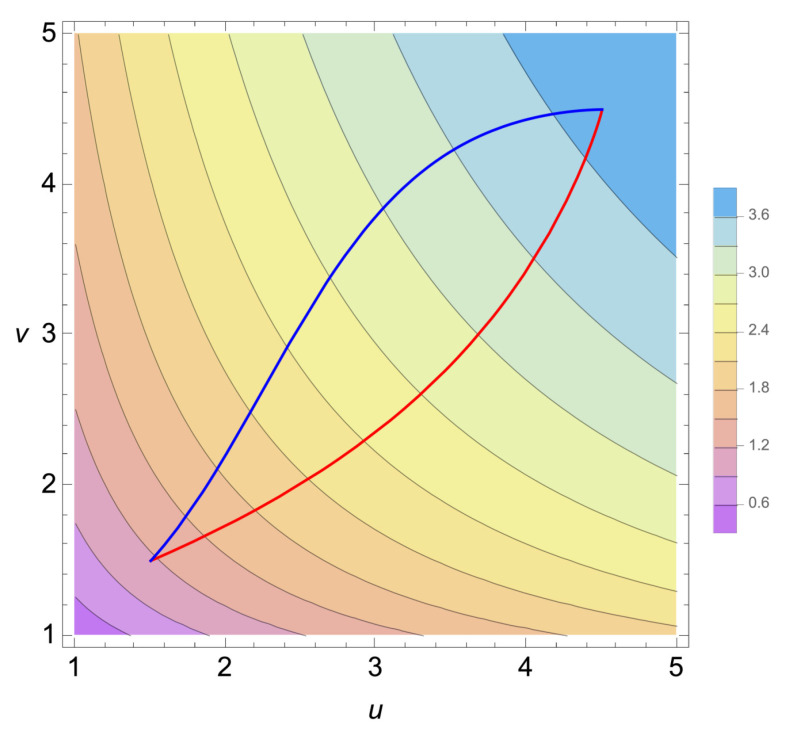 Figure 1
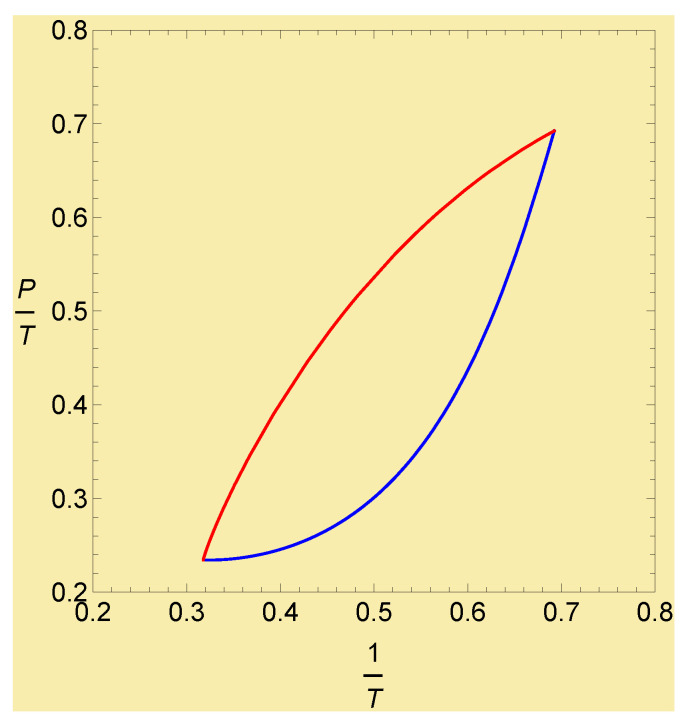 Figure 2
Peer Reviews
No public reviews on file for this paper yet. If you reviewed it on a platform where reviews are public (OpenReview, ICLR, NeurIPS, ICML), you can paste yours below so the community can read it here.
Videos
No videos yet. Explain this paper in a talk, walkthrough, or lecture? Add one.
Taxonomy
TopicsStatistical Mechanics and Entropy · Neural Networks and Applications · Blind Source Separation Techniques