Unique Biological Characteristics of Patients with High Gleason Score and Localized/Locally Advanced Prostate Cancer Using an In Silico Translational Approach
Shiori Miyachi, Masanori Oshi, Takeshi Sasaki, Itaru Endo, Kazuhide Makiyama, Takahiro Inoue

TL;DR
This study explores how high Gleason scores in prostate cancer are linked to increased cell proliferation, immune cell infiltration, and high mutation rates using genomic data.
Contribution
The first report linking Gleason scores to homologous recombination deficiency and intratumor heterogeneity through in silico analysis.
Findings
High Gleason scores correlate with increased activity of cell proliferation-related genes and immune cell infiltration.
GS levels are positively associated with homologous recombination defects, intratumor heterogeneity, and high mutation rates.
These biological features may contribute to worse clinical outcomes in prostate cancer patients.
Abstract
Gleason score (GS) is one of the best predictors of prostate cancer aggressiveness. GS classifies cancer cells based on the histological patterns of prostate tissue sections and does not evaluate the nuclear grade or proliferation of the cancer cells. A small number of studies focused on the association between gene expression signatures and GS using an in silico translational approach. GS is associated with cell cycle-related genes, changes in DNA repair genes, stromal-related genes, immune-related genes, cuprotosis-related genes, and several specific genes. To our knowledge, this is the first report showing that GS was positively correlated not only with homologous recombination deficiency mutations but also with intratumor heterogeneity, fractional mutations, single nucleotide variant neoantigen, silent mutation rate, and non-silent mutation rate. Our findings emphasize that GS…
Genes, proteins, chemicals, diseases, species, mutations and cell lines named across the full text — each resolved to its canonical identifier and authoritative record.
Click any figure to enlarge with its caption.
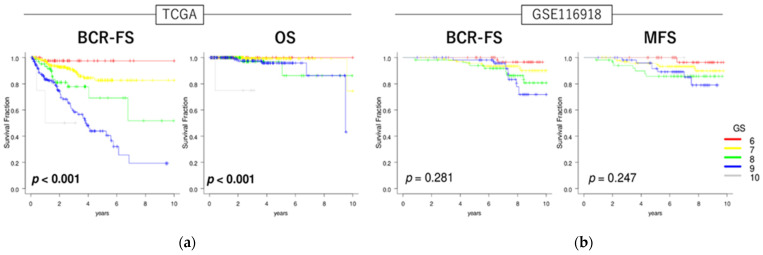 Figure 1
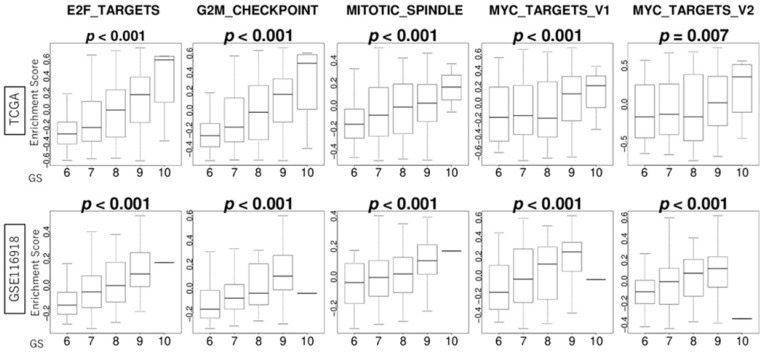 Figure 2
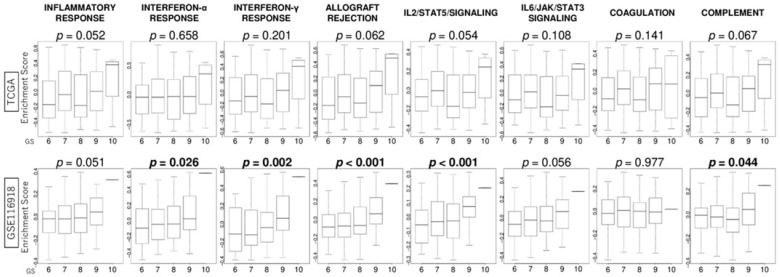 Figure 3
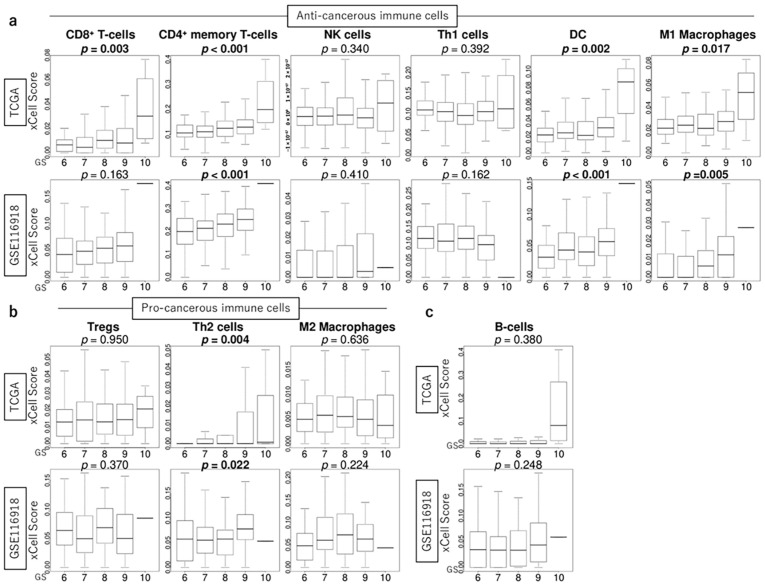 Figure 4
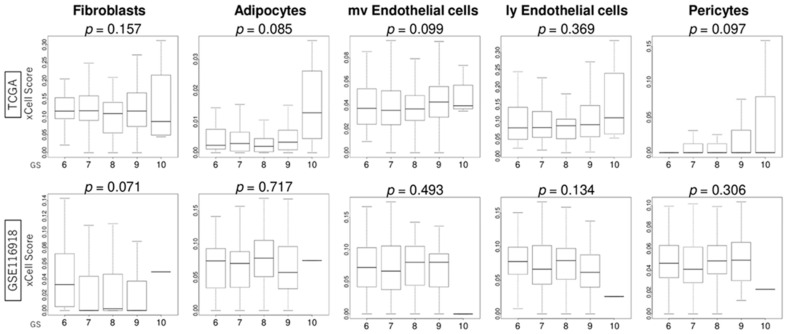 Figure 5
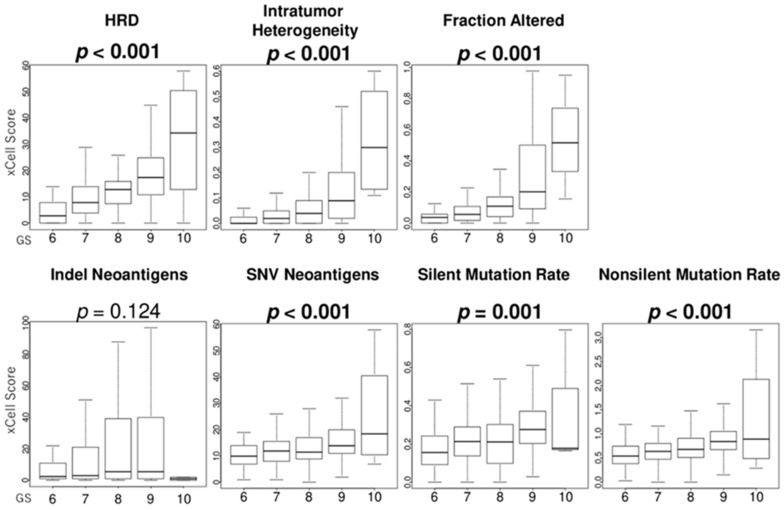 Figure 6
Peer Reviews
No public reviews on file for this paper yet. If you reviewed it on a platform where reviews are public (OpenReview, ICLR, NeurIPS, ICML), you can paste yours below so the community can read it here.
Videos
No videos yet. Explain this paper in a talk, walkthrough, or lecture? Add one.
Taxonomy
TopicsProstate Cancer Treatment and Research · Prostate Cancer Diagnosis and Treatment · Ferroptosis and cancer prognosis