The Prognostic Value of High-Sensitive Troponin T Rise Within the Upper Reference Limit in Breast Cancer: A Prospective Pilot Study
Sergey Kozhukhov, Nataliia Dovganych

TL;DR
This study shows that a rise in high-sensitive troponin T in breast cancer patients during treatment can predict early heart damage, even before symptoms appear.
Contribution
The study identifies a specific threshold (81% increase) for troponin T rise as a novel early marker of cardiotoxicity in breast cancer patients.
Findings
A troponin T increase of more than 81% was the best threshold for detecting early heart damage in breast cancer patients.
Left ventricular ejection fraction significantly decreased after 6 months of treatment in patients with elevated troponin T.
High-sensitive troponin T rise below the upper reference limit predicted heart function decline with 78% accuracy.
Abstract
Anti-cancer therapy is often accompanied by adverse reactions, among which cardiovascular toxicity is the most significant. Therefore, it is very important to diagnose cardiotoxicity before myocardial systolic function decreases or symptoms of heart failure appear. In this prospective study of 60 breast cancer patients, we studied dynamic changes in high-sensitive cardiac troponin T below the upper limit of normal. We found that an increase in troponin T > 81% was determined as the optimal threshold value for detecting early biochemical cardiotoxicity. Those patients should be considered as high-risk patients for cardiotoxicity and need more precise cardiac monitoring and early preventive strategies. Background: We investigated the role of a high-sensitive cardiac troponin T (hsTnT) increase below the upper limit of normal (ULN) in patients with breast cancer (BC). hsTnT assays…
Genes, proteins, chemicals, diseases, species, mutations and cell lines named across the full text — each resolved to its canonical identifier and authoritative record.
Click any figure to enlarge with its caption.
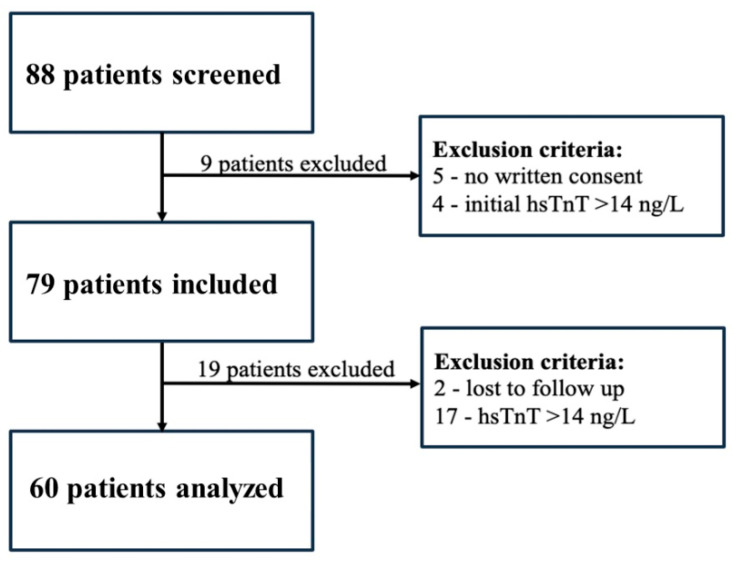 Figure 1
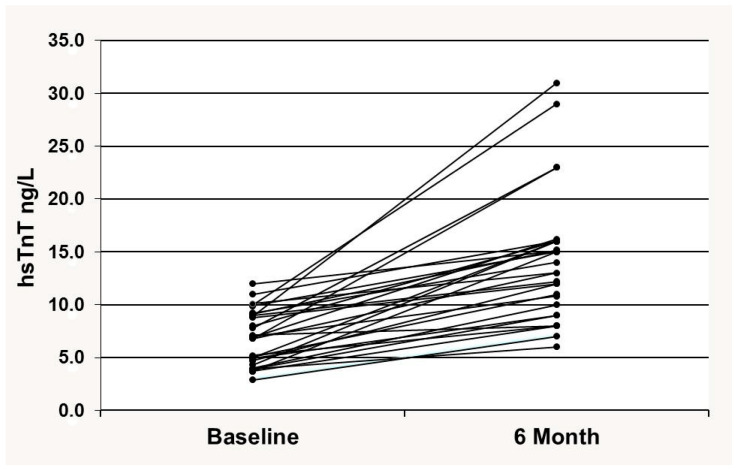 Figure 2
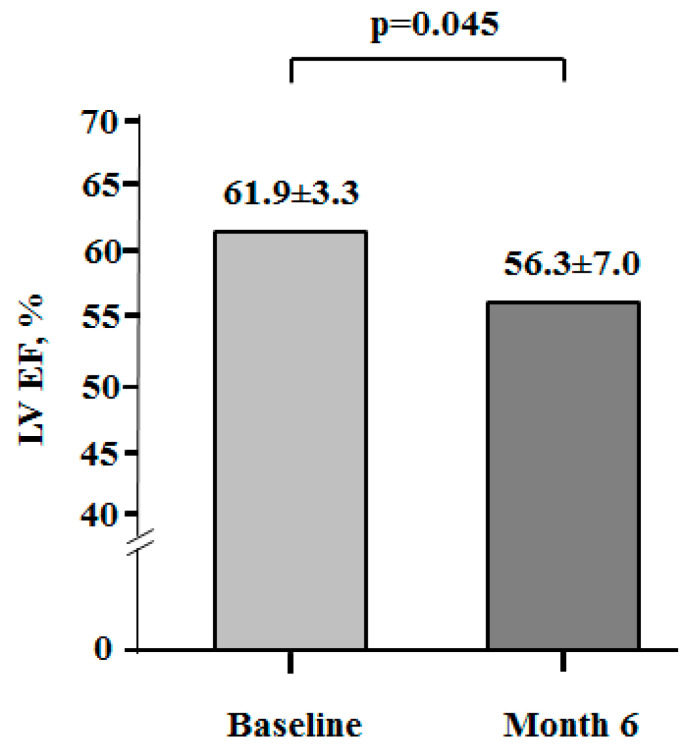 Figure 3
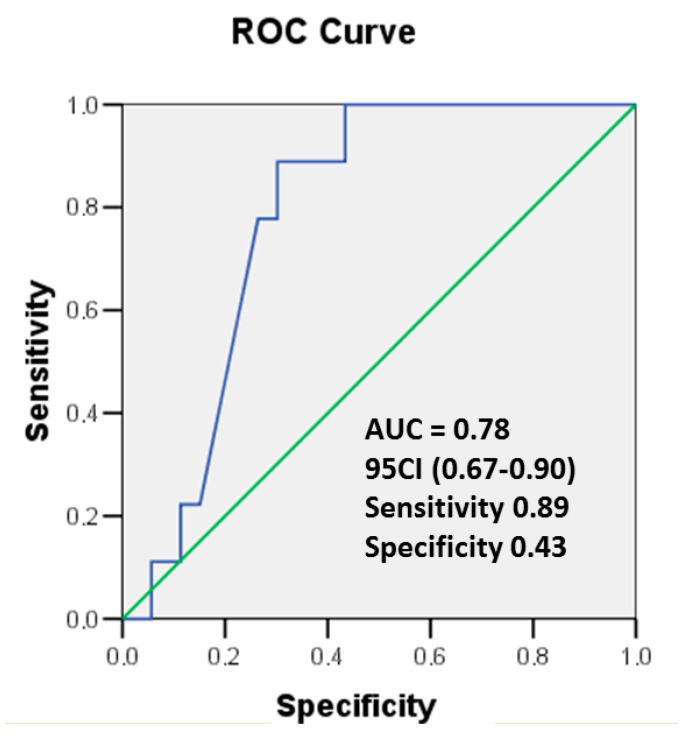 Figure 4
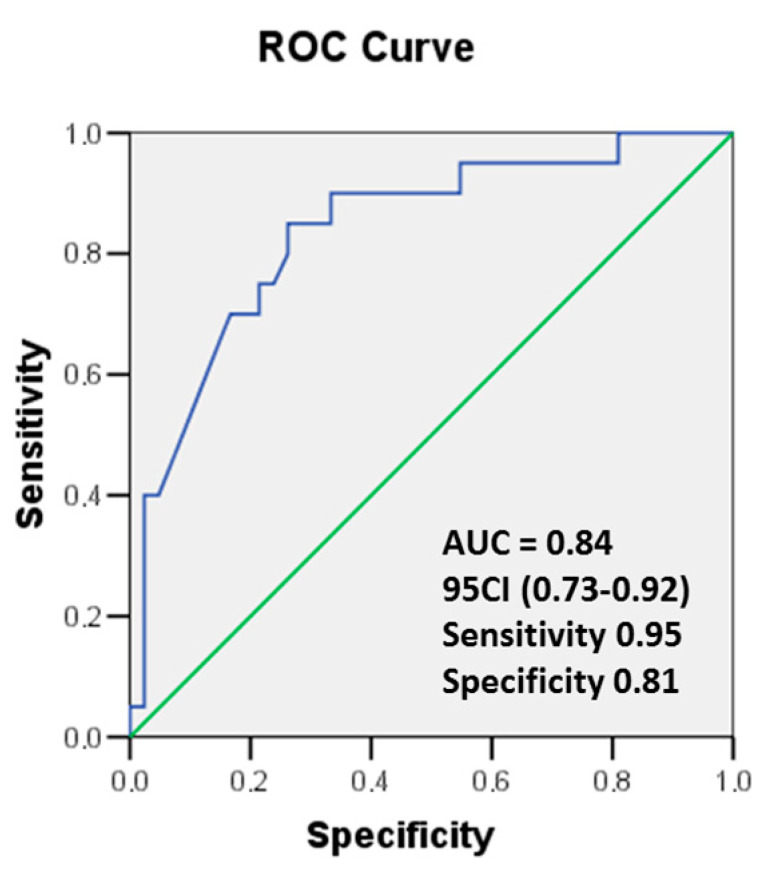 Figure 5
Peer Reviews
No public reviews on file for this paper yet. If you reviewed it on a platform where reviews are public (OpenReview, ICLR, NeurIPS, ICML), you can paste yours below so the community can read it here.
Videos
No videos yet. Explain this paper in a talk, walkthrough, or lecture? Add one.
Taxonomy
TopicsChemotherapy-induced cardiotoxicity and mitigation · Acute Myocardial Infarction Research · Coronary Interventions and Diagnostics