Platinum Nanoparticles Loaded in Polydopamine-Modified Porous Coordination Network-224 with Peroxidase-Like Activity for Sensitive Glutathione Detection
Shoubei Gao, Mingyue Gao, Chenran Zhen, Yanshuai Cui, Xianbing Ji, Ruyu Li, Longgang Wang

TL;DR
Researchers developed a sensitive method to detect glutathione using platinum nanoparticles in a modified porous material, showing high accuracy and low interference.
Contribution
A new colorimetric method for glutathione detection using peroxidase-like activity of Pt-loaded PCN-224-PDA.
Findings
PCN-224-PDA-Pt showed high peroxidase-like activity and generated hydroxyl radicals during catalysis.
The method detected glutathione with a linear range of 1–600 μM and a detection limit of 0.306 μM.
The method exhibited strong anti-interference capabilities and excellent recovery rates for biological detection.
Abstract
The content of glutathione in the human body is crucial to human health, so a convenient and efficient method is needed to detect it. Herein, porous coordination network-224 (PCN-224) was modified by polydopamine to prepare polydopamine-modified PCN-224 (PCN-224-PDA) to improve the water dispersibility of the PCN-224. Monodispersed platinum nanoparticles were loaded into the PCN-224-PDA to prepare PCN-224-PDA-Pt. The PCN-224-PDA-Pt showed high peroxidase-like catalytic activity, and its catalytic activity was affected by pH and temperature. The PCN-224-PDA-Pt almost had no hemolysis of red blood cells. In addition, the PCN-224-PDA-Pt showed high affinity for 3,3′,5,5′-tetramethylbenzidine and catalytic efficiency in kinetic studies, and the type of reactive oxygen species generated during the catalytic process was hydroxyl radicals. More importantly, a colorimetric method for…
Genes, proteins, chemicals, diseases, species, mutations and cell lines named across the full text — each resolved to its canonical identifier and authoritative record.
Click any figure to enlarge with its caption.
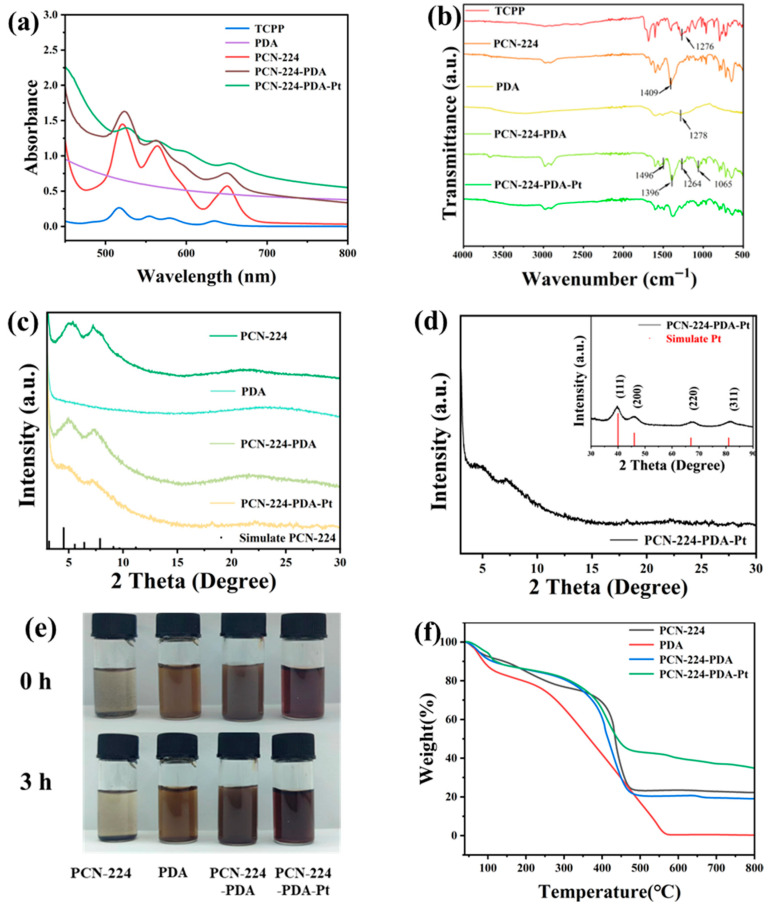 Figure 1
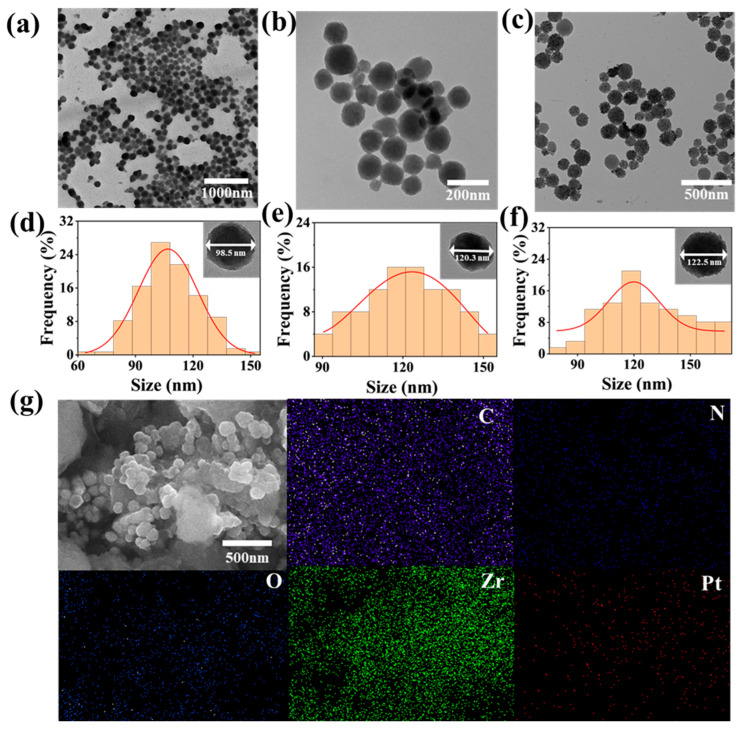 Figure 2
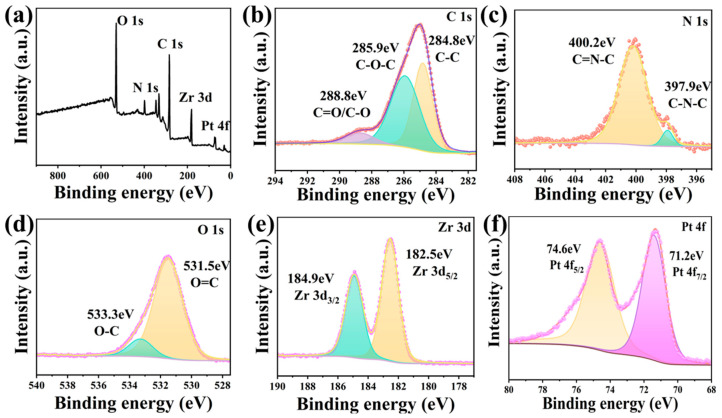 Figure 3
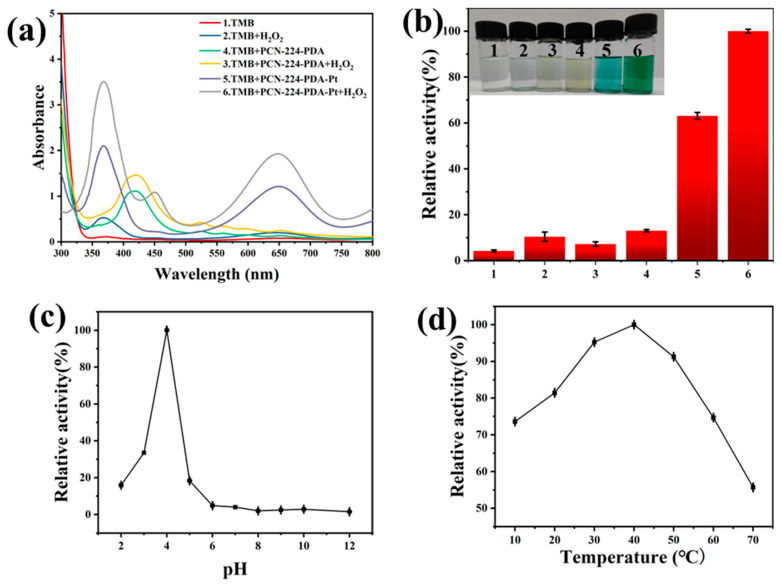 Figure 4
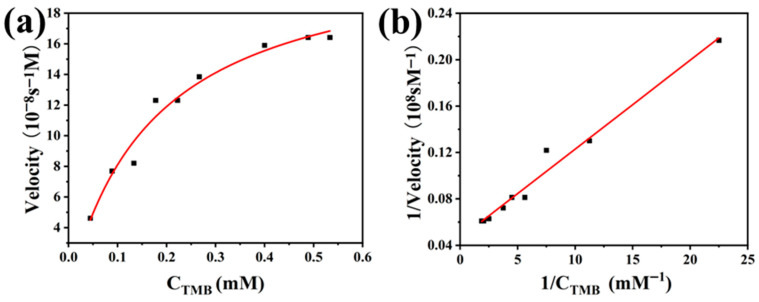 Figure 5
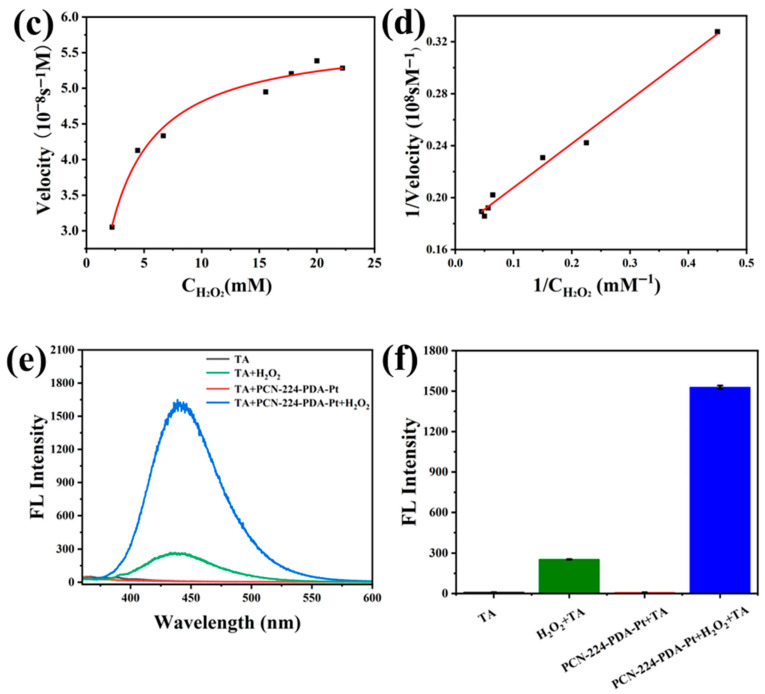 Figure 6
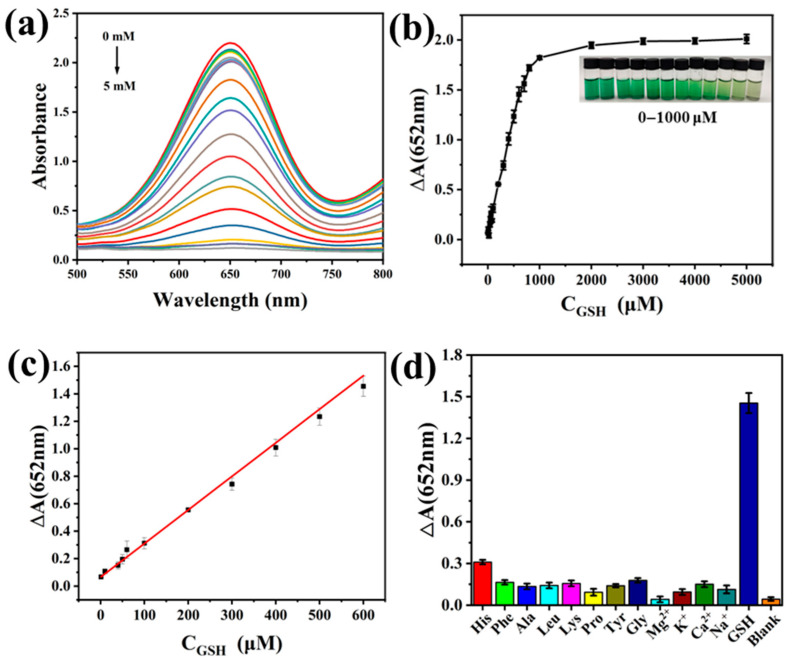 Figure 7
Peer Reviews
No public reviews on file for this paper yet. If you reviewed it on a platform where reviews are public (OpenReview, ICLR, NeurIPS, ICML), you can paste yours below so the community can read it here.
Videos
No videos yet. Explain this paper in a talk, walkthrough, or lecture? Add one.
Taxonomy
TopicsAdvanced Nanomaterials in Catalysis · Advanced biosensing and bioanalysis techniques · Nanocluster Synthesis and Applications