Non-Involuting Congenital Hepatic Hemangioma: Lessons from a Case Series
Karla Estefanía-Fernández, Paloma Triana, Carla Ramírez-Amorós, Mireia Gaspar-Pérez, Antonio Jesús Muñoz-Serrano, María Velayos, María San Basilio, Nelson M. Buitrago, Manuel Parrón, Ane Andrés, Francisco Hernández-Oliveros, Juan Carlos López Gutiérrez

TL;DR
This study explores non-involuting congenital hepatic hemangiomas in children, highlighting their varied growth patterns and potential treatment with sirolimus.
Contribution
The study provides new insights into the long-term behavior and treatment options for non-involuting congenital hepatic hemangiomas.
Findings
Three patients with giant NICHH showed partial response or stabilization with sirolimus treatment.
Untreated NICHH cases exhibited diverse evolutionary patterns, including delayed involution and growth.
Histologic confirmation and genetic analysis revealed a GNAQ gene mutation in one case.
Abstract
Background: Congenital hepatic hemangiomas (CHHs) are typically considered rapidly involuting tumors, similar to their cutaneous counterparts (RICHs). However, non-involuting tumors remain poorly characterized. This study examines the evolutionary patterns and management strategies for non-involuting congenital hepatic hemangiomas (NICHHs). Methods: We conducted a retrospective review of clinical, imaging, histological, and genetic data of children diagnosed with NICHH—defined as showing no signs of involution for at least 18 months—between 1991 and 2022. Results: Seven patients (five females, two males) were identified. The median age at diagnosis was 42 days (range: 0–1440). Five patients had asymptomatic lesions, predominantly located in the right hepatic lobe. Histologic confirmation was available in three cases, and a GNAQ gene mutation was identified in one. The median follow-up…
Genes, proteins, chemicals, diseases, species, mutations and cell lines named across the full text — each resolved to its canonical identifier and authoritative record.
Click any figure to enlarge with its caption.
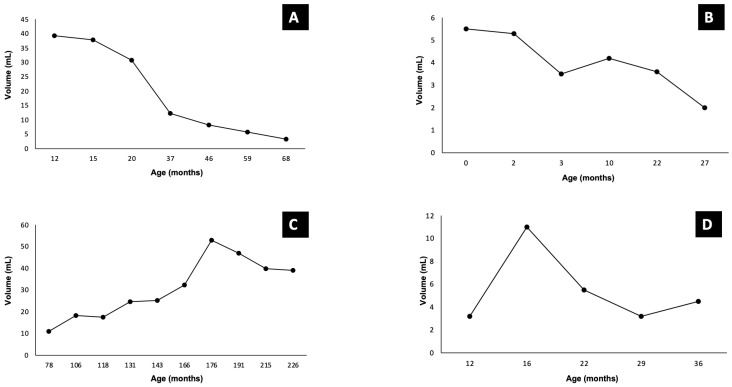 Figure 1
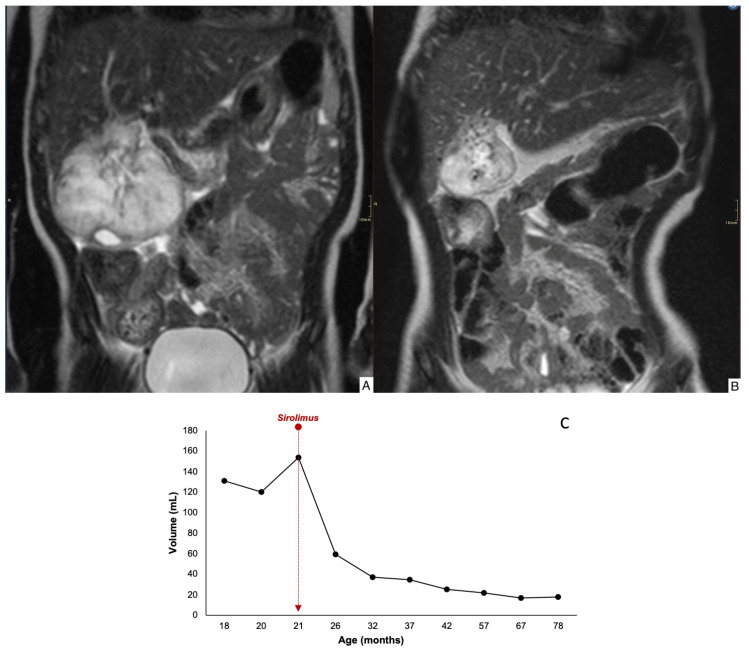 Figure 2
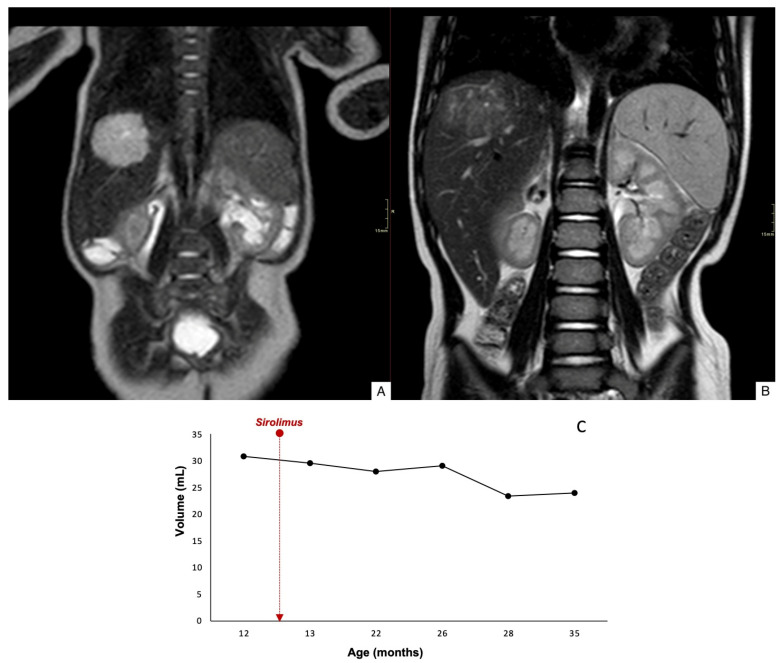 Figure 3
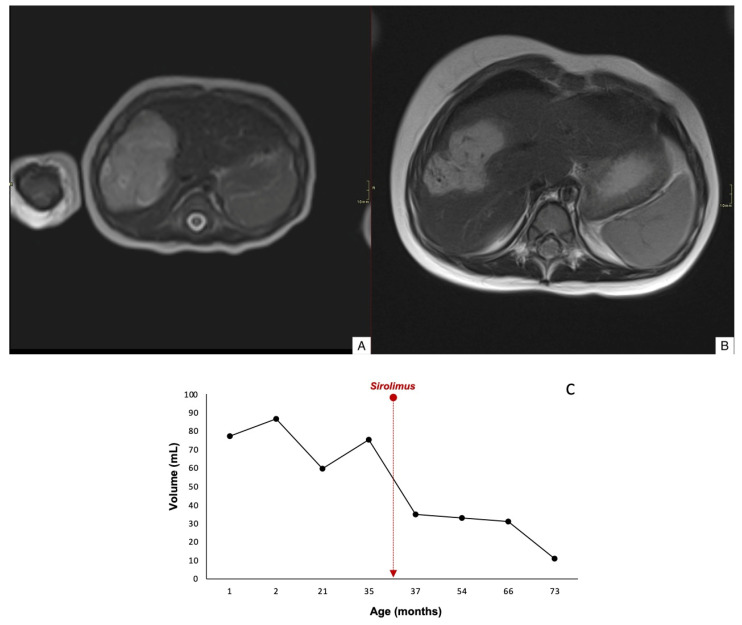 Figure 4
Peer Reviews
No public reviews on file for this paper yet. If you reviewed it on a platform where reviews are public (OpenReview, ICLR, NeurIPS, ICML), you can paste yours below so the community can read it here.
Videos
No videos yet. Explain this paper in a talk, walkthrough, or lecture? Add one.
Taxonomy
TopicsVascular Malformations and Hemangiomas · Parvovirus B19 Infection Studies · Genetic and Kidney Cyst Diseases