Parenting Under Pressure: The Transformative Impact of PCIT on Caregiver Depression and Anxiety and Child Outcomes
Abigail Peskin, Alexis Landa, Juliana Acosta, William Andrew Rothenberg, Rachel Levi, Eileen Davis, Dainelys Garcia, Jason F. Jent, Elana Mansoor

TL;DR
Parent-Child Interaction Therapy (PCIT) can reduce caregiver anxiety and depression while improving child behavior, with some parenting skills directly contributing to these outcomes.
Contribution
This study identifies that PCIT can improve caregiver mental health and child outcomes, with changes in caregiver-child interactions partially mediating these effects.
Findings
Child disruptive behavior and caregiver depression and anxiety symptoms improved significantly at each time point of PCIT.
Changes in caregiver anxiety and depression were partially mediated by improvements in caregiver–child interaction skills.
Caregivers with higher anxiety reported fewer improvements in child disruptive behavior compared to others.
Abstract
Background Objectives: Parental anxiety and depression demonstrate bidirectional connections with child developmental outcomes (e.g., disruptive behavior). Directly targeting child development through behavioral parent training (BPT) has potential for reversing this cycle. Parent–Child Interaction Therapy (PCIT), a BPT with robust research evidence for decreasing child disruptive behaviors, has demonstrated promise in also decreasing caregiver anxiety and depression. However, the mechanisms that explain this relationship are less understood. Methods: The current study examined whether caregivers (N = 840) completing time-limited PCIT experienced significant reductions in depression and anxiety symptoms and improvements in child disruptive behaviors at each time point. Generalized estimate equation analyses assessed whether caregiver anxiety and depression moderated changes in child…
Genes, proteins, chemicals, diseases, species, mutations and cell lines named across the full text — each resolved to its canonical identifier and authoritative record.
Click any figure to enlarge with its caption.
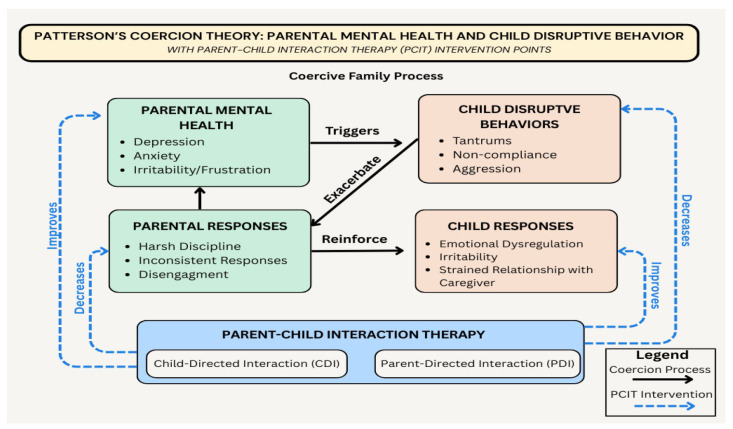 Figure 1
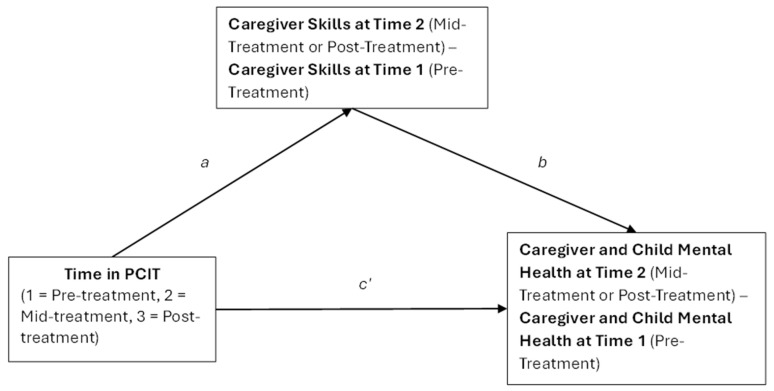 Figure 2
Peer Reviews
No public reviews on file for this paper yet. If you reviewed it on a platform where reviews are public (OpenReview, ICLR, NeurIPS, ICML), you can paste yours below so the community can read it here.
Videos
No videos yet. Explain this paper in a talk, walkthrough, or lecture? Add one.
Taxonomy
TopicsChild and Adolescent Psychosocial and Emotional Development · Attachment and Relationship Dynamics · Family and Disability Support Research