[18F]FDG PET-CT Imaging of the Low Back in Persistent Spinal Pain Syndrome Type 2: A Pilot Study Towards Improved Diagnosis
Lara S. Burmeister, Richard L. Witkam, Kris C. P. Vissers, Martin Gotthardt, Dylan J. H. A. Henssen

TL;DR
This pilot study explores how [18F]FDG PET-CT imaging can help diagnose Persistent Spinal Pain Syndrome Type 2 by comparing glucose metabolism in patients and healthy controls.
Contribution
The study introduces [18F]FDG PET-CT imaging as a potential diagnostic tool for PSPS-T2 by analyzing metabolic differences in the axial musculoskeletal system.
Findings
Healthy controls showed significantly higher SUVmean values in specific spinal regions compared to PSPS-T2 patients.
No significant correlations were found between SUVmean values and pain severity scores in PSPS-T2 patients.
The metabolic profile of the axial musculoskeletal system in PSPS-T2 patients differs from that of healthy individuals.
Abstract
Background/Objectives: Diagnosis of Persistent Spinal Pain Syndrome Type 2 (PSPS-T2) currently lacks objective biomarkers. Therefore, this retrospective study aimed to investigate differences in glucose metabolism in the axial musculoskeletal system in PSPS-T2 patients by means of [18F]FDG PET-CT imaging. Methods: Nine PSPS-T2 patients (five females, four males; mean age of 53 ± 4.82 years) and nine age- and gender-matched healthy controls (five females, four males; mean age of 53 ± 3.91 years) were included. For each participant, 24 regions of interest (ROIs) were manually drawn, including areas of the vertebral endplates, the intervertebral discs, and the psoas muscles. For each ROI, the mean standardized uptake values (SUVs) were assessed. Group differences were evaluated using repeated measures ANOVA with Bonferroni-adjusted post-hoc pairwise comparisons. Additionally, Pearson…
Genes, proteins, chemicals, diseases, species, mutations and cell lines named across the full text — each resolved to its canonical identifier and authoritative record.
Click any figure to enlarge with its caption.
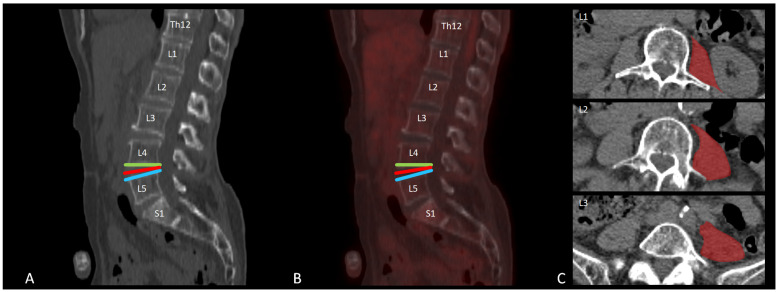 Figure 1
Peer Reviews
No public reviews on file for this paper yet. If you reviewed it on a platform where reviews are public (OpenReview, ICLR, NeurIPS, ICML), you can paste yours below so the community can read it here.
Videos
No videos yet. Explain this paper in a talk, walkthrough, or lecture? Add one.
Taxonomy
TopicsSpine and Intervertebral Disc Pathology · Musculoskeletal pain and rehabilitation · Pain Mechanisms and Treatments