Esophageal Squamous Papilloma and Papillomatosis: Current Evidence of HPV Involvement and Malignant Potential
Miriana Mercurio, Roberto de Sire, Paola Campagnoli, Marco Dal Fante, Linda Fazzini, Luciano Guerra, Massimo Primignani, Maria Giuseppina Tatarella, Mauro Sollai, Sandro Ardizzone, Roberta Maselli

TL;DR
This review explores the potential link between esophageal squamous lesions and high-risk HPV, highlighting the need for better understanding of their cancer risk.
Contribution
The paper provides a comprehensive review of the emerging evidence linking HPV to esophageal squamous lesions and their malignant potential.
Findings
High-risk HPV genotypes may be associated with esophageal squamous papilloma and papillomatosis.
Advanced endoscopic imaging improves detection of dysplastic changes in these lesions.
Multifocal or HPV-positive cases require closer follow-up compared to solitary non-dysplastic lesions.
Abstract
Esophageal squamous papilloma (ESP) and papillomatosis are rare esophageal lesions traditionally considered benign, yet emerging evidence suggests a possible association with high-risk human papillomavirus (HPV) infection and a potential risk of malignant progression. In this review, we summarize current evidence on their pathogenesis, clinical features, diagnostic approaches, and management strategies, with particular focus on the role of HPV. We also discuss the contribution of advanced endoscopic imaging in detecting lesions with dysplastic changes. Given the limited and heterogeneous data available, further research is urgently needed to clarify the oncogenic potential of these lesions and to optimize surveillance and treatment protocols. Human papillomavirus (HPV) is a recognized oncogenic agent in several epithelial malignancies, though its role in esophageal squamous lesions…
Genes, proteins, chemicals, diseases, species, mutations and cell lines named across the full text — each resolved to its canonical identifier and authoritative record.
Click any figure to enlarge with its caption.
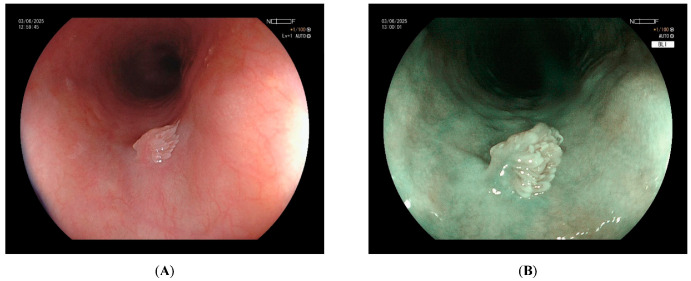 Figure 1
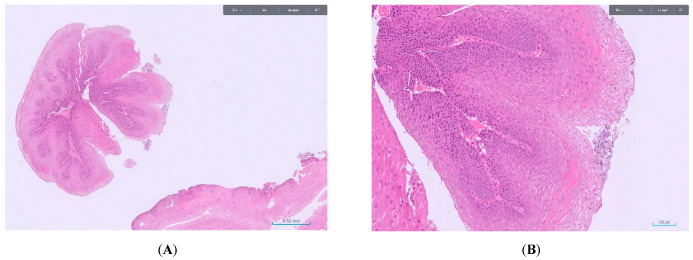 Figure 2
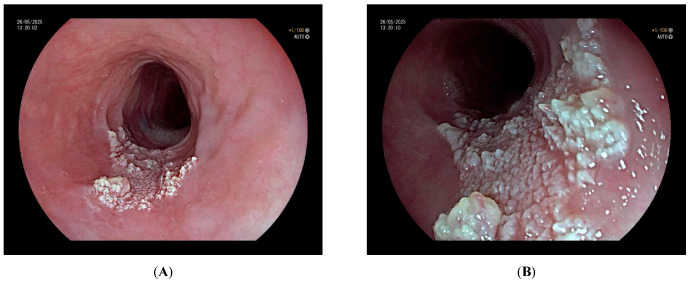 Figure 3
Peer Reviews
No public reviews on file for this paper yet. If you reviewed it on a platform where reviews are public (OpenReview, ICLR, NeurIPS, ICML), you can paste yours below so the community can read it here.
Videos
No videos yet. Explain this paper in a talk, walkthrough, or lecture? Add one.
Taxonomy
TopicsCervical Cancer and HPV Research · Urinary and Genital Oncology Studies · Medical Imaging and Pathology Studies