PTEN Inactivation in Mouse Colonic Epithelial Cells Curtails DSS-Induced Colitis and Accelerates Recovery
Larissa Kotelevets, Francine Walker, Godefroy Mamadou, Bruno Eto, Thérèse Lehy, Eric Chastre

TL;DR
Disabling PTEN in mouse intestinal cells reduces colitis severity and speeds up recovery by boosting cell growth and strengthening the gut barrier.
Contribution
This study reveals that PTEN inactivation in intestinal epithelial cells protects against colitis and promotes healing.
Findings
PTEN invalidation in intestinal cells reduces DSS-induced colitis symptoms and weight loss.
PTEN knockout enhances intestinal barrier function by strengthening tight junctions and reducing permeability.
Sustained epithelial cell proliferation due to PTEN inactivation aids in mucosal repair after injury.
Abstract
The PTEN tumor suppressor controls a broad range of cellular functions, including cell proliferation, differentiation, migration and apoptosis. The purpose of our study was to delineate the physiopathological role of PTEN in intestinal homeostasis and in susceptibility to colitis. Using a transgenic mouse model, we showed that PTEN invalidation in intestinal epithelium promotes cell proliferation and triggers colonic mucosa hyperplasia. We also evidenced that this invalidation alleviates chemically induced colitis. The underlying mechanisms involved a sustained colonic epithelial cell proliferation in the vicinity of mucosal lesions, favoring re-epithelization, and the enhancement of intestinal barrier function through the strengthening of tight junctions and the reduction of paracellular permeability. Thus, PTEN inactivation exerts a protective effect on the onset of colitis, and the…
Genes, proteins, chemicals, diseases, species, mutations and cell lines named across the full text — each resolved to its canonical identifier and authoritative record.
Click any figure to enlarge with its caption.
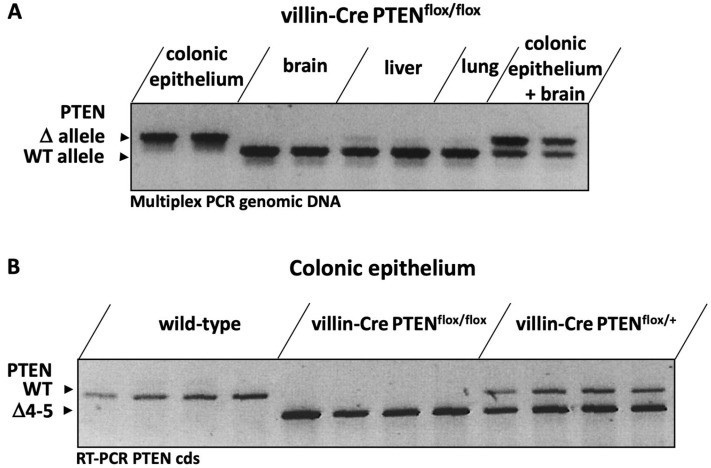 Figure 1
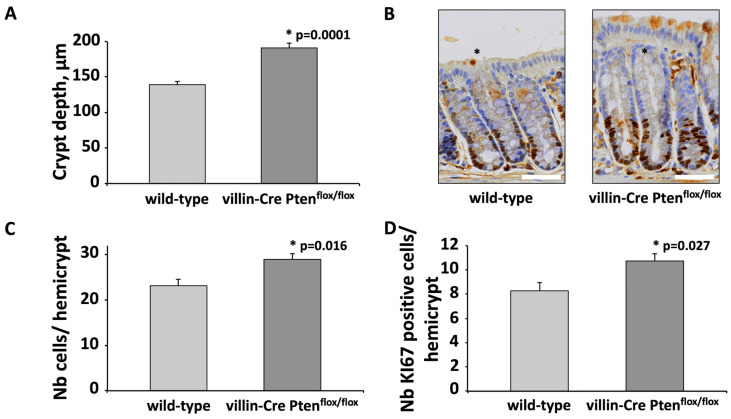 Figure 2
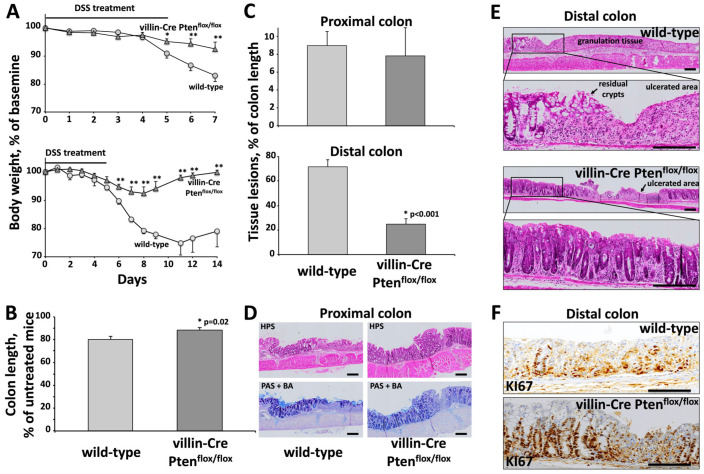 Figure 3
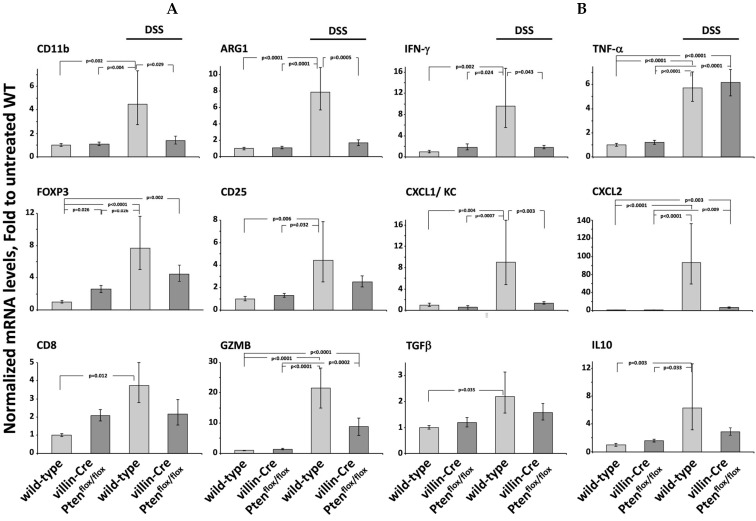 Figure 4
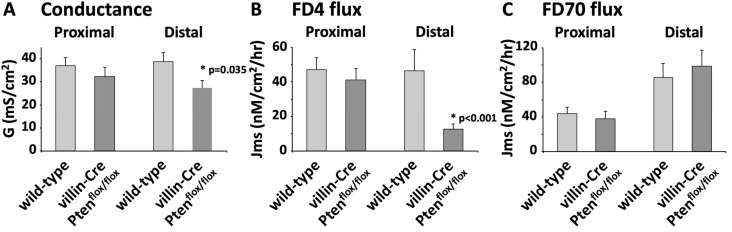 Figure 5
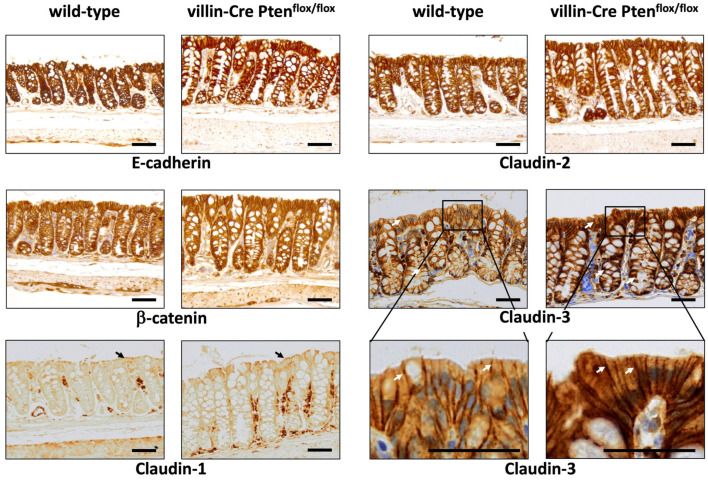 Figure 6
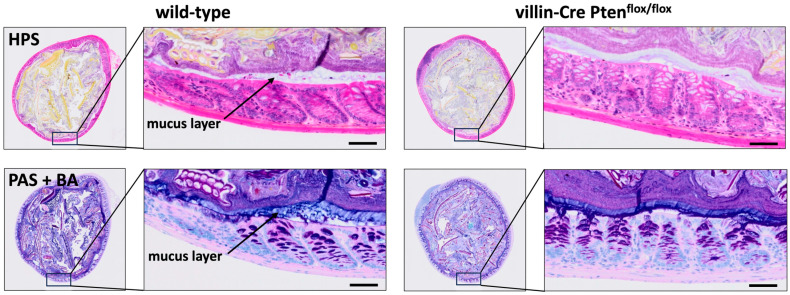 Figure 7
Peer Reviews
No public reviews on file for this paper yet. If you reviewed it on a platform where reviews are public (OpenReview, ICLR, NeurIPS, ICML), you can paste yours below so the community can read it here.
Videos
No videos yet. Explain this paper in a talk, walkthrough, or lecture? Add one.
Taxonomy
TopicsPI3K/AKT/mTOR signaling in cancer · Cancer-related molecular mechanisms research · Cytokine Signaling Pathways and Interactions