Efficacy of Dupilumab in a Young Woman with Refractory Cutaneous Lichen Planus: A Case-Based Review
Cristina Guerriero, Luisa Boeti, Francesco Mastellone, Giulia Coscarella, Gennaro Marco Falco, Gerardo Palmisano, Helena Pelanda, Ketty Peris, Donato Rigante

TL;DR
A young woman with long-standing cutaneous lichen planus achieved full remission after two years of dupilumab treatment, suggesting its potential as a new therapy.
Contribution
This case study demonstrates the efficacy of dupilumab in treating refractory cutaneous lichen planus, highlighting Th2 pathway targeting as a novel therapeutic approach.
Findings
Dupilumab treatment led to full remission in a 26-year-old woman with longstanding cutaneous lichen planus.
The patient experienced resolution of severe pruritus and skin lesions after two years of dupilumab therapy.
The case suggests that targeting the Th2 pathway may be effective in treating refractory CLP.
Abstract
Background: Cutaneous lichen planus (CLP) is a chronic inflammatory T cell-mediated disease driven by a mixed Th1 and Th2 lymphocyte population, for which many of the currently available treatments have poor efficacy. Aim: The aim of this study was to indicate the clinical success of dupilumab administration after two years of treatment in a case of longstanding CLP and to perform a review of the medical literature related to the use of dupilumab in different dermatologic settings and in CLP. Case presentation: One 26-year-old woman with a previous history of atopic dermatitis had a long-lasting skin condition, referred to as a suspected lichen, which started when she was 7 years old. Her disease exhibited a relapsing–remitting course with severe bouts of pruritus over a very long period. The final histological diagnosis of CLP was confirmed at the age of 26. Starting dupilumab…
Genes, proteins, chemicals, diseases, species, mutations and cell lines named across the full text — each resolved to its canonical identifier and authoritative record.
Click any figure to enlarge with its caption.
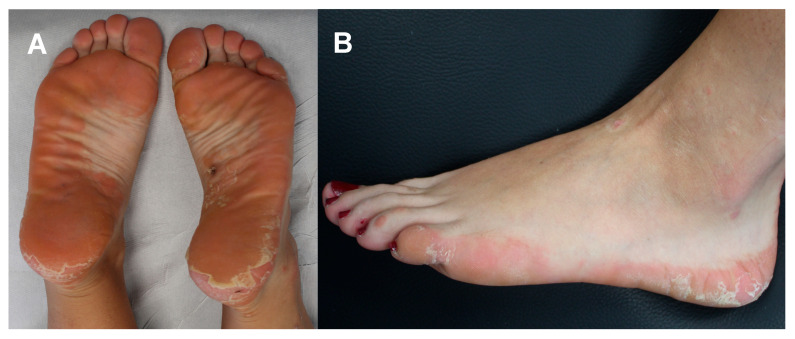 Figure 1
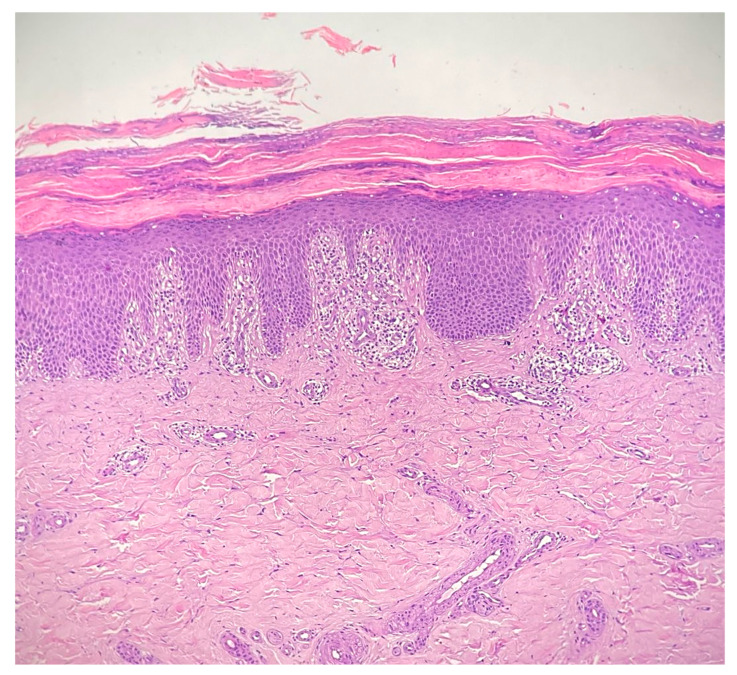 Figure 2
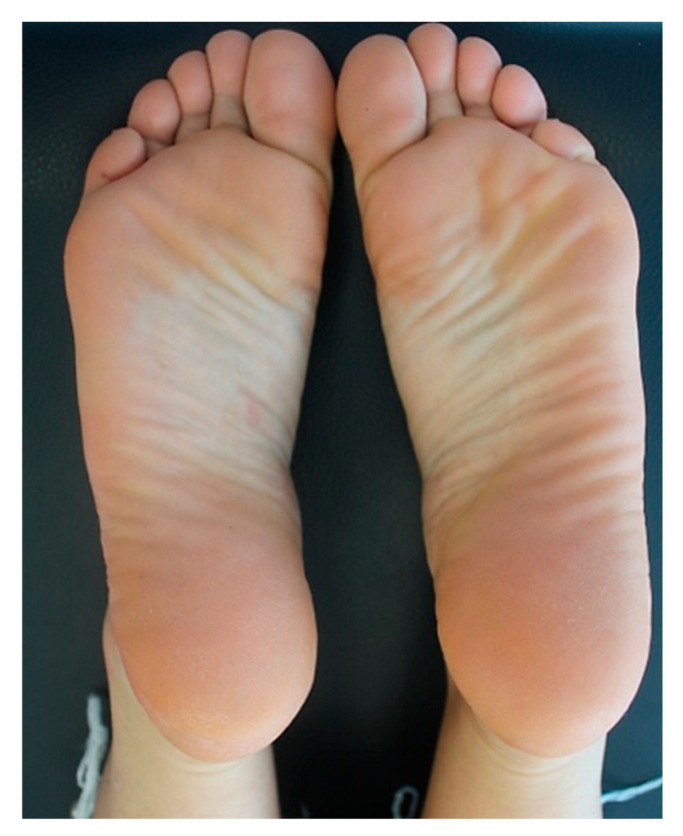 Figure 3
Peer Reviews
No public reviews on file for this paper yet. If you reviewed it on a platform where reviews are public (OpenReview, ICLR, NeurIPS, ICML), you can paste yours below so the community can read it here.
Videos
No videos yet. Explain this paper in a talk, walkthrough, or lecture? Add one.
Taxonomy
TopicsOral Health Pathology and Treatment · Autoimmune Bullous Skin Diseases · Dermatology and Skin Diseases