The Capacities of the Probiotic Strains L. helveticus MIMLh5 and L. acidophilus NCFM to Induce Th1-Stimulating Cytokines in Dendritic Cells Are Inversely Correlated with the Thickness of Their S-Layers
Valentina Taverniti, Paolo D’Incecco, Stefano Farris, Peter Riber Jonsen, Helene Skovsted Eld, Juliane Sørensen, Laura Brunelli, Giacomo Mantegazza, Stefania Arioli, Diego Mora, Simone Guglielmetti, Hanne Frøkiær

TL;DR
This study compares two probiotic bacteria and finds that their ability to stimulate immune responses is linked to the thickness of their protective surface layers.
Contribution
The study reveals that the S-layer thickness of probiotic strains inversely correlates with their ability to induce Th1-stimulating cytokines in dendritic cells.
Findings
L. acidophilus NCFM induces stronger IL-12 responses compared to L. helveticus MIMLh5.
MIMLh5 has a thicker and stiffer S-layer, which correlates with reduced IL-12 induction.
S-layer depletion equalizes the mechanical properties and cytokine responses of the two strains.
Abstract
The two probiotic bacteria Lactobacillus helveticus MIMLh5 and L. acidophilus NCFM exhibit homology, are both equipped with an S-layer made up of highly homologous proteins and are capable of stimulating Th1-inducing signals in dendritic cells. In this study, we aimed to compare the two strains as regards the thickness of the S-layer and their capacity to induce the production of the two Th1-inducing cytokines IL-12 and IFN-β. For both bacteria, stimulation with an increasing number of bacteria led to the higher and prompter production of IL-12 and IFN-β, but at all MOIs tested, the IL-12 response induced by NCFM was always the strongest. For both bacteria, the induction of IL-12 peaked at a multiplicity of infection (MOI) of 2–5, while IL-10, known to inhibit the induction of IL-12 cytokines, was induced more slowly and continued to increase at a higher MOI. By employing specific…
Genes, proteins, chemicals, diseases, species, mutations and cell lines named across the full text — each resolved to its canonical identifier and authoritative record.
Click any figure to enlarge with its caption.
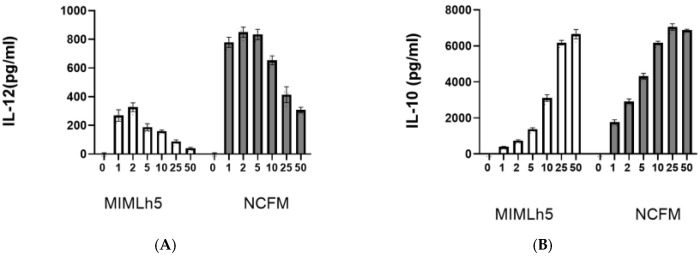 Figure 1
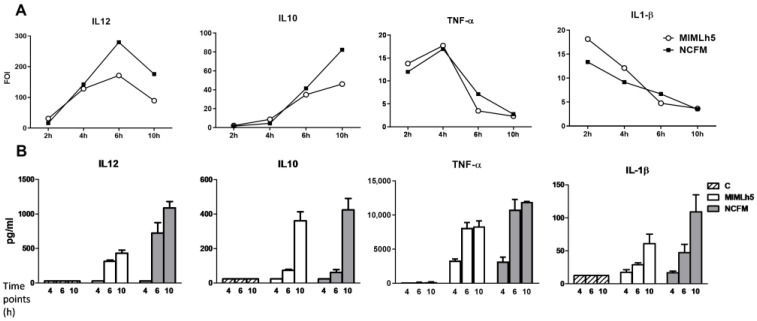 Figure 2
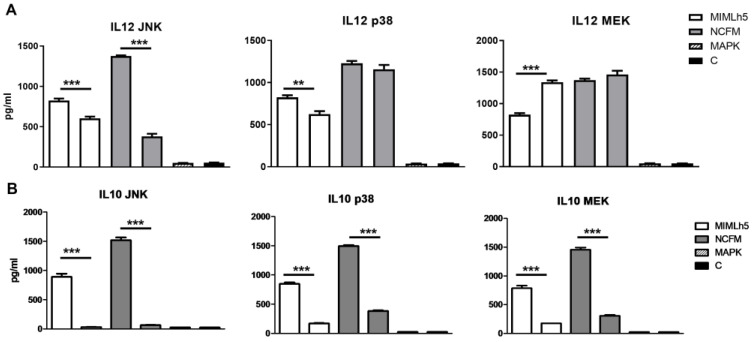 Figure 3
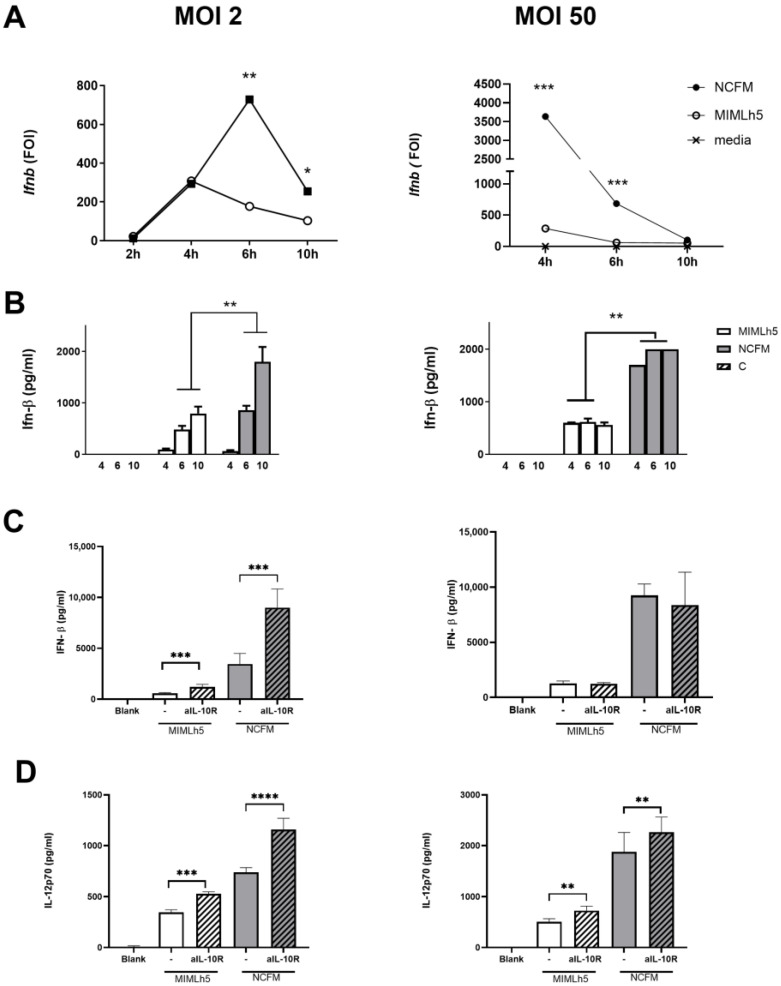 Figure 4
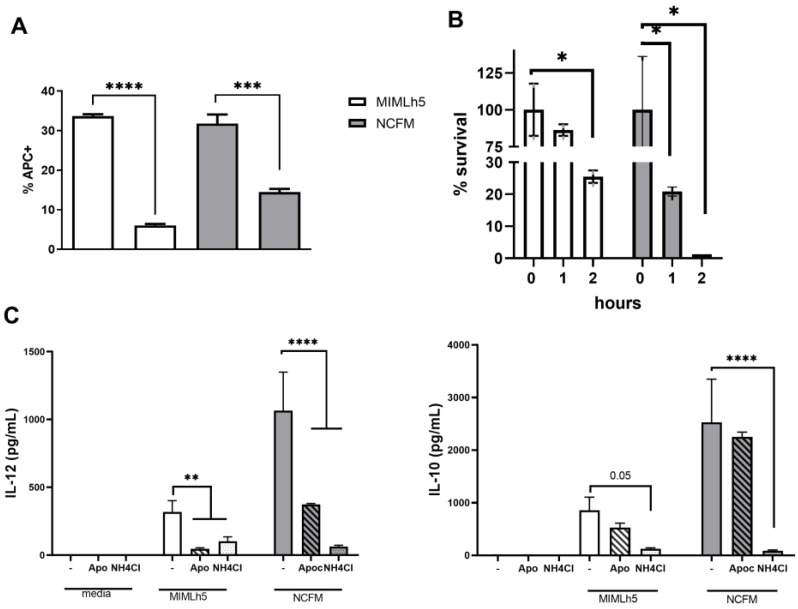 Figure 5
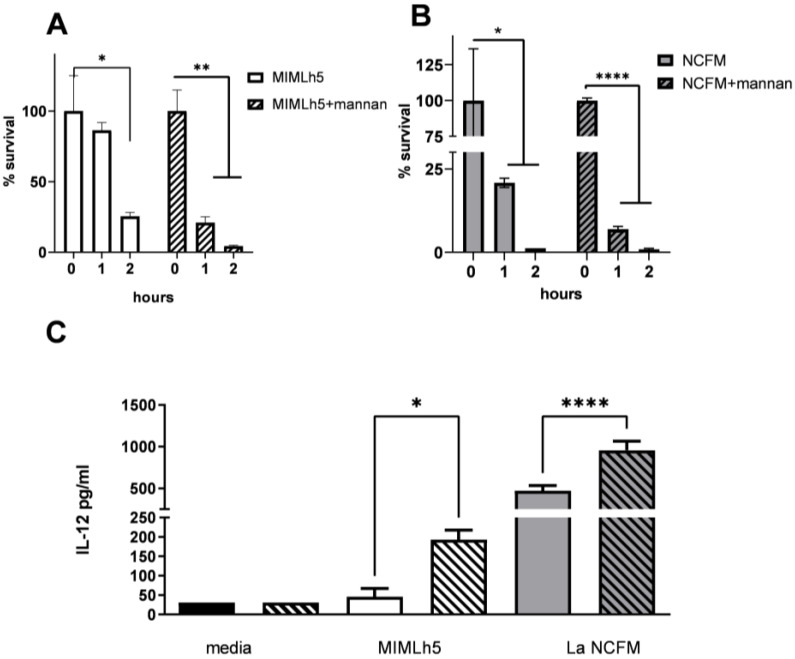 Figure 6
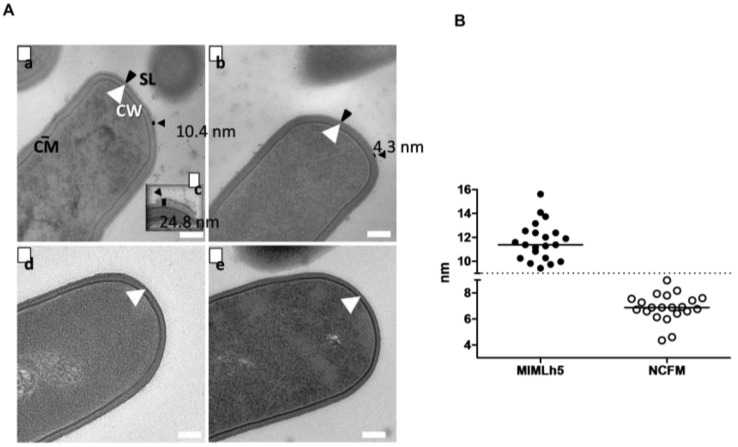 Figure 7
Peer Reviews
No public reviews on file for this paper yet. If you reviewed it on a platform where reviews are public (OpenReview, ICLR, NeurIPS, ICML), you can paste yours below so the community can read it here.
Videos
No videos yet. Explain this paper in a talk, walkthrough, or lecture? Add one.
Taxonomy
TopicsProbiotics and Fermented Foods · Antimicrobial Peptides and Activities · Escherichia coli research studies