PET/CT Volumetric Parameters as Predictors of the Peritoneal Cancer Index in Advanced Ovarian Cancer Patients
Ariel Glickman, Blanca Gil-Ibáñez, Aida Niñerola-Baizán, Marta Tormo, Núria Carreras-Dieguez, Pere Fusté, Marta Del Pino, Eduardo González-Bosquet, Inmaculada Romero-Zayas, Cristina Celada-Castro, Tiermes Marina, Lydia Gaba, Adela Rodriguez Hernández, Adela Saco, Laura Buñesch

TL;DR
This study shows that PET/CT scans can predict the extent of cancer spread in advanced ovarian cancer patients, helping guide treatment decisions.
Contribution
The study demonstrates that PET/CT volumetric parameters can non-invasively predict the peritoneal cancer index in advanced ovarian cancer.
Findings
MTV40 and TLG40 showed significant correlations with the peritoneal cancer index (PCI).
Quadrant-specific parameters like MTV3_40 and TLG3_40 had high AUCs for predicting PCI above 14.
Volumetric parameters effectively predicted PCI above or below 20 with AUCs around 0.77.
Abstract
Background: Assessment of the peritoneal cancer burden is crucial for determining the optimal treatment in advanced ovarian cancer (AOC). Effective non-invasive methods to predict tumour load remain limited. This study aimed to assess the applicability of 2-[18F]FDG PET/CT volumetric parameters, metabolic tumour volume (MTV), and total lesion glycolysis (TLG) for predicting the surgical peritoneal cancer index (PCI) in AOC before primary treatment. Methods: Patients with high-grade serous or undifferentiated AOC who underwent surgical PCI evaluation and 2-[18F]FDG PET/CT between 01/2013 and 12/2018 were included. MTV and TLG were calculated using thresholds of 40% and 50% (MTV40, MTV50, TLG40, and TLG50). Correlations between the peritoneal carcinomatosis MTV (car_MTV) and TLG (car_TLG) were analysed. The capacity of volumetric parameters to estimate PCIs above or below 14 and 20 was…
Genes, proteins, chemicals, diseases, species, mutations and cell lines named across the full text — each resolved to its canonical identifier and authoritative record.
Click any figure to enlarge with its caption.
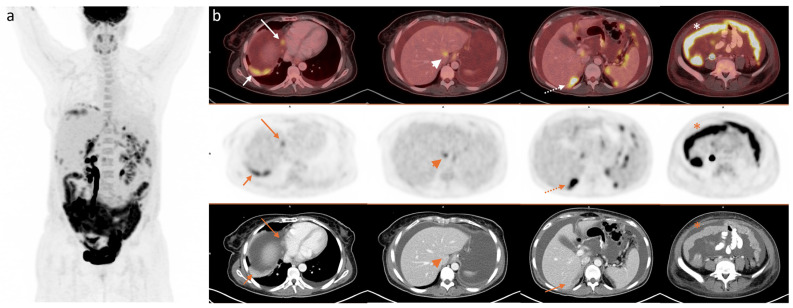 Figure 1
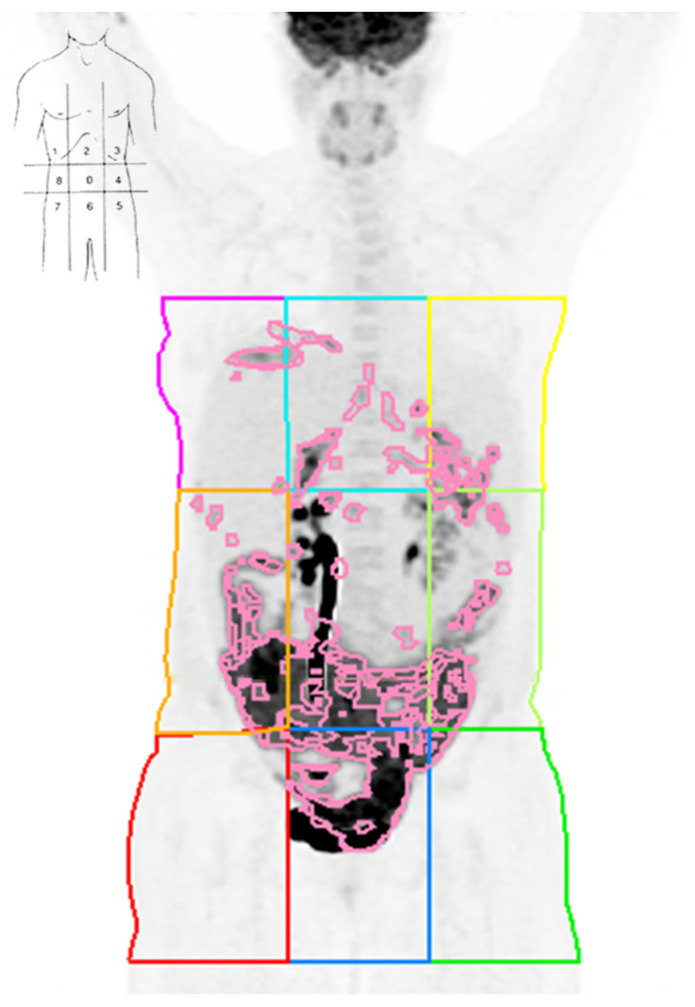 Figure 2
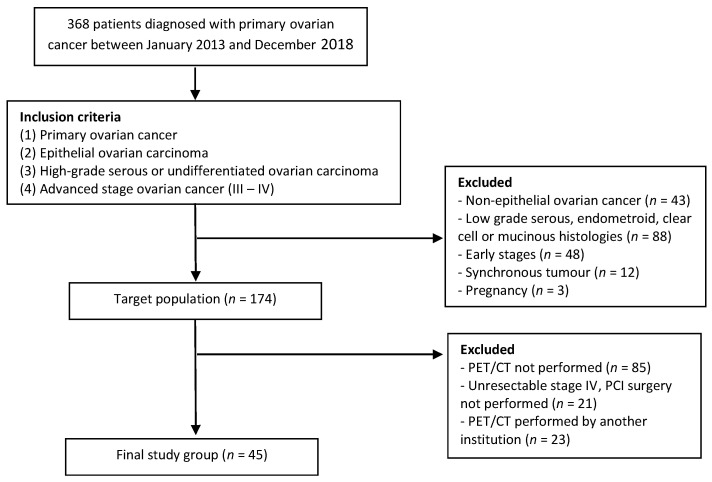 Figure 3
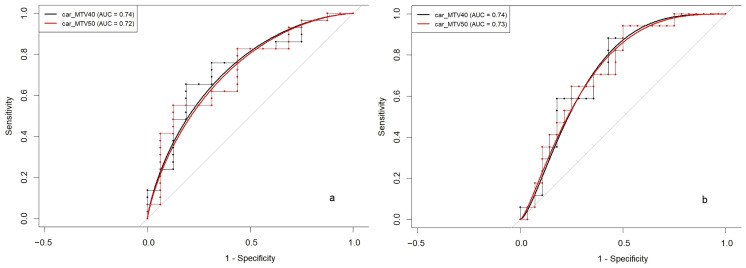 Figure 4
Peer Reviews
No public reviews on file for this paper yet. If you reviewed it on a platform where reviews are public (OpenReview, ICLR, NeurIPS, ICML), you can paste yours below so the community can read it here.
Videos
No videos yet. Explain this paper in a talk, walkthrough, or lecture? Add one.
Taxonomy
TopicsOvarian cancer diagnosis and treatment · Intraperitoneal and Appendiceal Malignancies · Endometriosis Research and Treatment