Synthesis and Cytotoxicity Evaluation of Denitroaristolochic Acids: Structural Insights and Mechanistic Implications in Nephrotoxicity
Jianfei Gao, Mengtong Zhao, Jianhua Su, Yi Gao, Xiaofeng Zhang, Yongzhao Ding, Xiaoping Liu, Yang Luan, Chun Hu

TL;DR
This study explores the synthesis and toxicity of denitroaristolochic acids, revealing how structural changes affect their harmful effects on kidney cells.
Contribution
The paper introduces a novel synthetic strategy and reveals new insights into the cytotoxic mechanisms of denitroaristolochic acids.
Findings
Denitroaristolochic acids III and IV showed reduced cytotoxicity compared to the nitro-containing prototype.
The absence of a nitro group does not eliminate toxicity, suggesting alternative mechanisms like oxidative stress.
DAA-II and DAA-V showed no detectable cytotoxicity, indicating reduced toxicological impact.
Abstract
The efficient synthetic routes and evaluates cytotoxic profiles of denitroaristolochic acids II–V (DAA-II–V) were demonstrated in this study. Based on retrosynthetic analysis, a modular synthetic strategy was developed through Suzuki–Miyaura coupling, Wittig reaction, and bismuth triflate-catalyzed intramolecular Friedel–Crafts cyclization to efficiently construct the phenanthrene core. Process optimization significantly improved yields: aryl bromide intermediate A reached 50.8% yield via bromination refinement, while arylboronic ester intermediate B overcame selectivity limitations. Combining Darzens condensation with Wittig reaction enhanced throughput, achieving 88.4% yield in the key cyclization. Structures were confirmed by NMR and mass spectra. CCK-8 cytotoxicity assays in human renal proximal tubular epithelial cells revealed distinct toxicological profiles: DAA-III and DAA-IV…
Genes, proteins, chemicals, diseases, species, mutations and cell lines named across the full text — each resolved to its canonical identifier and authoritative record.
Click any figure to enlarge with its caption.
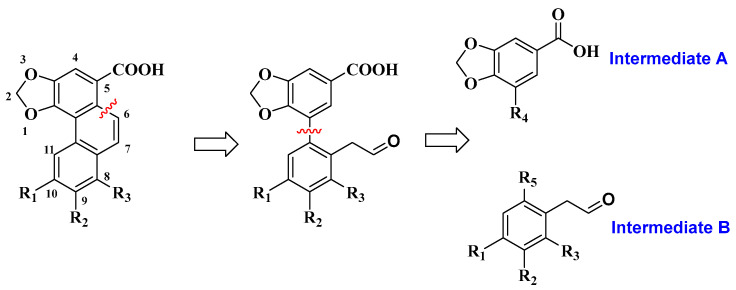 Figure 1
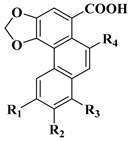 Figure 2
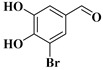 Figure 3
 Figure 4
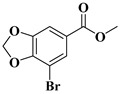 Figure 5
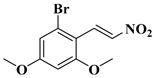 Figure 6
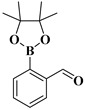 Figure 7
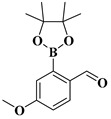 Figure 8
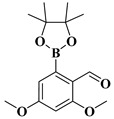 Figure 9
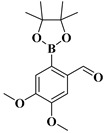 Figure 10
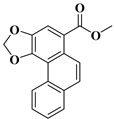 Figure 11
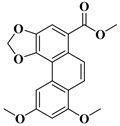 Figure 12
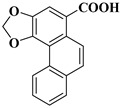 Figure 13
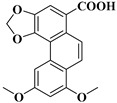 Figure 14
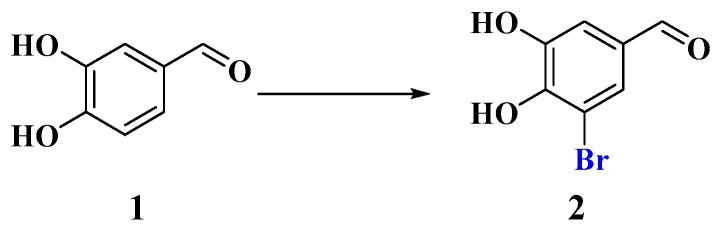 Figure 15
 Figure 16
 Figure 17
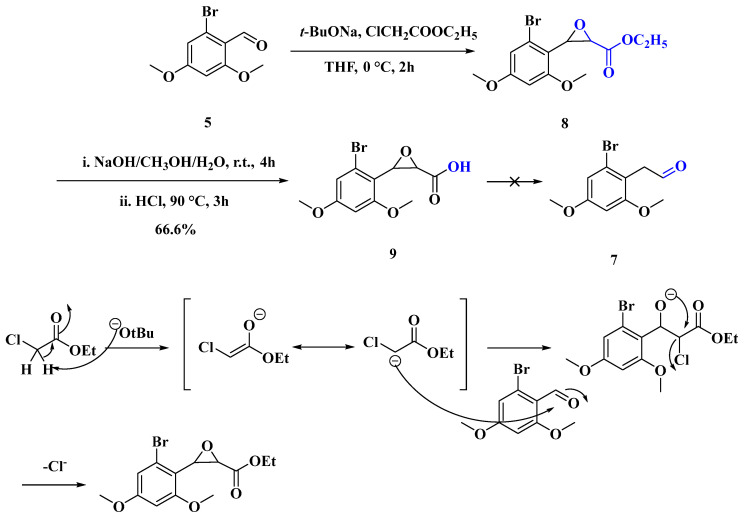 Figure 18
 Figure 19
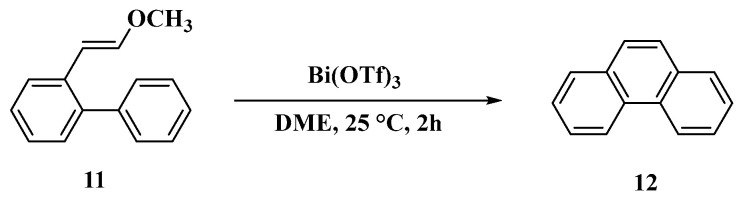 Figure 20
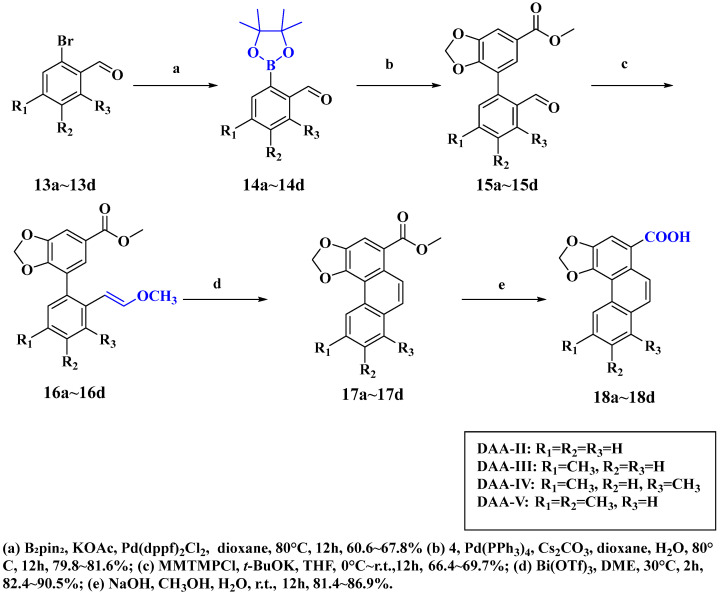 Figure 21
Peer Reviews
No public reviews on file for this paper yet. If you reviewed it on a platform where reviews are public (OpenReview, ICLR, NeurIPS, ICML), you can paste yours below so the community can read it here.
Videos
No videos yet. Explain this paper in a talk, walkthrough, or lecture? Add one.
Taxonomy
TopicsNephrotoxicity and Medicinal Plants · Garlic and Onion Studies · Phytochemistry and biological activities of Ficus species