Cognitive, Behavioral, and Learning Profiles of Children with Above-Average Cognitive Functioning: Insights from an Italian Clinical Sample
Daniela Pia Rosaria Chieffo, Valentina Arcangeli, Valentina Delle Donne, Giulia Settimi, Valentina Massaroni, Angelica Marfoli, Monia Pellizzari, Ida Turrini, Elisa Marconi, Laura Monti, Federica Moriconi, Delfina Janiri, Gabriele Sani, Eugenio Maria Mercuri

TL;DR
This study explores the cognitive, academic, and emotional profiles of Italian children with above-average intelligence, revealing both strengths and challenges.
Contribution
The study provides new insights into the cognitive and behavioral profiles of gifted children in Southern Europe using an inclusive dimensional approach.
Findings
Gifted children showed strong verbal comprehension but relative weaknesses in working memory and processing speed.
Females scored higher in processing speed, while males outperformed in perceptual reasoning.
Subclinical internalizing problems were common, and working memory correlated with fewer behavioral problems.
Abstract
Background/Objectives: Children with above-average cognitive functioning often present complex developmental profiles, combining high cognitive potential with heterogeneous socio-emotional and learning trajectories. Although the cognitive and behavioral characteristics of giftedness have been widely studied in Anglophone countries, evidence remains limited in Southern Europe. This study aimed to investigate the cognitive, academic, and emotional–behavioral profiles of Italian children and adolescents with above-average cognitive functioning, using an inclusive, dimensional approach (IQ > 114). Methods: We analyzed a cross-sectional sample of 331 children and adolescents (ages 2.11–16.5 years), referred for clinical cognitive or behavioral evaluations. Participants were assessed using the WPPSI-III or WISC-IV for cognitive functioning, the MT battery for academic achievement, and the…
Genes, proteins, chemicals, diseases, species, mutations and cell lines named across the full text — each resolved to its canonical identifier and authoritative record.
Click any figure to enlarge with its caption.
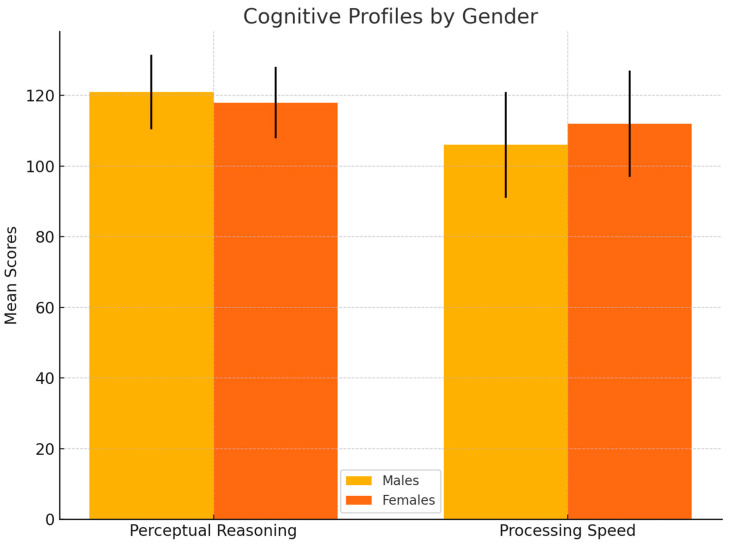 Figure 1
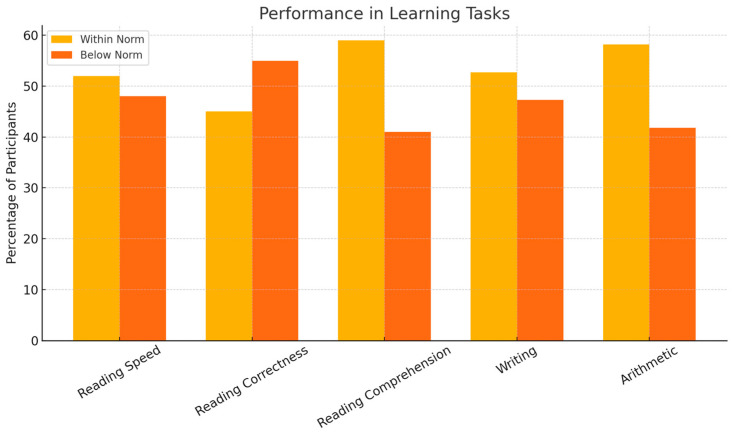 Figure 2
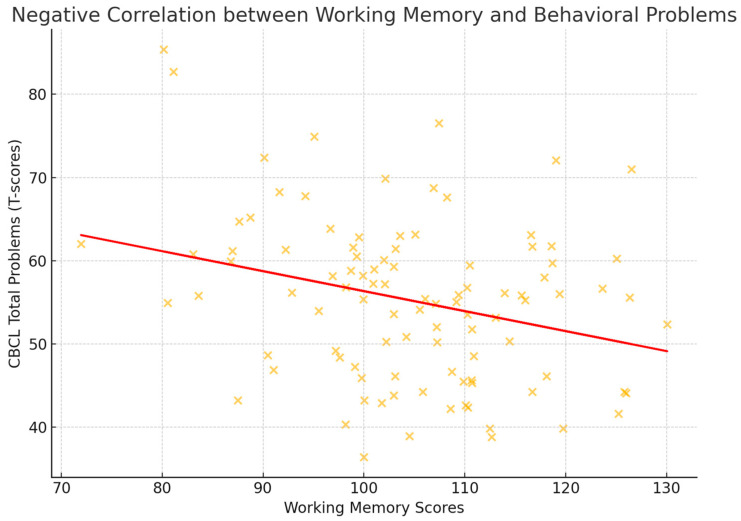 Figure 3
Peer Reviews
No public reviews on file for this paper yet. If you reviewed it on a platform where reviews are public (OpenReview, ICLR, NeurIPS, ICML), you can paste yours below so the community can read it here.
Videos
No videos yet. Explain this paper in a talk, walkthrough, or lecture? Add one.
Taxonomy
TopicsCognitive Abilities and Testing · Attention Deficit Hyperactivity Disorder · Education, Achievement, and Giftedness