miR-302a/b/d-3p Differentially Expressed During Frontonasal Development Is Sensitive to Retinoic Acid Exposure
Chihiro Iwaya, Akiko Suzuki, Goo Jun, Junichi Iwata

TL;DR
This study shows that miR-302a/b/d-3p is involved in facial development and is affected by retinoic acid, which can cause facial malformations.
Contribution
The study identifies miR-302a/b/d-3p as sensitive to retinoic acid and linked to frontonasal development.
Findings
miR-302a/b/d-3p expression is upregulated by excessive retinoic acid exposure.
Inhibiting miR-302a/b/d-3p restores cell proliferation reduced by retinoic acid.
These miRNAs regulate multiple genes associated with frontonasal anomalies.
Abstract
Any failure in frontonasal development can lead to malformations at the middle facial region, such as frontonasal dysplasia, midfacial clefts, and hyper/hypotelorism. Various environmental factors influence morphogenesis through epigenetic regulations, including the action of noncoding microRNAs (miRNAs). However, it remains unclear how miRNAs are involved in the frontonasal development. In our analysis of publicly available miRNA-seq and RNA-seq datasets, we found that miR-28a-5p, miR-302a-3p, miR-302b-3p, and miR-302d-3p were differentially expressed in the frontonasal process during embryonic days 10.5 to 13.5 (E10.5–E13.5) in mice. Overexpression of these miRNAs led to a suppression of cell proliferation in cultured mouse embryonic frontonasal mesenchymal (MEFM) cells as well as in O9-1 cells, a cranial neural crest cell line. Through advanced bioinformatic analyses and miRNA-gene…
Genes, proteins, chemicals, diseases, species, mutations and cell lines named across the full text — each resolved to its canonical identifier and authoritative record.
Click any figure to enlarge with its caption.
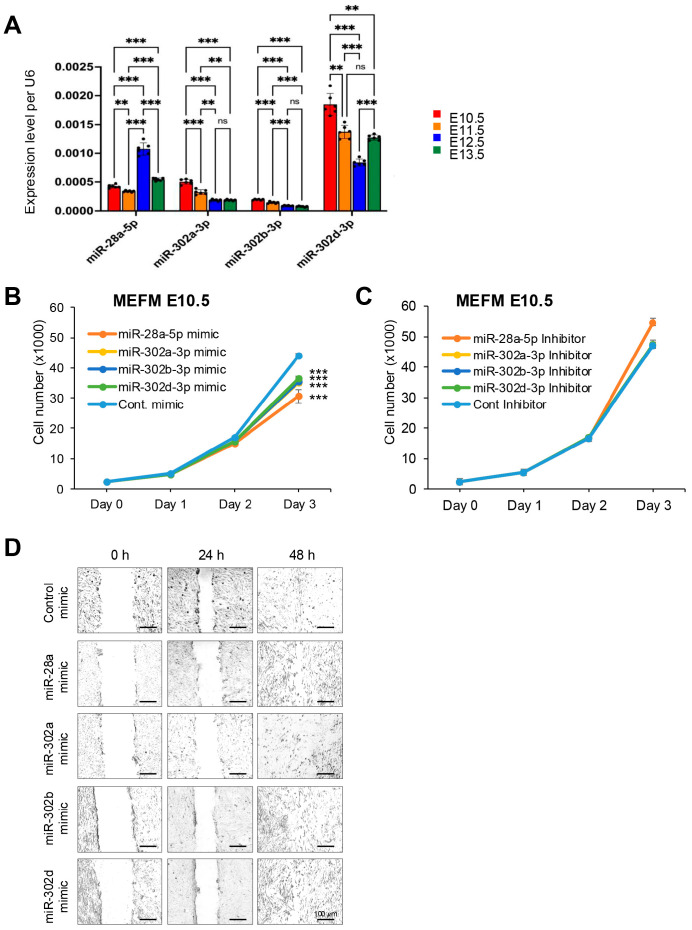 Figure 1
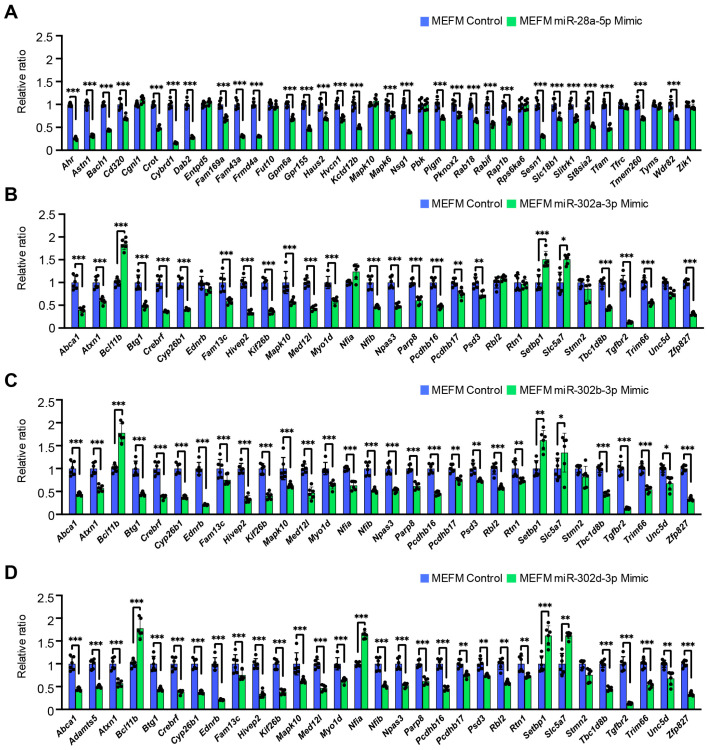 Figure 2
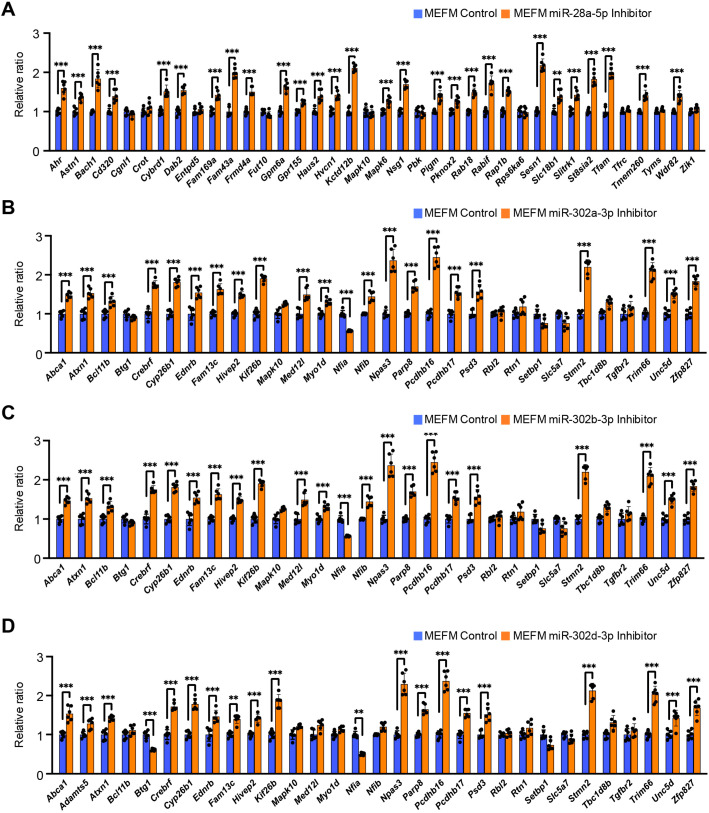 Figure 3
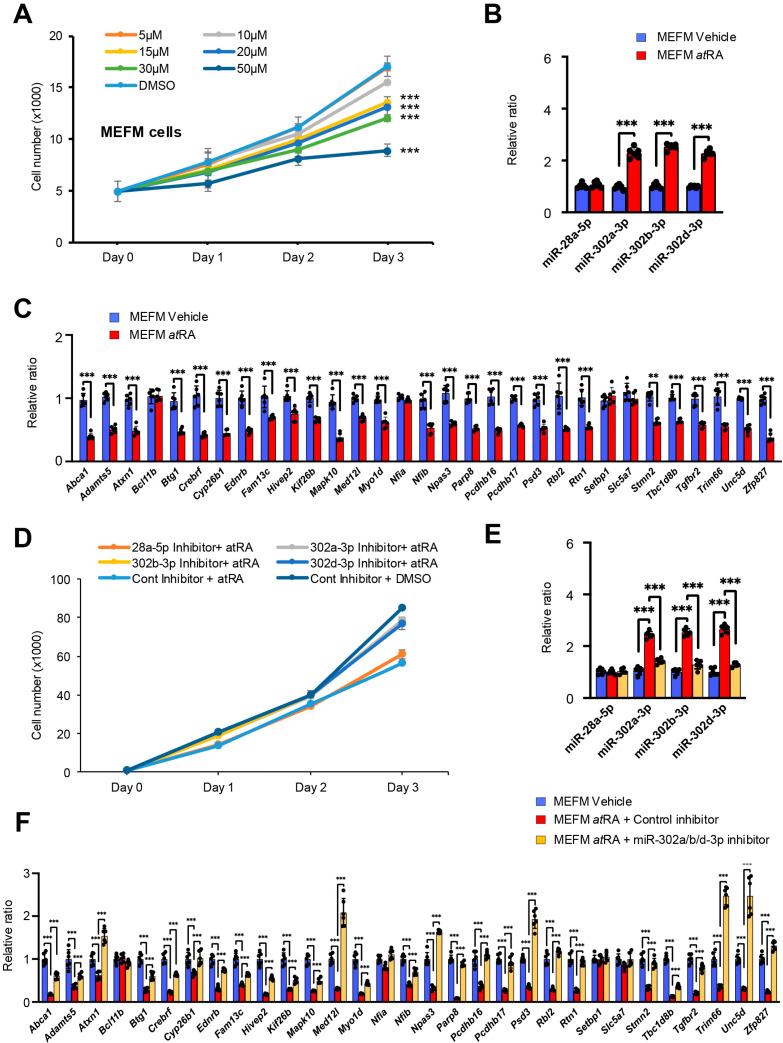 Figure 4
Peer Reviews
No public reviews on file for this paper yet. If you reviewed it on a platform where reviews are public (OpenReview, ICLR, NeurIPS, ICML), you can paste yours below so the community can read it here.
Videos
No videos yet. Explain this paper in a talk, walkthrough, or lecture? Add one.
Taxonomy
TopicsNeonatal Respiratory Health Research · Neurogenesis and neuroplasticity mechanisms · Craniofacial Disorders and Treatments