Integrating Near-Infrared Spectroscopy and Proteomics for Semen Quality Biosensing
Notsile H. Dlamini, Mariana Santos-Rivera, Carrie K. Vance-Kouba, Olga Pechanova, Tibor Pechan, Jean M. Feugang

TL;DR
This study combines near-infrared spectroscopy and proteomics to non-invasively assess boar semen quality using extracellular vesicles in seminal plasma.
Contribution
The integration of NIRS and SP-EV proteomics offers a novel, non-invasive method for rapid semen quality evaluation in swine breeding.
Findings
NIRS achieved 92.2% accuracy in classifying semen quality based on water structure variations.
Proteomic analysis identified 218 and 238 proteins in passed and failed samples, respectively, with key proteins like Nexin-1 and LGALS3BP showing differential expression.
Functional analysis linked passed samples to pathways involving fertilization and glutathione metabolism.
Abstract
Artificial insemination (AI) is a key breeding technique in the swine industry; however, the lack of reliable biomarkers for semen quality limits its effectiveness. Seminal plasma (SP) contains extracellular vesicles (EVs) that present a promising, non-invasive biomarker for semen quality. This study explores the biochemical profiles of boar SP to assess semen quality through near-infrared spectroscopy (NIRS) and proteomics of SP-EVs. Fresh semen from mature Duroc boars was evaluated based on sperm motility, classifying samples as Passed (≥70%) or Failed (<70%). NIRS analysis identified distinct variations in water structures at specific wavelengths (C1, C5, C12 nm), achieving high accuracy (92.2%), sensitivity (94.2%), and specificity (90.3%) through PCA-LDA. Proteomic analysis of SP-EVs revealed 218 proteins in Passed and 238 in Failed samples. Nexin-1 and seminal plasma protein pB1…
Genes, proteins, chemicals, diseases, species, mutations and cell lines named across the full text — each resolved to its canonical identifier and authoritative record.
Click any figure to enlarge with its caption.
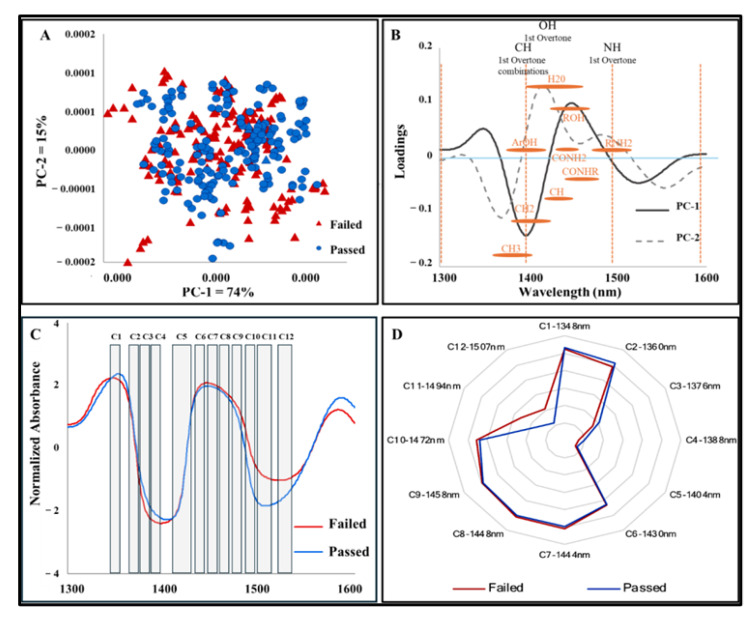 Figure 1
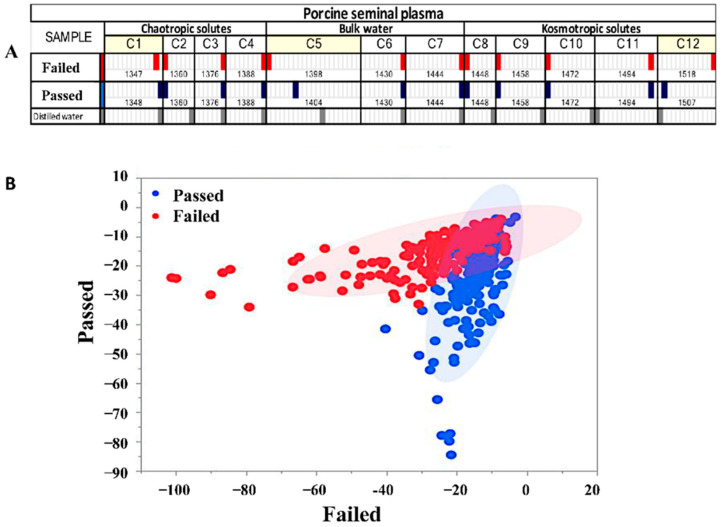 Figure 2
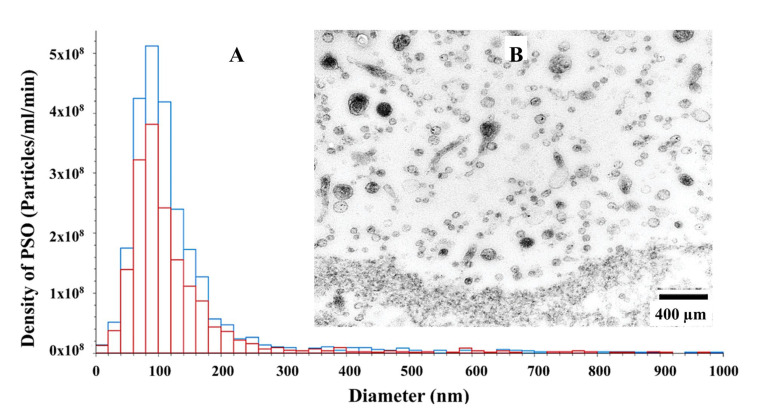 Figure 3
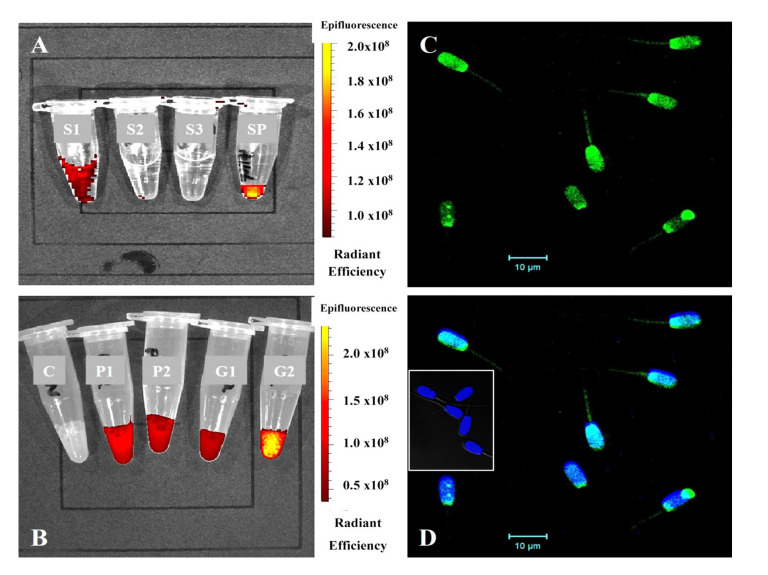 Figure 4
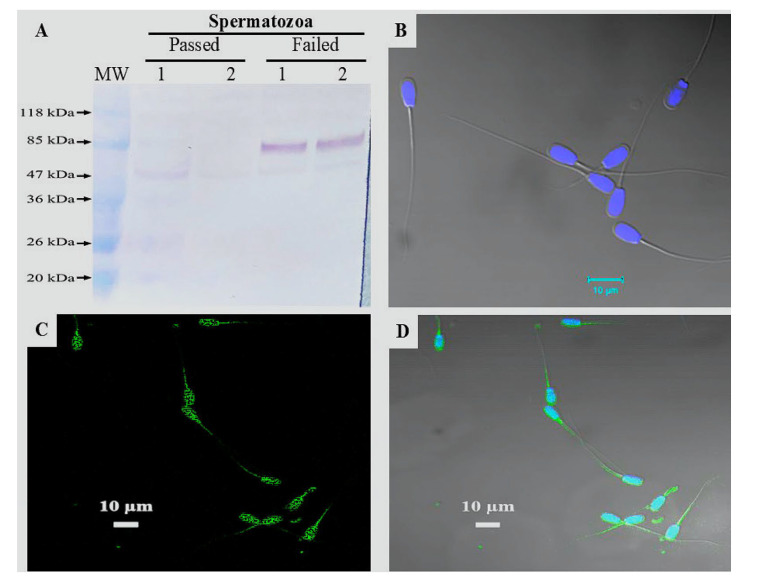 Figure 5
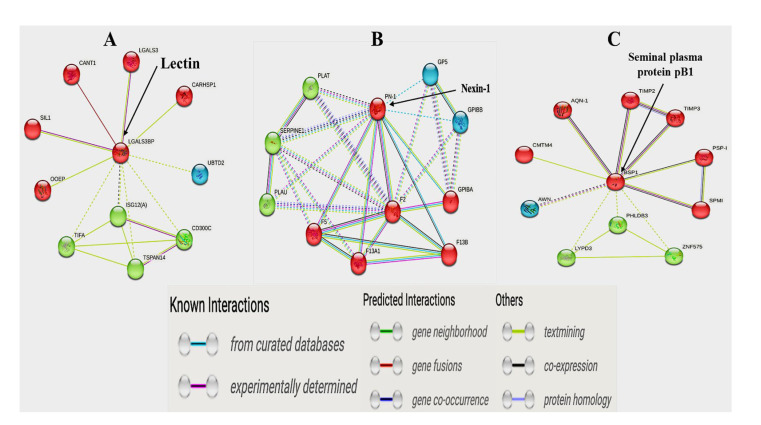 Figure 6
Peer Reviews
No public reviews on file for this paper yet. If you reviewed it on a platform where reviews are public (OpenReview, ICLR, NeurIPS, ICML), you can paste yours below so the community can read it here.
Videos
No videos yet. Explain this paper in a talk, walkthrough, or lecture? Add one.
Taxonomy
TopicsSpectroscopy Techniques in Biomedical and Chemical Research · Extracellular vesicles in disease · Animal Virus Infections Studies