Weak Acids as Endogenous Inhibitors of the Proton-Activated Chloride Channel
Inês C. A. Pombeiro Stein, Maren Schulz, Daniel Rudolf, Christine Herzog, Frank Echtermeyer, Nils Kriedemann, Robert Zweigerdt, Andreas Leffler

TL;DR
This study shows that weak acids like acetic and lactic acid inhibit a proton-activated chloride channel through a specific binding site involving Arg93.
Contribution
The paper identifies a novel extracellular mechanism by which weak acids inhibit the PAC channel, involving a specific amino acid residue.
Findings
Weak acids inhibit PAC channels in a reversible, concentration-dependent, and pH-dependent manner.
Extracellular arginine 93 is crucial for the inhibition of PAC channels by certain weak acids.
Lactic acid inhibits PAC channels but does not reduce proton-induced cytotoxicity in HEK293 cells.
Abstract
The recently identified proton-activated chloride (PAC) channel is ubiquitously expressed, and it regulates several proton-sensitive physiological and pathophysiological processes. While the PAC channel is activated by strong acids due to the binding of protons to extracellular binding sites, here, we describe the way in which weak acids inhibit the PAC channel by a mechanism involving a distinct extracellular binding site. Whole-cell patch clamp was performed on wildtype HEK293T cells, PAC-knockout HEK293 cells expressing human (h)PAC mutant constructs, and on hiPSC-derived cardiomyocytes. Proton-induced cytotoxicity was examined in HEK293T cells. Acetic acid inhibited endogenous PAC channels in HEK 293T cells in a reversible, concentration-dependent, and pH-dependent manner. The inhibition of PAC channels was also induced by lactic acid, propionic acid, itaconic acid, and…
Genes, proteins, chemicals, diseases, species, mutations and cell lines named across the full text — each resolved to its canonical identifier and authoritative record.
Click any figure to enlarge with its caption.
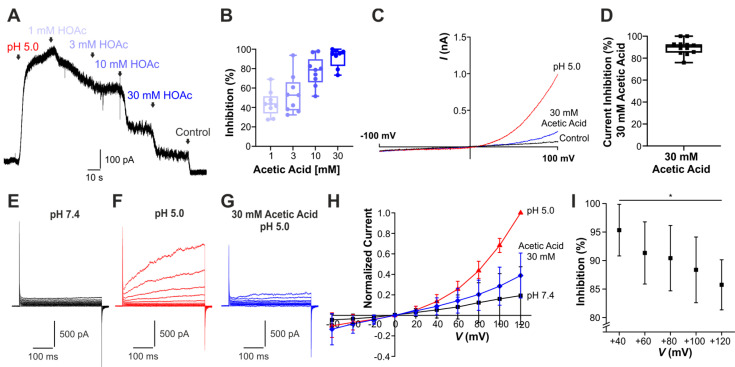 Figure 1
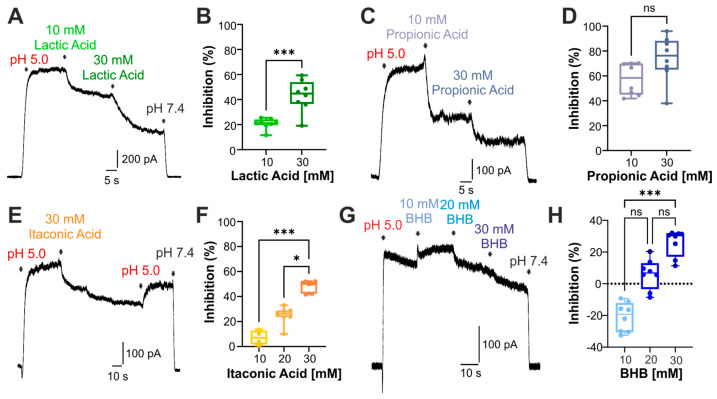 Figure 2
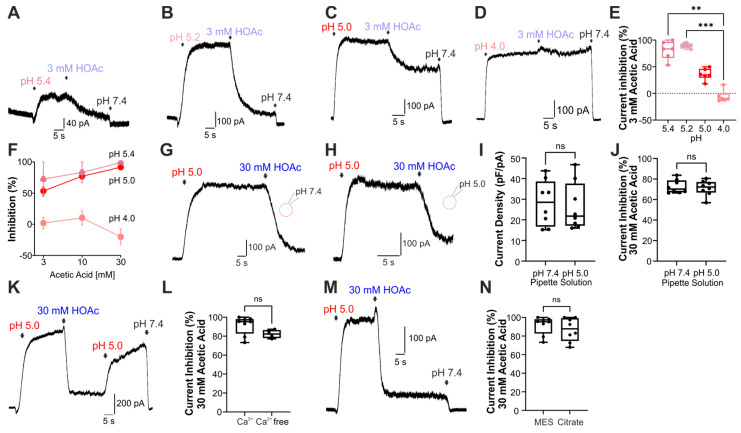 Figure 3
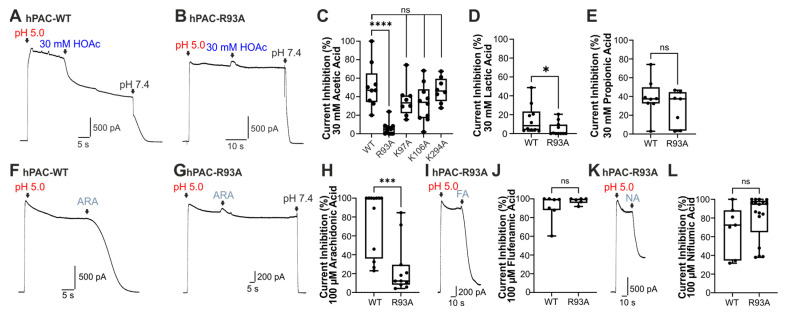 Figure 4
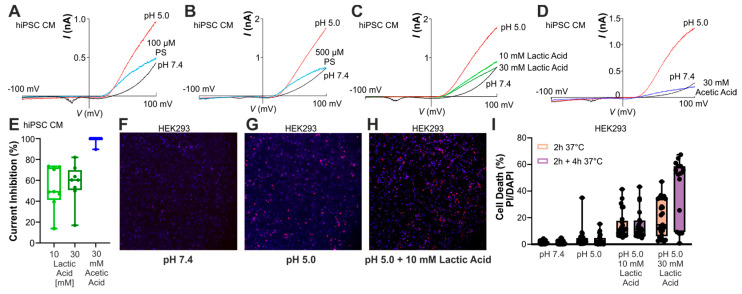 Figure 5
Peer Reviews
No public reviews on file for this paper yet. If you reviewed it on a platform where reviews are public (OpenReview, ICLR, NeurIPS, ICML), you can paste yours below so the community can read it here.
Videos
No videos yet. Explain this paper in a talk, walkthrough, or lecture? Add one.
Taxonomy
TopicsIon channel regulation and function · Cardiac electrophysiology and arrhythmias · Nicotinic Acetylcholine Receptors Study