Therapeutic Efficacy of a Very Low/Low Dose of Lenvatinib in Advanced Radioiodine-Refractory Thyroid Cancer: A Real-World Series from a Single Center
Vittorio Oteri, Fiorenza Gianì, Giulia Sapuppo, Stefania Panebianco, Ilenia Marturano, Giusi Blanco, Pasqualino Malandrino, Marco Russo, Francesco Frasca, Gabriella Pellegriti

TL;DR
This study shows that using very low or low doses of lenvatinib can effectively manage advanced thyroid cancer while reducing severe side effects.
Contribution
The paper presents real-world evidence of lenvatinib's efficacy and safety at very low/low doses for fragile RAI-RTC patients.
Findings
53.3% of patients did not show disease progression.
26.6% of patients achieved a partial response with tumor volume reduction.
80% of patients experienced adverse events, mostly of moderate severity.
Abstract
Managing the treatment of advanced RAI-RTC (advanced radioiodine-refractory differentiated thyroid cancer) with progressive disease remains a clinical challenge in the presence of comorbidities or locally advanced (with invasion of the trachea, the esophagus, and/or the carotid artery) and unresectable or metastatic progressive tumors. Initiating lenvatinib at a low or very low intensity in these patients seems to be a promising approach, balancing effective disease control with a favorable safety profile. The aim of our paper is to describe the therapeutic efficacy and safety of a very low (4 mg/day) or low (4–10/day) lenvatinib dose in 15 patients with RAI-RTC. In our experience, lenvatinib, even at very low doses, can achieve significant tumor reduction and extend progression-free survival, all while minimizing severe adverse effects. Background: Lenvatinib is a receptor tyrosine…
Genes, proteins, chemicals, diseases, species, mutations and cell lines named across the full text — each resolved to its canonical identifier and authoritative record.
Click any figure to enlarge with its caption.
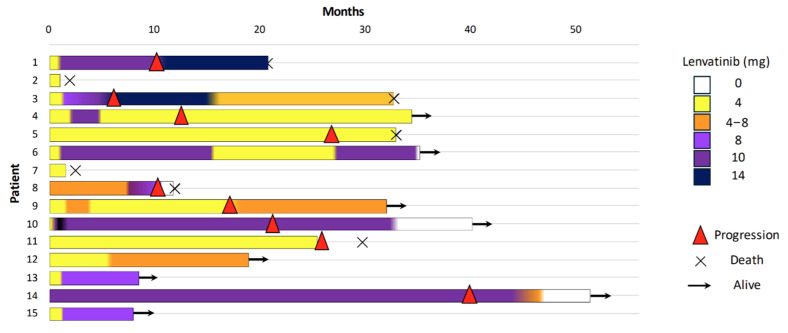 Figure 1
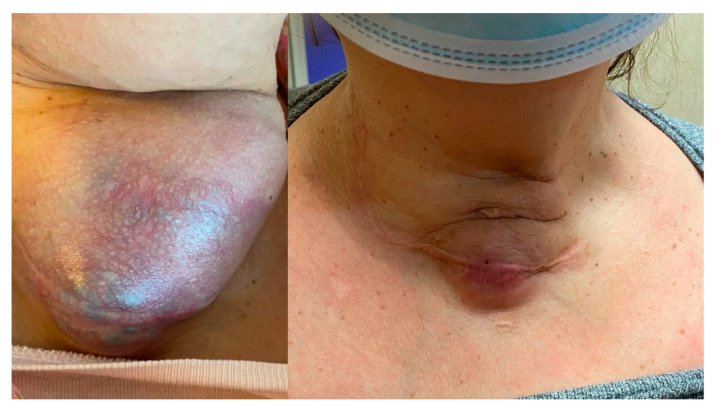 Figure 2
 Figure 3
 Figure 4
Peer Reviews
No public reviews on file for this paper yet. If you reviewed it on a platform where reviews are public (OpenReview, ICLR, NeurIPS, ICML), you can paste yours below so the community can read it here.
Videos
No videos yet. Explain this paper in a talk, walkthrough, or lecture? Add one.
Taxonomy
TopicsThyroid Cancer Diagnosis and Treatment