Reliability of the Polish Version of the Kinesiophobia Causes Scale (KCS) Questionnaire in Assessing the Level of Fear of Movement Among People Suffering from Chronic Nonspecific Low Back Pain
Edward Saulicz, Andrzej Knapik, Aleksandra Saulicz, Damian Sikora, Mariola Saulicz

TL;DR
The study confirms that a Polish version of the Kinesiophobia Causes Scale (KCS) reliably measures fear of movement in people with chronic lower back pain.
Contribution
The paper validates the reliability of the Polish version of the KCS questionnaire for assessing kinesiophobia in chronic nonspecific low back pain patients.
Findings
The Polish KCS questionnaire showed good internal consistency with Cronbach’s alpha values between 0.8 and 0.9.
The reliability of the KCS was excellent for both biological and psychological domains, with ICC3.1 confidence intervals ranging from 0.86–0.96.
The total KCS score demonstrated excellent reliability with an ICC3.1 of 0.91–0.93.
Abstract
Background: The phenomenon of fear of movement is called kinesiophobia. Kinesiophobia is a significant factor that complicates the treatment process. Fear of movement and physical activity is a risk factor for the transformation of acute pain into chronic pain. Therefore, the assessment of the level of kinesiophobia is a prognostic factor for disability and mental stress, thus having a significant impact on the quality of life of people with lower back pain. One of the psychometric diagnostic tools for assessing the level of kinesiophobia is the Kinesiophobia Causes Scale (KCS). The aim of the study was to assess the reliability of the KCS test used in people suffering from chronic nonspecific lower back pain (nsLBP). Methods: The study included a group of 112 people suffering from chronic nsLBP. The subjects completed the same Polish version of the KCS questionnaire 4 weeks apart.…
Genes, proteins, chemicals, diseases, species, mutations and cell lines named across the full text — each resolved to its canonical identifier and authoritative record.
Click any figure to enlarge with its caption.
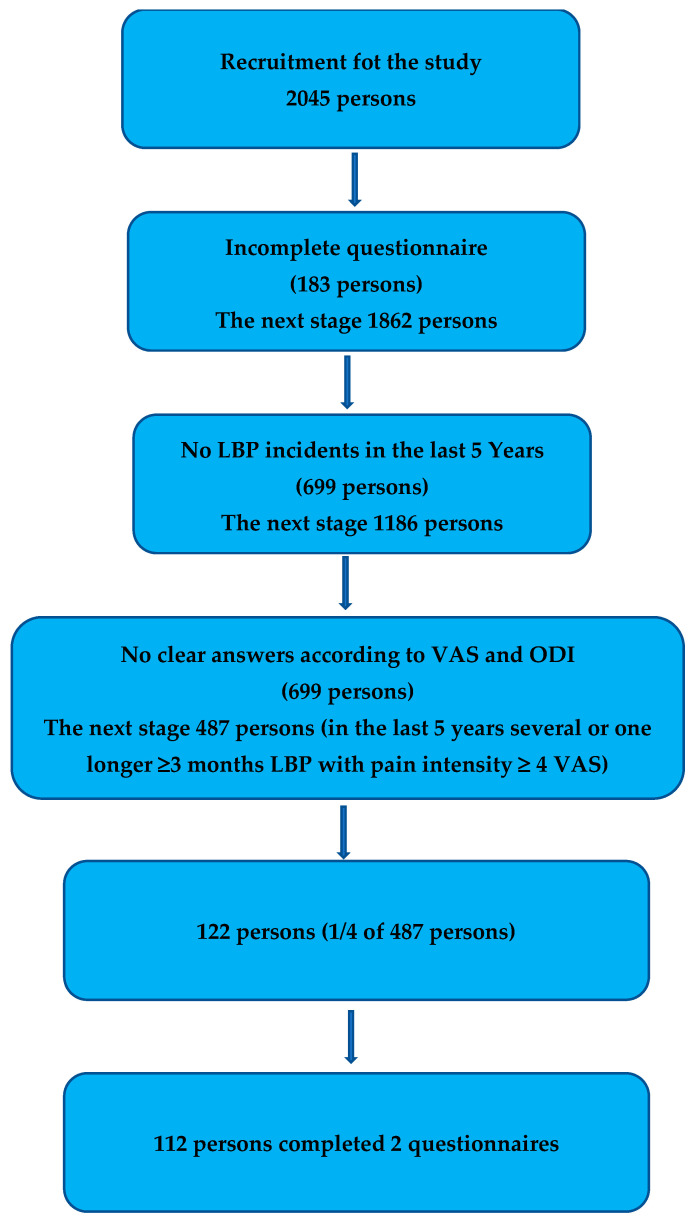 Figure 1
Peer Reviews
No public reviews on file for this paper yet. If you reviewed it on a platform where reviews are public (OpenReview, ICLR, NeurIPS, ICML), you can paste yours below so the community can read it here.
Videos
No videos yet. Explain this paper in a talk, walkthrough, or lecture? Add one.
Taxonomy
TopicsMusculoskeletal pain and rehabilitation · Myofascial pain diagnosis and treatment · Fibromyalgia and Chronic Fatigue Syndrome Research