Bioengineering a Human Dermal Equivalent Using Induced Pluripotent Stem Cell-Derived Fibroblasts to Support the Formation of a Full-Thickness Skin Construct
Lucy Smith, David Bunton, Michael Finch, Stefan Przyborski

TL;DR
Researchers created a human skin model using stem cell-derived fibroblasts, offering a consistent and customizable alternative to traditional methods.
Contribution
The study introduces a novel method to generate a full-thickness skin construct using iPSC-derived fibroblasts.
Findings
iPSC-derived fibroblasts formed a dermal equivalent with structure and composition similar to primary fibroblasts.
The skin model expressed key skin markers in the organized epidermis, improving on previous models.
The model supports an overlying epidermis and demonstrates potential for customized skin equivalents.
Abstract
In vitro tissue models offer a flexible complementary study system for use alongside in vivo human tissue samples. Achieving accurate in vitro models relies on combining appropriate scaffolds, growth factors and cell populations to recreate human tissue complexity. Balancing a consistent cell supply with the creation of healthy tissue models can be challenging; established cell lines are often cancerous, with altered cellular function compared to healthy populations, and primary cells require repeated isolation, with associated batch-to-batch variation. Pluripotent stem cell-derived populations offer a consistent supply, as well as the ability to model disease phenotypes through cell reprogramming using patient-derived cells. In this study, we have used an induced pluripotent stem cell-derived fibroblast population to develop a dermal equivalent model. These cells form a consistent…
Genes, proteins, chemicals, diseases, species, mutations and cell lines named across the full text — each resolved to its canonical identifier and authoritative record.
Click any figure to enlarge with its caption.
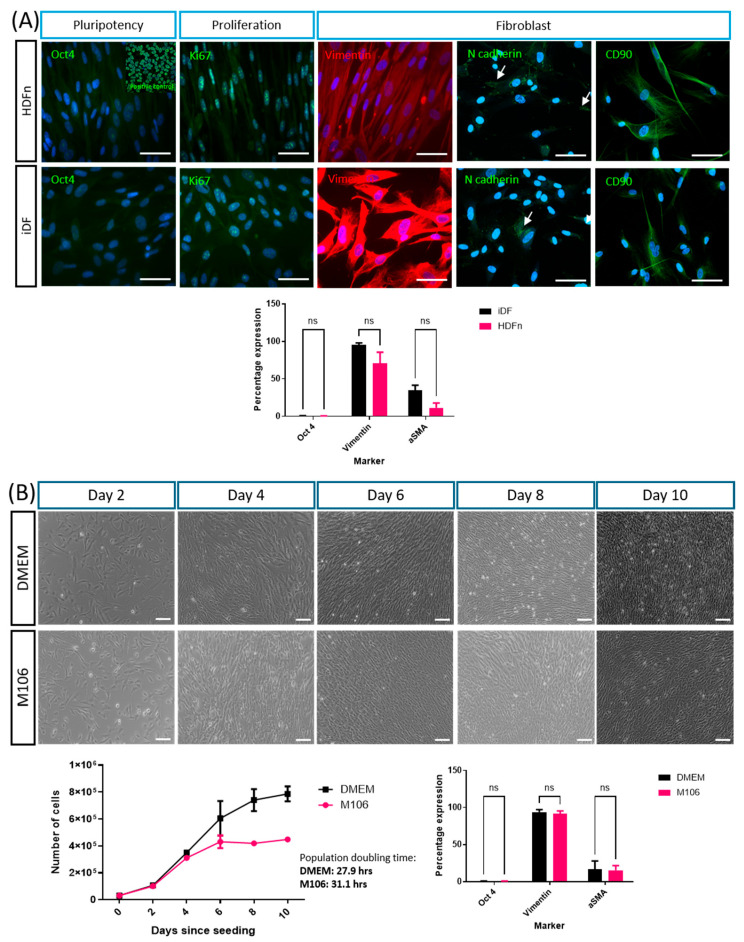 Figure 1
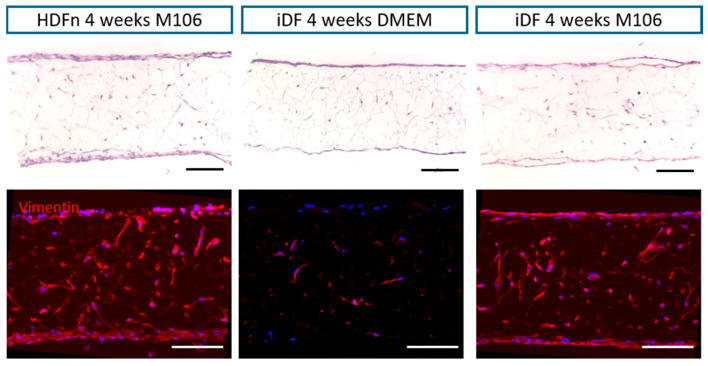 Figure 2
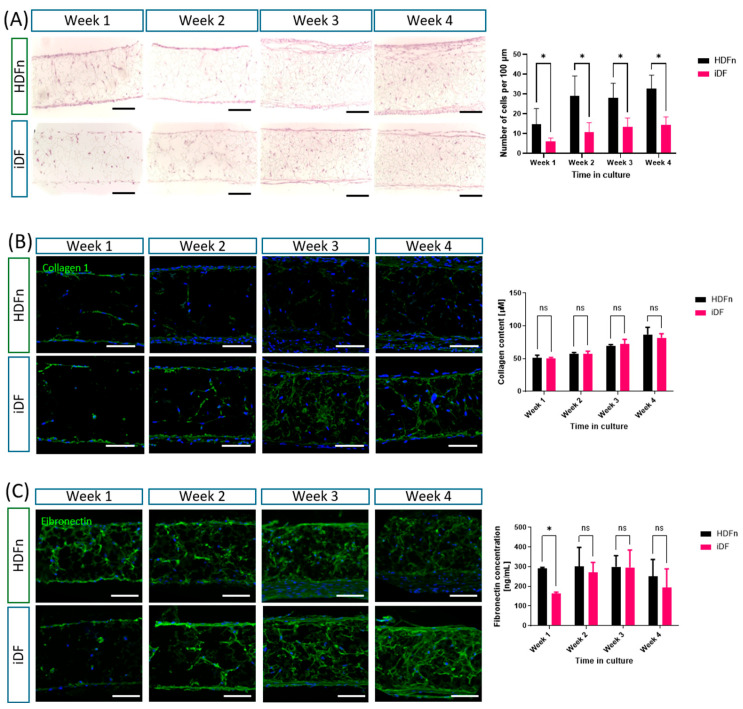 Figure 3
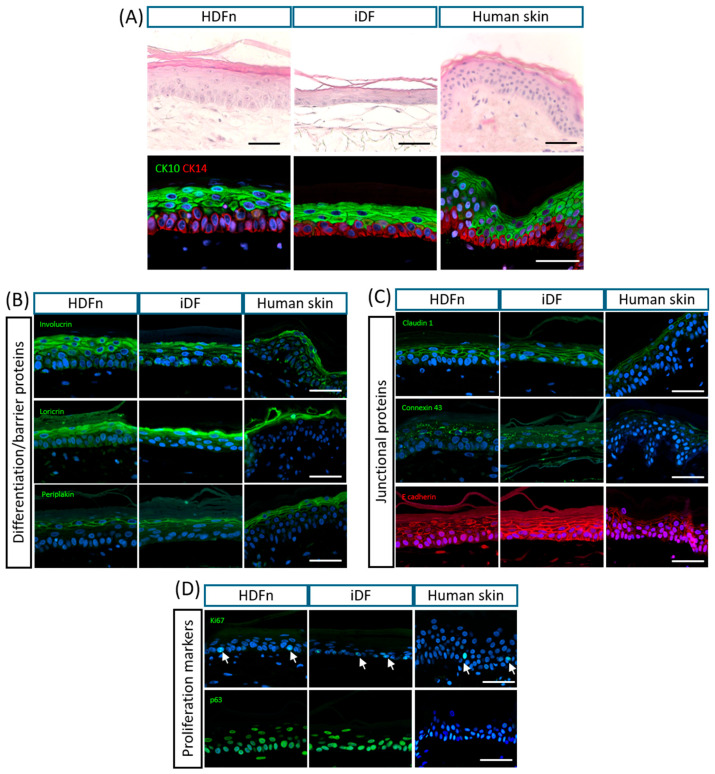 Figure 4
Peer Reviews
No public reviews on file for this paper yet. If you reviewed it on a platform where reviews are public (OpenReview, ICLR, NeurIPS, ICML), you can paste yours below so the community can read it here.
Videos
No videos yet. Explain this paper in a talk, walkthrough, or lecture? Add one.
Taxonomy
TopicsPluripotent Stem Cells Research · 3D Printing in Biomedical Research · Cellular Mechanics and Interactions