Pemigatinib in the Real-World Management of Cholangiocarcinoma Through a Canadian Patient Support Program
Philip Q. Ding, Vincent C. Tam, Ravi Ramjeesingh, Jamil Asselah, Brandon S. Sheffield, Taylor Mitchell, Anne-Julie Gaudreau, Jennifer J. Knox, Winson Y. Cheung

TL;DR
This study shows that pemigatinib is effective and well-tolerated in real-world Canadian patients with advanced cholangiocarcinoma linked to FGFR2 genetic changes.
Contribution
The study provides real-world evidence of pemigatinib's effectiveness and safety in Canadian patients with FGFR2-positive cholangiocarcinoma.
Findings
Over half of patients showed a measurable response to pemigatinib.
Nearly 90% of patients had disease control, with an average delay in disease progression of one year.
No patients discontinued treatment due to side effects.
Abstract
Cholangiocarcinoma is a rare and aggressive cancer of the bile ducts. For some patients, this cancer is linked to a genetic change in the FGFR2 protein. In 2021, Health Canada approved pemigatinib as a targeted therapy for patients with previously treated, unresectable, locally advanced or metastatic cholangiocarcinoma with an FGFR2 fusion or rearrangement. However, there is little real-world data on the use of pemigatinib in these patients in the Canadian setting. This study included 18 patients across six provinces who received pemigatinib through a patient support program. Most had advanced disease, and many had already received several lines of chemotherapy. After starting pemigatinib, over half showed a measurable response in their cancer, and nearly 90% had some level of disease control. On average, pemigatinib delayed disease progression for approximately one year. Importantly,…
Genes, proteins, chemicals, diseases, species, mutations and cell lines named across the full text — each resolved to its canonical identifier and authoritative record.
Click any figure to enlarge with its caption.
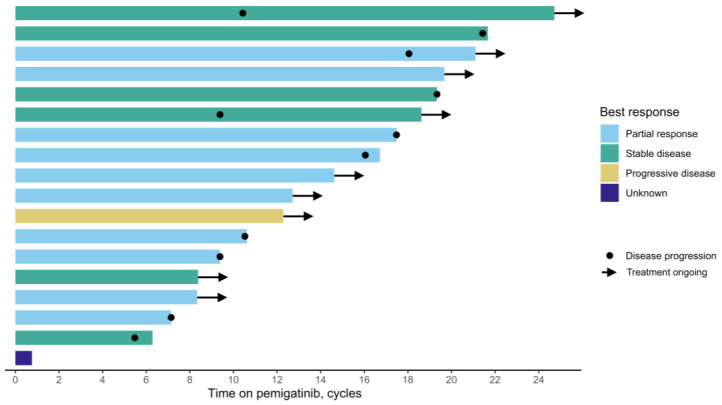 Figure 1
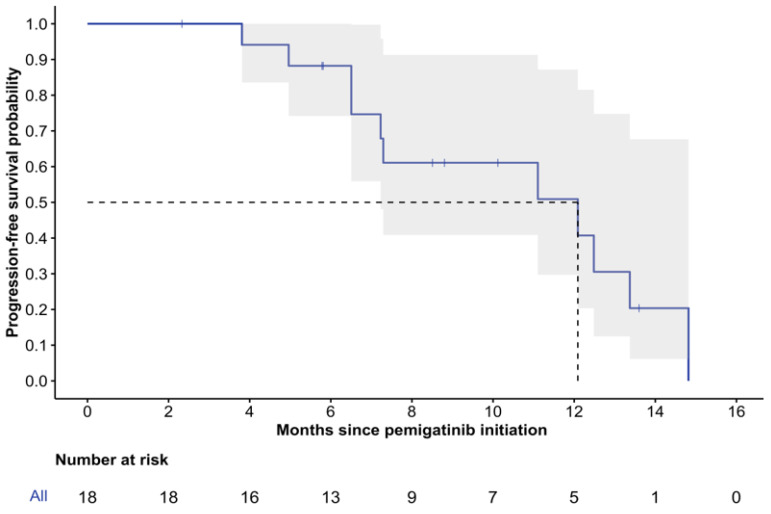 Figure 2
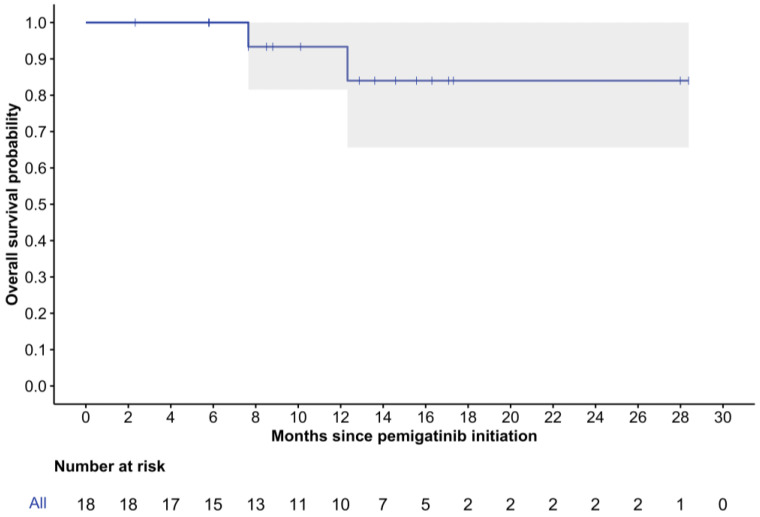 Figure 3
Peer Reviews
No public reviews on file for this paper yet. If you reviewed it on a platform where reviews are public (OpenReview, ICLR, NeurIPS, ICML), you can paste yours below so the community can read it here.
Videos
No videos yet. Explain this paper in a talk, walkthrough, or lecture? Add one.
Taxonomy
TopicsCholangiocarcinoma and Gallbladder Cancer Studies · Pancreatic and Hepatic Oncology Research · Gallbladder and Bile Duct Disorders