A New Staining Method Using Methionyl-tRNA Synthetase 1 Antibody for Endoscopic Ultrasound-Guided Fine-Needle Aspiration Cytology of Pancreatic Cancer
Sung Ill Jang, See Young Lee, Ji Hae Nahm, Jae Hee Cho, Jung Hyun Jo, Chan Min Jung, Beom Jin Lim, Jin Hong Lim, Hyung Sun Kim, Su Yun Lee, In Young Hong, Sunghoon Kim, Dong Ki Lee

TL;DR
A new staining method using MARS1 antibody improves the accuracy of diagnosing pancreatic cancer through EUS-FNA compared to traditional methods.
Contribution
Introduces MARS1 IF staining as a novel, highly sensitive method for detecting pancreatic cancer in EUS-FNA samples.
Findings
MARS1 IF staining showed 97.4% sensitivity for detecting pancreatic cancer, significantly higher than 79.1% for Pap staining.
MARS1 staining successfully identified cancer in samples with atypia that were inconclusive with Pap staining.
MARS1 was detected in all 10 surgical specimens of pancreatic adenocarcinoma, confirming its relevance as a biomarker.
Abstract
Background/Objectives: Accurate determination of malignancy in pancreatic masses through endoscopic ultrasound-guided fine-needle aspiration (EUS-FNA) is crucial for appropriate clinical management and prognostic assessment. However, the diagnostic sensitivity of conventional cytology using Papanicolaou (Pap) staining remains limited, often leading to inconclusive results. In this study, we investigated the diagnostic utility of methionyl-tRNA synthetase 1 (MARS1) through immunohistochemical (IHC) and immunofluorescence (IF) staining as a potential biomarker for pancreatic cancer. IHC analysis was conducted on resected tissue samples from 10 patients, including both pancreatic ductal adenocarcinoma and corresponding non-neoplastic pancreatic tissue. Additionally, cytologic samples were obtained from 198 patients with pancreatic masses who underwent EUS-FNA for diagnostic evaluation. Pap…
Genes, proteins, chemicals, diseases, species, mutations and cell lines named across the full text — each resolved to its canonical identifier and authoritative record.
Click any figure to enlarge with its caption.
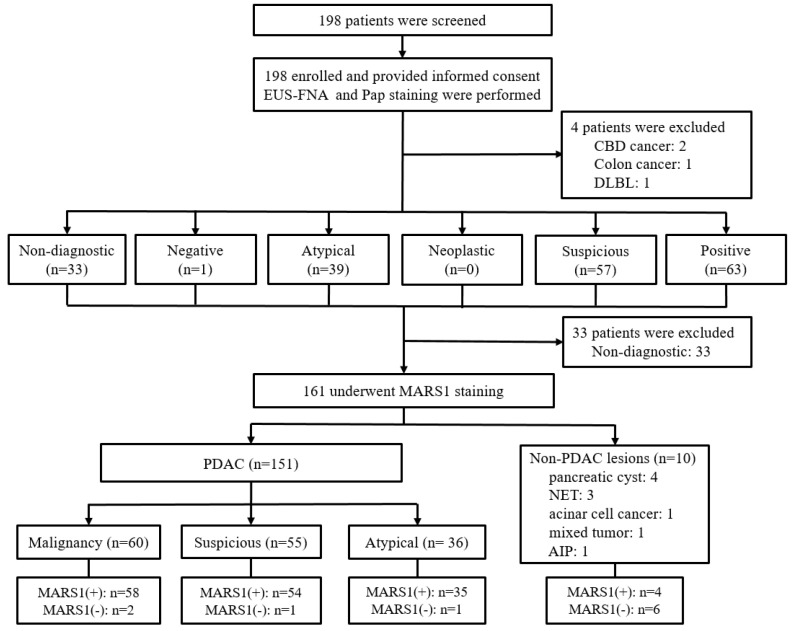 Figure 1
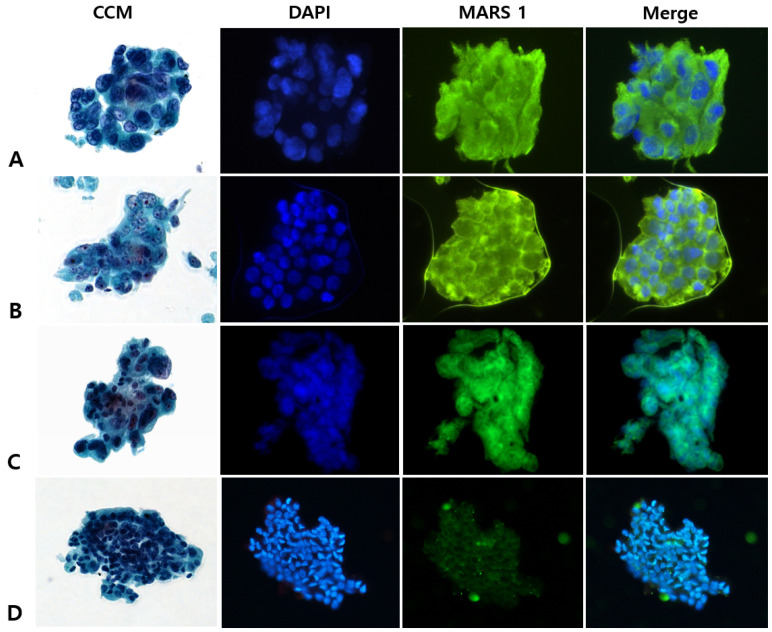 Figure 2
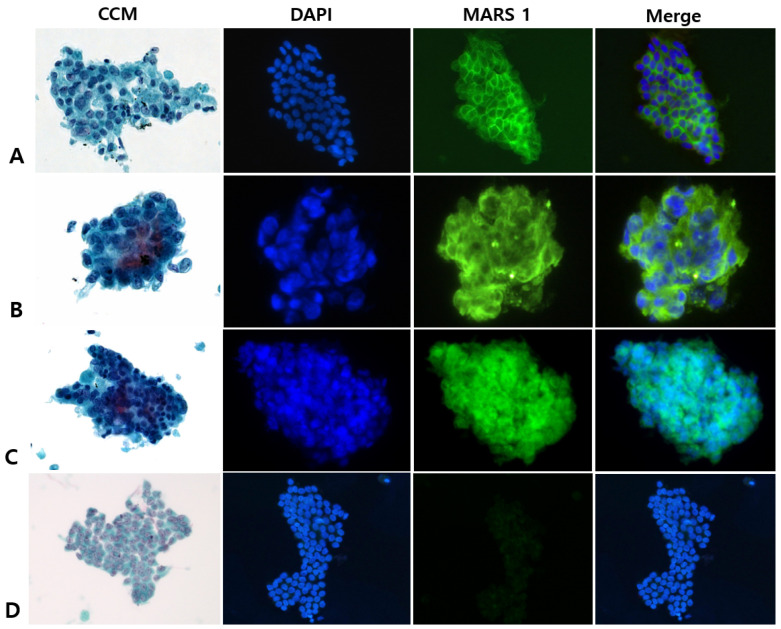 Figure 3
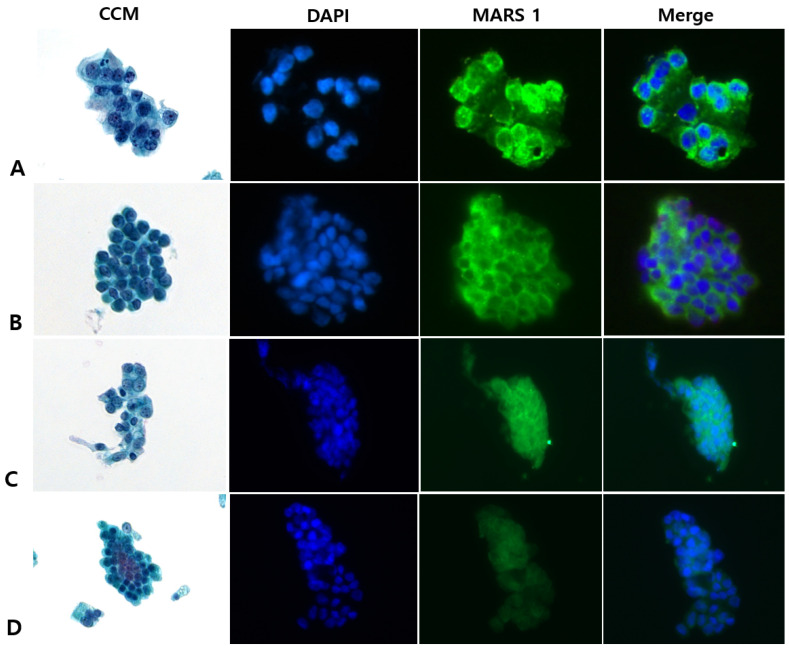 Figure 4
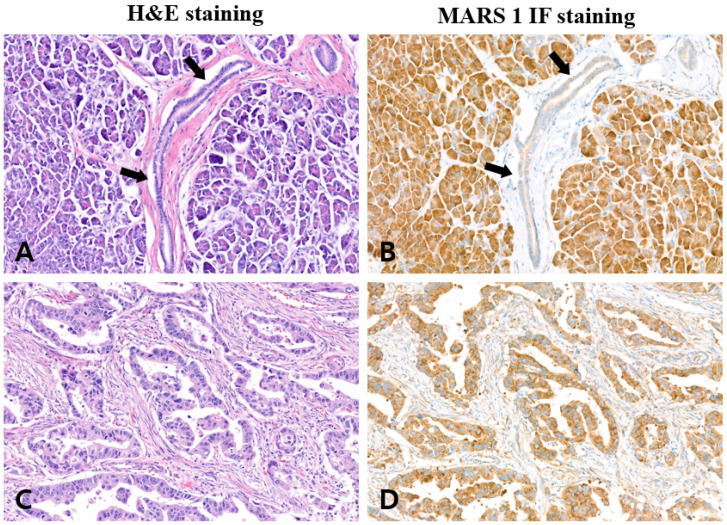 Figure 5
Peer Reviews
No public reviews on file for this paper yet. If you reviewed it on a platform where reviews are public (OpenReview, ICLR, NeurIPS, ICML), you can paste yours below so the community can read it here.
Videos
No videos yet. Explain this paper in a talk, walkthrough, or lecture? Add one.
Taxonomy
TopicsPancreatic and Hepatic Oncology Research · Cancer Genomics and Diagnostics · Neuroendocrine Tumor Research Advances