Microsatellite Instability and BAT-26 Marker Expression in a Mexican Prostate Cancer Population with Different Gleason Scores
Ana K. Flores-Islas, Manuel A. Rico-Méndez, Marisol Godínez-Rubí, Martha Arisbeth Villanueva-Pérez, Erick Sierra-Díaz, Ana Laura Pereira-Suárez, Saul A. Beltrán-Ontiveros, Perla Y. Gutiérrez-Arzapalo, José M. Moreno-Ortiz, Adrián Ramírez-de-Arellano

TL;DR
This study examines microsatellite instability in Mexican prostate cancer patients, finding a link between higher Gleason scores and specific genetic markers.
Contribution
First evaluation of microsatellite instability frequency in Mexican prostate cancer patients.
Findings
19.83% of Mexican prostate cancer patients showed microsatellite instability.
Most instability was observed in the BAT-26 marker among MSI-positive patients.
MSI-positive cases were predominantly found in patients with Gleason score 9.
Abstract
Background/Objectives: Prostate cancer (PCa) is one of the most common cancers in men worldwide. While standard treatments often provide good initial results, many patients eventually develop resistance and experience a more aggressive relapse. Microsatellite instability (MSI) involves variations in the lengths of microsatellite base repeats in cells. Assessing the frequency of MSI is essential, as it may identify candidates for immune checkpoint inhibitors, which have shown promising outcomes. This study focuses on evaluating the MSI frequency in Mexican PCa patients and exploring its potential relationship with tumor aggressiveness. Methods: In this study, 116 formalin-fixed paraffin-embedded tumoral tissue biopsies from Mexican patients with PCa were collected from Hospital Civil de Culiacán and Pathology and Nephropathology, Diagnosis and Research Center, in the period from 2021 to…
Genes, proteins, chemicals, diseases, species, mutations and cell lines named across the full text — each resolved to its canonical identifier and authoritative record.
Click any figure to enlarge with its caption.
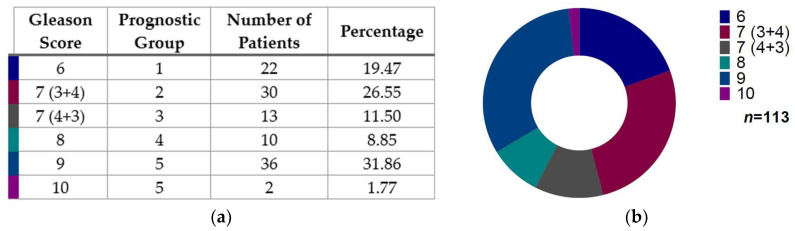 Figure 1
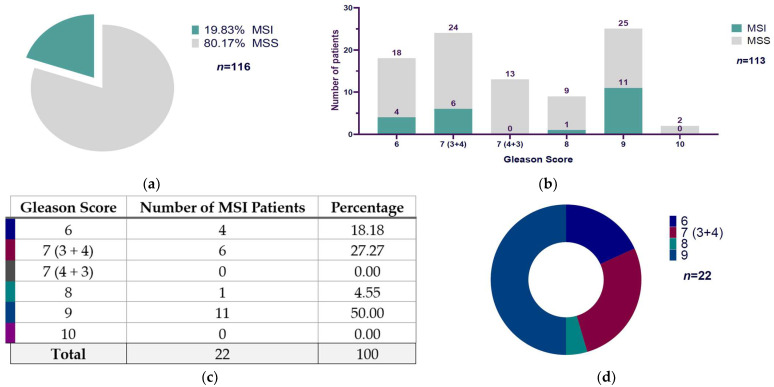 Figure 2
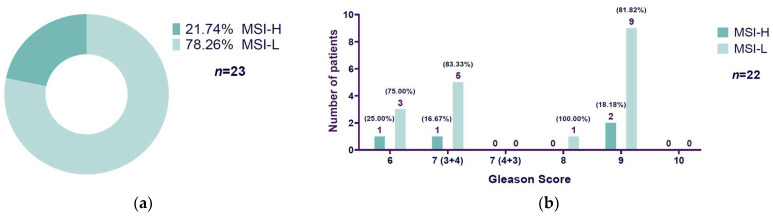 Figure 3
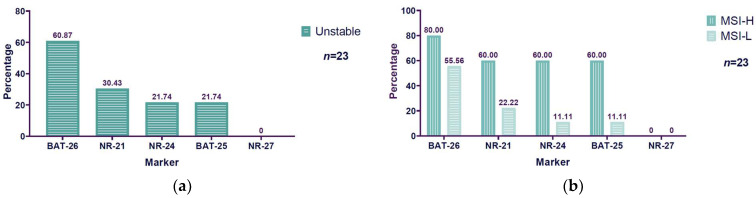 Figure 4
Peer Reviews
No public reviews on file for this paper yet. If you reviewed it on a platform where reviews are public (OpenReview, ICLR, NeurIPS, ICML), you can paste yours below so the community can read it here.
Videos
No videos yet. Explain this paper in a talk, walkthrough, or lecture? Add one.
Taxonomy
TopicsGenetic factors in colorectal cancer · Cancer Genomics and Diagnostics · Cholangiocarcinoma and Gallbladder Cancer Studies