AΚtransU-Net: Transformer-Equipped U-Net Model for Improved Actinic Keratosis Detection in Clinical Photography
Panagiotis Derekas, Charalampos Theodoridis, Aristidis Likas, Ioannis Bassukas, Georgios Gaitanis, Athanasia Zampeta, Despina Exadaktylou, Panagiota Spyridonos

TL;DR
This paper introduces AKTransU-Net, a new AI model that improves detection of actinic keratosis in skin images by combining local and global context.
Contribution
The novel AKTransU-Net model integrates Transformers and ConvLSTM to enhance context-aware AK lesion detection.
Findings
AKTransU-Net achieved a median Dice score of 65.13% in lesion segmentation.
The model demonstrated robust context awareness in whole-image assessments.
It outperformed state-of-the-art models in tile-based processing continuity.
Abstract
Background: Integrating artificial intelligence into clinical photography offers great potential for monitoring skin conditions such as actinic keratosis (AK) and skin field cancerization. Identifying the extent of AK lesions often requires more than analyzing lesion morphology—it also depends on contextual cues, such as surrounding photodamage. This highlights the need for models that can combine fine-grained local features with a comprehensive global view. Methods: To address this challenge, we propose AKTransU-net, a hybrid U-net-based architecture. The model incorporates Transformer blocks to enrich feature representations, which are passed through ConvLSTM modules within the skip connections. This configuration allows the network to maintain semantic coherence and spatial continuity in AK detection. This global awareness is critical when applying the model to whole-image detection…
Genes, proteins, chemicals, diseases, species, mutations and cell lines named across the full text — each resolved to its canonical identifier and authoritative record.
Click any figure to enlarge with its caption.
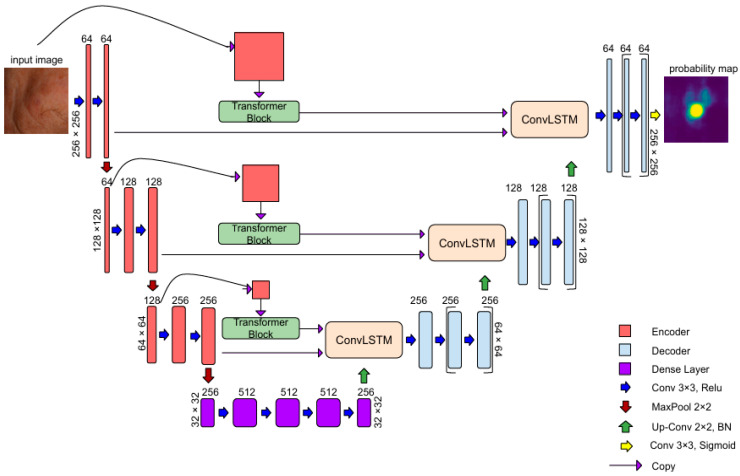 Figure 1
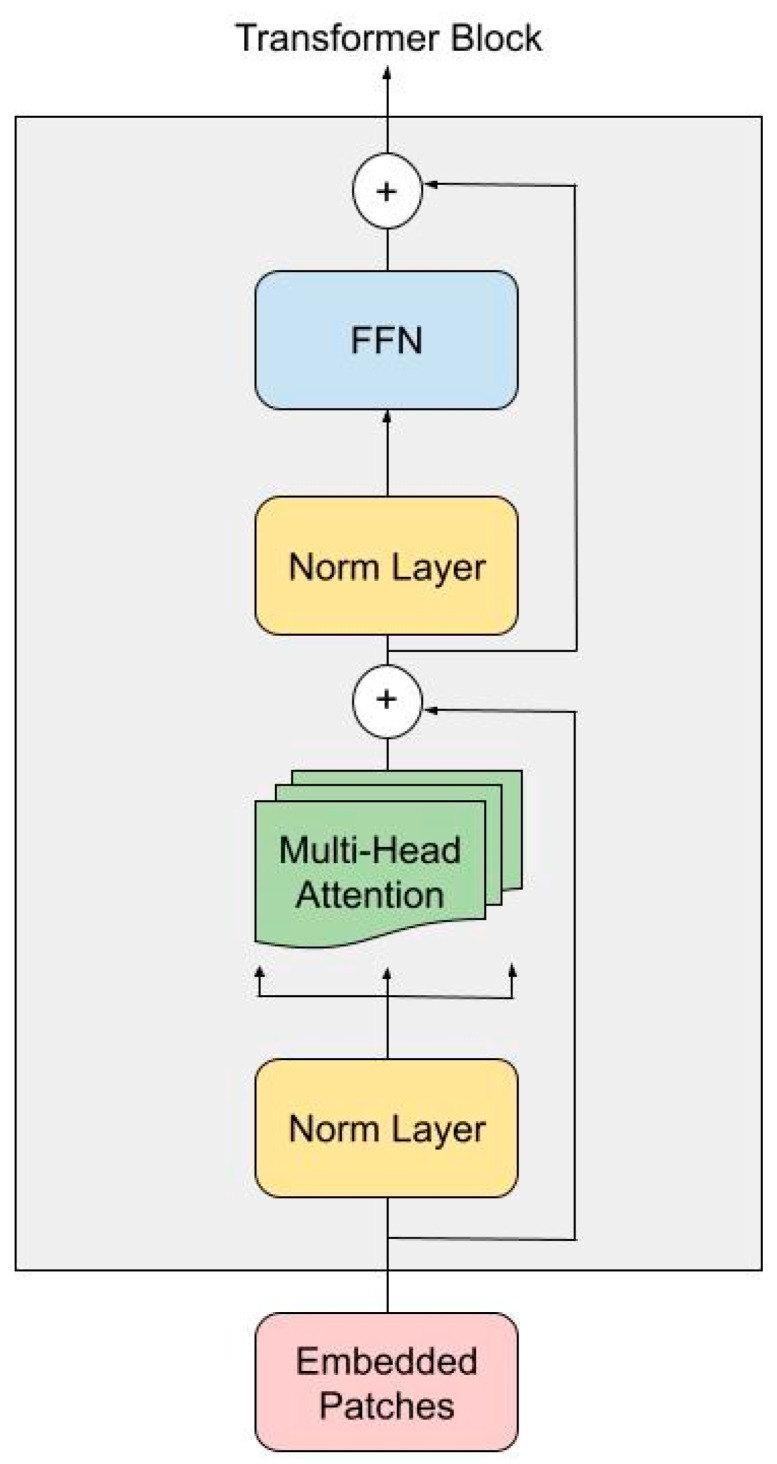 Figure 2
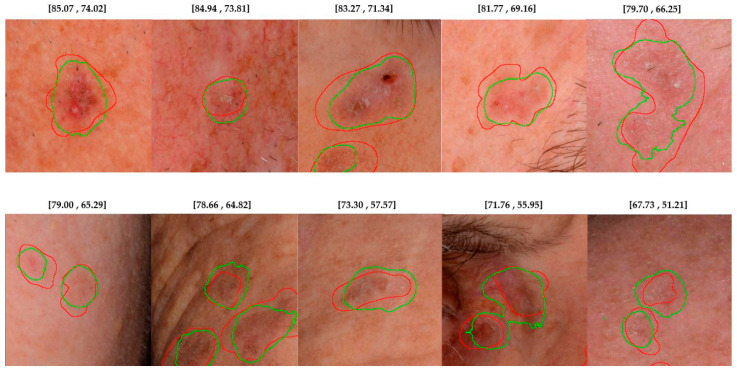 Figure 3
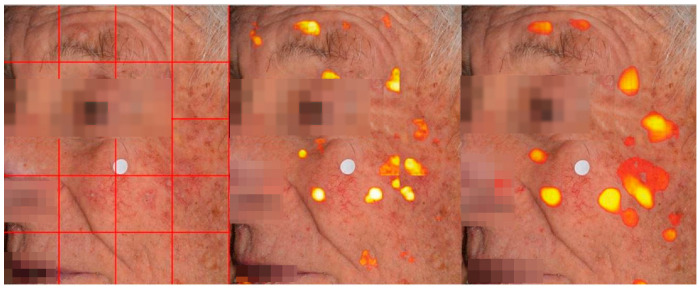 Figure 4
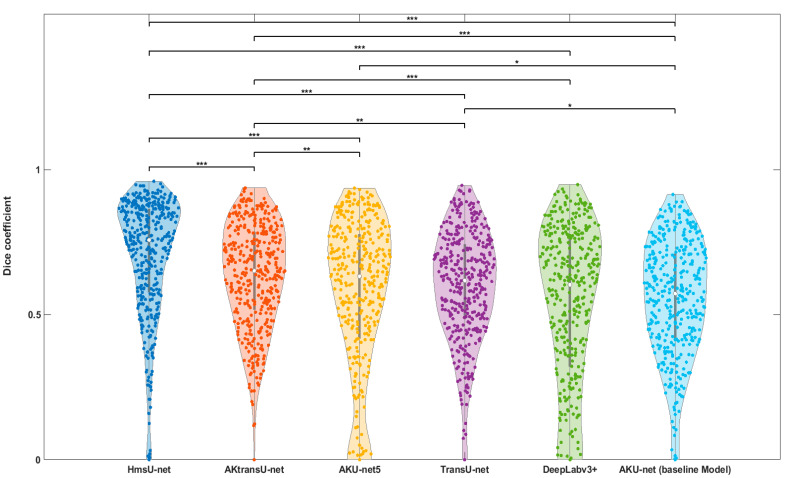 Figure 5
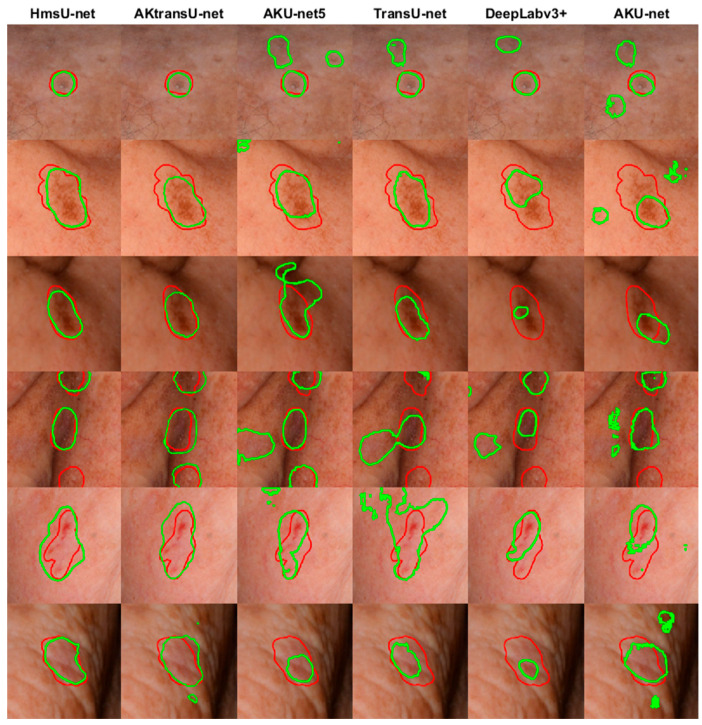 Figure 6
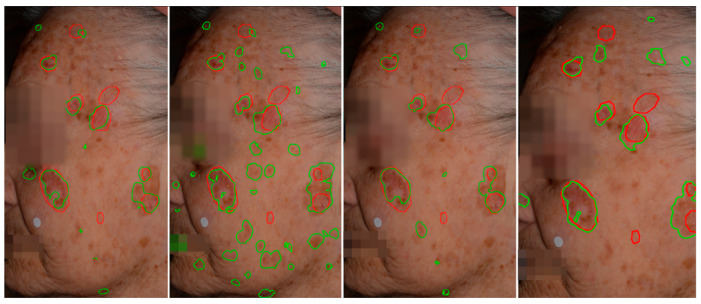 Figure 7
Peer Reviews
No public reviews on file for this paper yet. If you reviewed it on a platform where reviews are public (OpenReview, ICLR, NeurIPS, ICML), you can paste yours below so the community can read it here.
Videos
No videos yet. Explain this paper in a talk, walkthrough, or lecture? Add one.
Taxonomy
TopicsCutaneous Melanoma Detection and Management · Nonmelanoma Skin Cancer Studies · AI in cancer detection