Efficacy and Safety of Chemotherapy Combined with Hormonal Therapy in Heavily Pretreated Advanced Epithelial Ovarian, Fallopian Tube, or Primary Peritoneal Cancer (ELSA/KGOG3049): A Multicenter Pilot Study
Kidong Kim, Chel Hun Choi, Sang-Yoon Park, Min Kyu Kim, Keun Ho Lee, Eun-Ju Lee, Myong Cheol Lim, Young Han Park, Min Sun Kyung, Jae Hong No, Dong Hoon Suh, Jeong-Won Lee, Sangjeong Ahn, Banghyun Lee

TL;DR
This study explores combining chemotherapy with hormone therapy in advanced ovarian cancer patients who have had multiple prior treatments, finding potential benefits in those with estrogen receptor dominance.
Contribution
The study introduces a personalized approach combining chemotherapy with hormone therapy based on hormone receptor expression in heavily pretreated ovarian cancer patients.
Findings
Chemotherapy combined with tamoxifen showed a 27.3% six-month objective response rate in estrogen receptor-dominant patients.
No significant clinical response was observed in progesterone receptor-dominant patients.
The treatment was well-tolerated with no unacceptable toxicity.
Abstract
Many patients with advanced epithelial ovarian, fallopian tube, or primary peritoneal cancer experience recurrence after the initial treatment, and the effectiveness of chemotherapy decreases with each recurrence. Therefore, new strategies are urgently needed to improve outcomes in patients who have already undergone multiple lines of treatment. Hormonal therapy has been used for ovarian cancer, but its role when combined with chemotherapy and tailored to hormone receptor expression is unclear. This study examined whether combining chemotherapy with hormonal therapy could improve clinical outcomes in patients with heavily pretreated cancer. Patients whose tumors had more estrogen receptors received tamoxifen, while those with more progesterone receptors received megestrol acetate, each combined with chemotherapy. These findings suggest that the combination of tamoxifen and chemotherapy…
Genes, proteins, chemicals, diseases, species, mutations and cell lines named across the full text — each resolved to its canonical identifier and authoritative record.
Click any figure to enlarge with its caption.
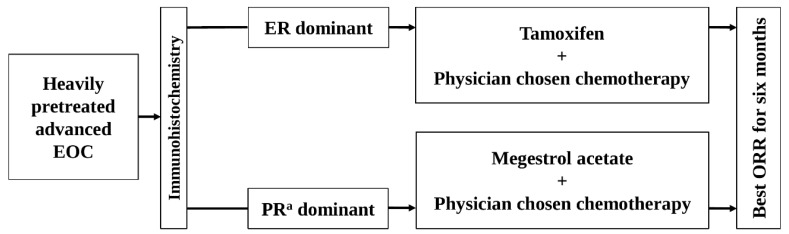 Figure 1
 Figure 2
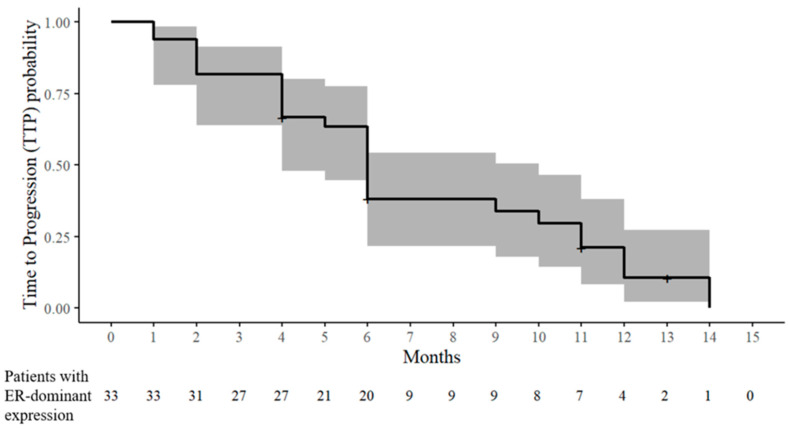 Figure 3
Peer Reviews
No public reviews on file for this paper yet. If you reviewed it on a platform where reviews are public (OpenReview, ICLR, NeurIPS, ICML), you can paste yours below so the community can read it here.
Videos
No videos yet. Explain this paper in a talk, walkthrough, or lecture? Add one.
Taxonomy
TopicsOvarian cancer diagnosis and treatment · Intraperitoneal and Appendiceal Malignancies · BRCA gene mutations in cancer