The Role of Endothelial Progenitor Cells (EPCs) and Circulating Endothelial Cells (CECs) as Early Biomarkers of Endothelial Dysfunction in Children with Newly Diagnosed Type 1 Diabetes
Milena Jamiołkowska-Sztabkowska, Sebastian Ciężki, Aleksandra Starosz, Kamil Grubczak, Marcin Moniuszko, Artur Bossowski, Barbara Głowińska-Olszewska

TL;DR
This study explores how endothelial progenitor cells and circulating endothelial cells might serve as early signs of blood vessel damage in children newly diagnosed with type 1 diabetes.
Contribution
The study identifies EPCs and CECs as potential biomarkers for endothelial dysfunction in children with newly diagnosed type 1 diabetes.
Findings
Children with T1D had higher EPC levels than healthy controls, but no differences in CEC levels.
Better clinical conditions in T1D patients correlated with lower EPCs and EPC/CEC ratios.
CECs were higher in patients who later experienced partial remission of diabetes.
Abstract
The aim of this study is to assess endothelial progenitor cells (EPCs) and circulating endothelial cells (CECs) at the time of type 1 diabetes (T1D) recognition concerning patients’ clinical state, remaining insulin secretion, and further partial remission (PR) occurrence. We recruited 45 children that were admitted to hospital due to newly diagnosed T1D (median age 10.8 yrs), and 20 healthy peers as a control group. EPC and CEC levels were measured at disease onset in PBMC isolated from whole peripheral blood with the use of flow cytometry. Clinical data regarding patients’ condition, C-peptide secretion, and further PR prevalence were analyzed. T1D-diagnosed patients presented higher EPC levels than the control group (p = 0.026), while no statistical differences in CEC levels and EPC/CEC ratio were observed. Considering only T1D patients, those with better clinical conditions…
Genes, proteins, chemicals, diseases, species, mutations and cell lines named across the full text — each resolved to its canonical identifier and authoritative record.
Click any figure to enlarge with its caption.
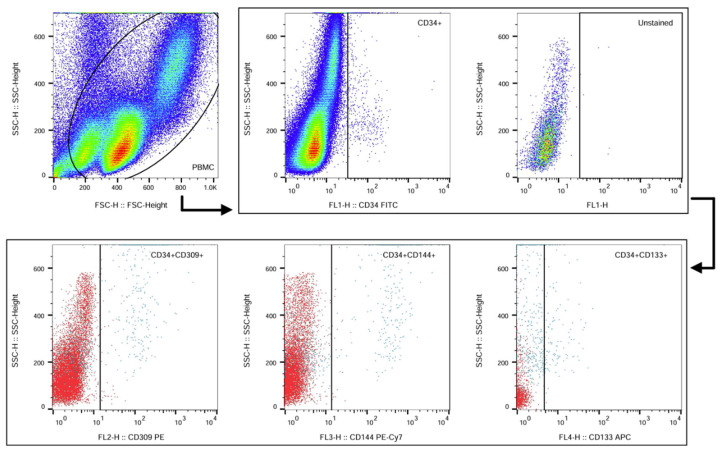 Figure 1
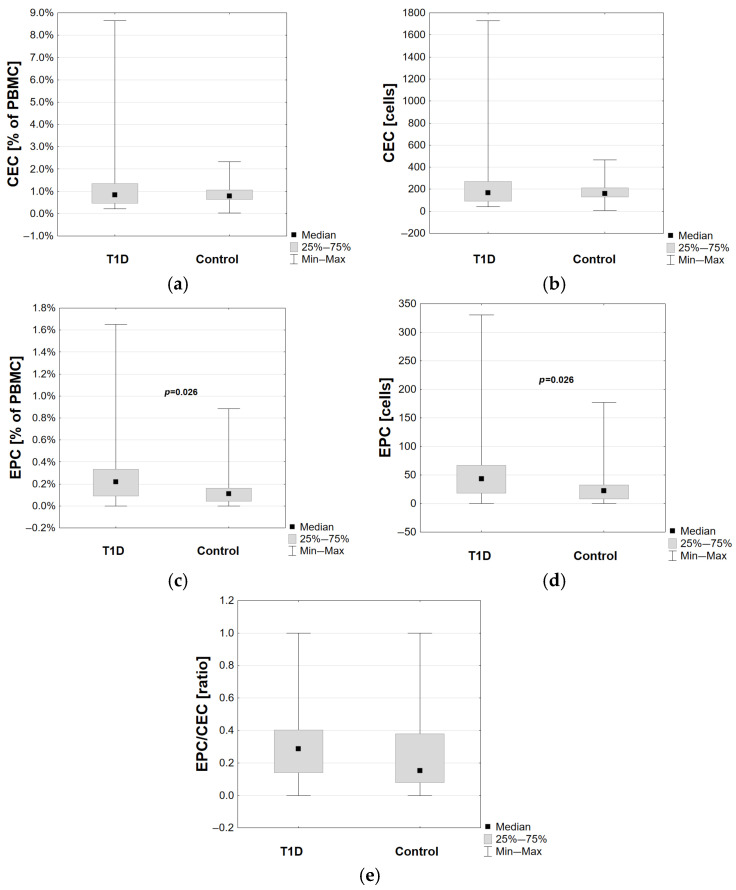 Figure 2
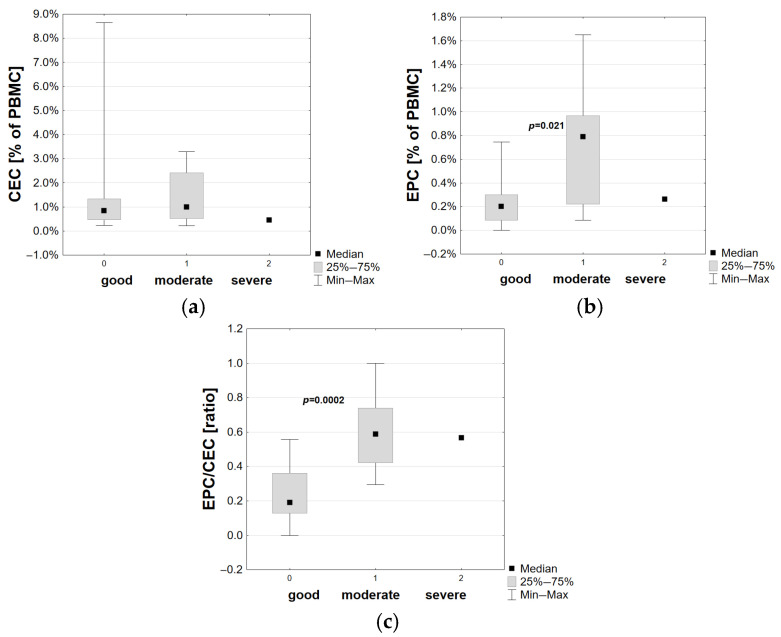 Figure 3
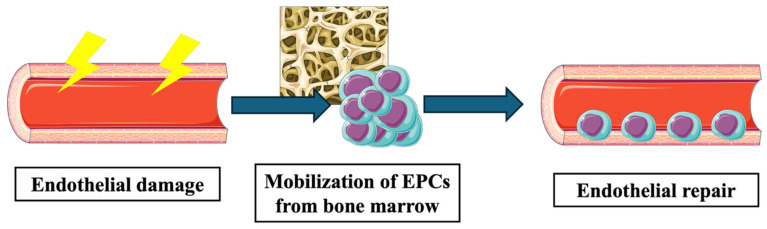 Figure 4
Peer Reviews
No public reviews on file for this paper yet. If you reviewed it on a platform where reviews are public (OpenReview, ICLR, NeurIPS, ICML), you can paste yours below so the community can read it here.
Videos
No videos yet. Explain this paper in a talk, walkthrough, or lecture? Add one.
Taxonomy
TopicsCongenital heart defects research · Cardiovascular Health and Disease Prevention · Cardiovascular Function and Risk Factors