PARG Mutation Uncovers Critical Structural Determinant for Poly(ADP-Ribose) Hydrolysis and Chromatin Regulation in Embryonic Stem Cells
Yaroslava Karpova, Sara Piatz, Guillaume Bordet, Alexei V. Tulin

TL;DR
This study identifies a key structural part of PARG needed for breaking down poly(ADP-ribose), showing its role in embryonic stem cells and development.
Contribution
A novel Parg29b mutant mouse ESC line reveals a critical structural determinant of PARG function in pADPr hydrolysis.
Findings
A PARG catalytic domain deletion abolishes pADPr hydrolysis but does not affect ESC viability or proliferation.
The mutation disrupts the pADPr pathway in Drosophila, halting developmental progression.
The study provides a genetically tractable model for studying pADPr dynamics and PARP inhibition responses.
Abstract
Poly(ADP-ribosyl)ation is a crucial posttranslational modification that governs gene expression, chromatin remodeling, and cellular homeostasis. This dynamic process is mediated by the opposing activities of poly(ADP-ribose) polymerases (PARPs), which synthesize poly(ADP-ribose) (pADPr), and poly(ADP-ribose) glycohydrolase (PARG), which degrades it. While PARP function has been extensively studied, the structural and mechanistic basis of PARG-mediated pADPr degradation remain incompletely understood. To investigate the role of PARG in pADPr metabolism, we employed CRISPR/Cas9-based genome editing to generate a novel Parg29b mutant mouse embryonic stem cell (ESC) line carrying a precise deletion within the PARG catalytic domain. This deletion completely abolished pADPr hydrolytic activity, resulting in massive nuclear pADPr accumulation, yet ESC viability, proliferation, and cell cycle…
Genes, proteins, chemicals, diseases, species, mutations and cell lines named across the full text — each resolved to its canonical identifier and authoritative record.
Click any figure to enlarge with its caption.
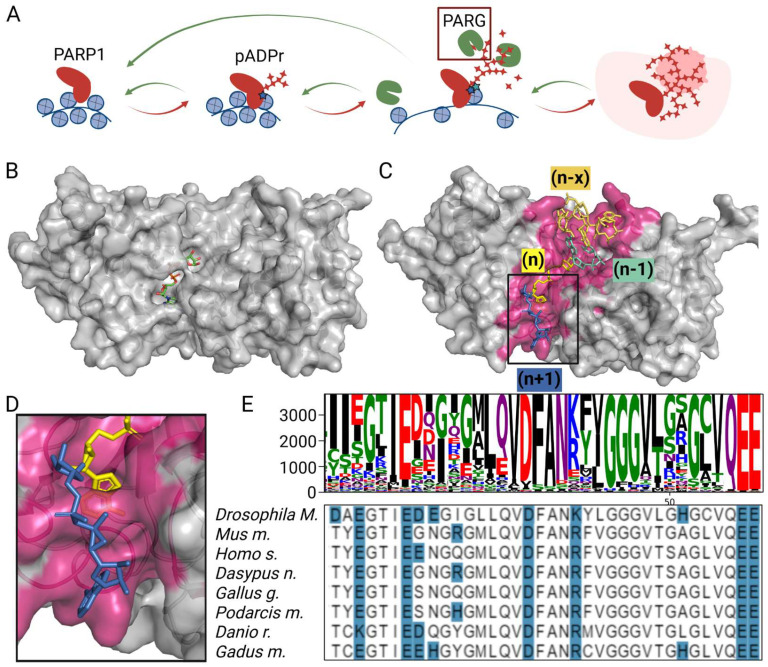 Figure 1
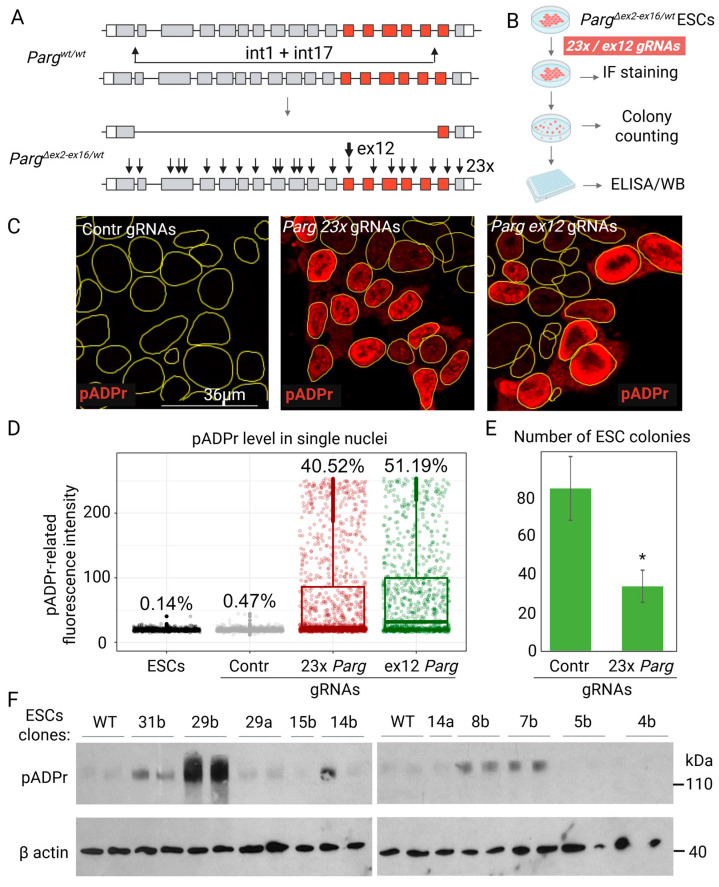 Figure 2
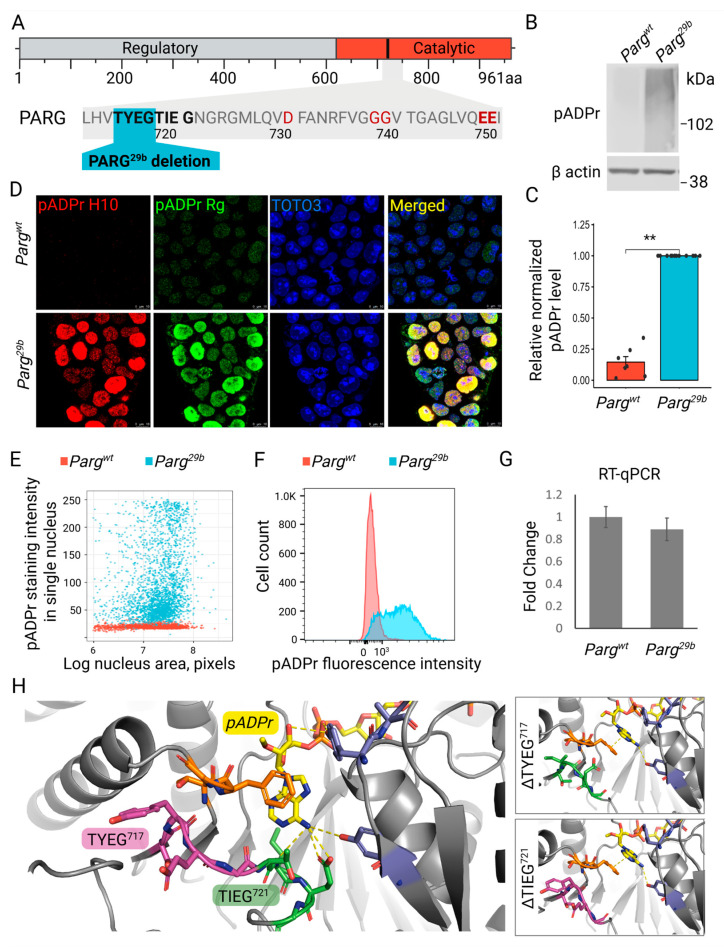 Figure 3
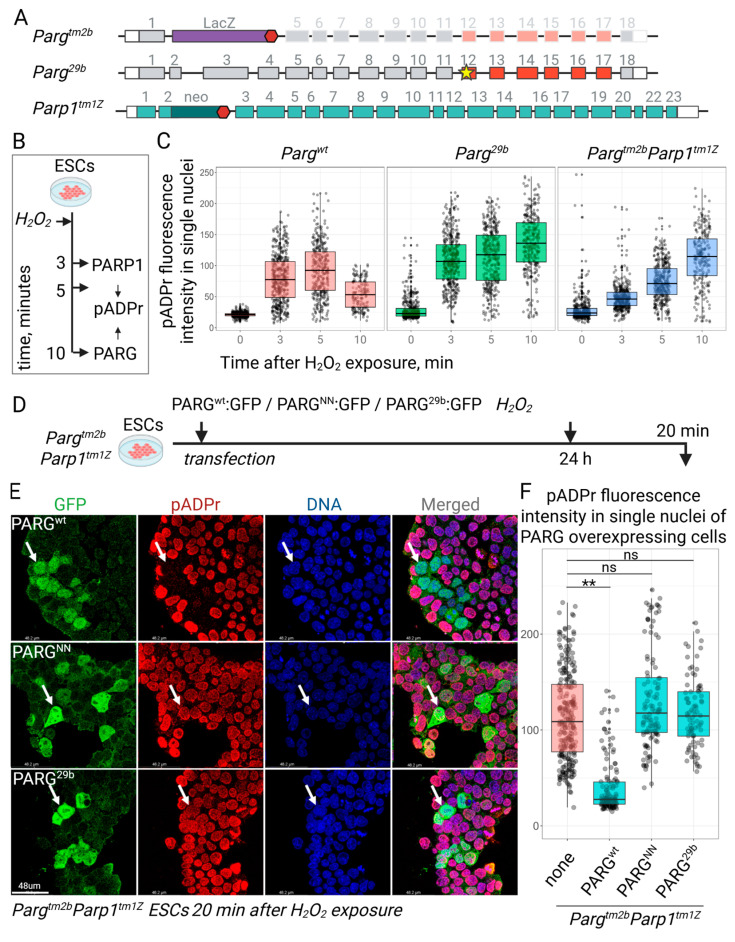 Figure 4
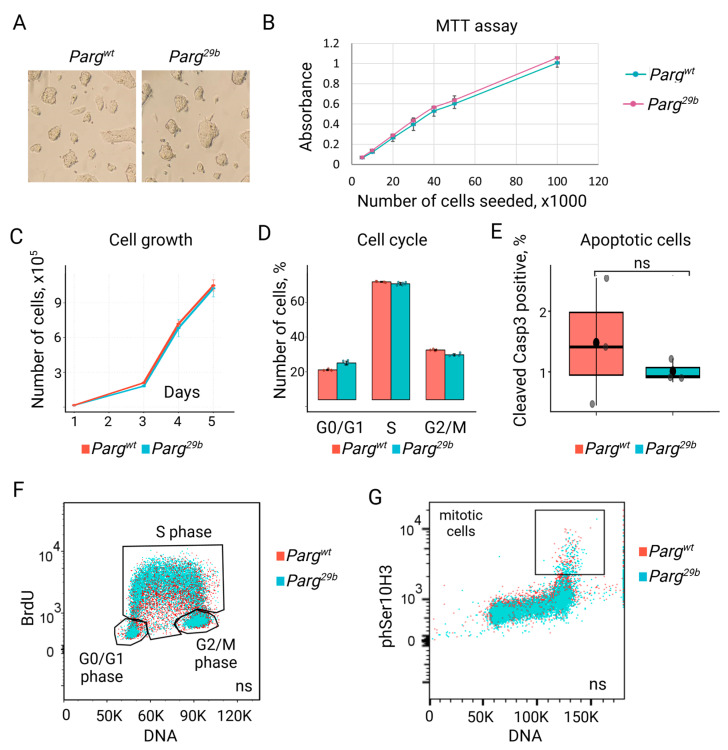 Figure 5
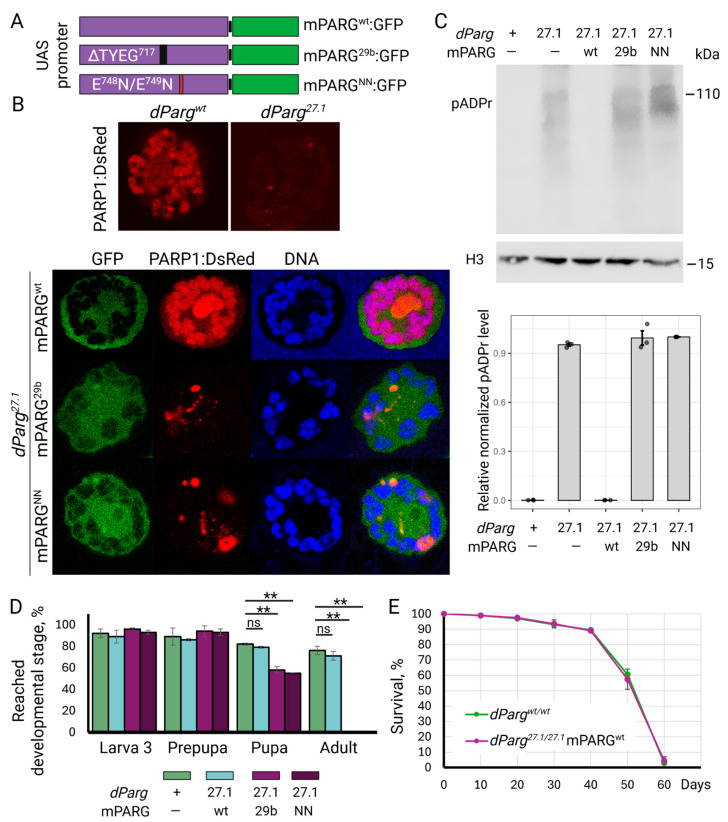 Figure 6
Peer Reviews
No public reviews on file for this paper yet. If you reviewed it on a platform where reviews are public (OpenReview, ICLR, NeurIPS, ICML), you can paste yours below so the community can read it here.
Videos
No videos yet. Explain this paper in a talk, walkthrough, or lecture? Add one.
Taxonomy
TopicsPARP inhibition in cancer therapy · Electrostatic Discharge in Electronics · CRISPR and Genetic Engineering