Steady-State PERG Adaptation Reveals Temporal Abnormalities of Retinal Ganglion Cells in Treated Ocular Hypertension and Glaucoma
Tommaso Salgarello, Andrea Giudiceandrea, Grazia Maria Cozzupoli, Martina Cocuzza, Romolo Fedeli, Donato Errico, Antonello Fadda, Filippo Amore, Marco Sulfaro, Epifanio Giudiceandrea, Matteo Salgarello, Stanislao Rizzo, Benedetto Falsini

TL;DR
This study shows that retinal ganglion cells in people with eye pressure and glaucoma show timing issues in their electrical responses, which could help detect glaucoma earlier.
Contribution
The study introduces PERGx, a new method to detect early retinal ganglion cell dysfunction in glaucoma and ocular hypertension.
Findings
PERGx amplitude was significantly reduced in OHT and OAG groups compared to healthy subjects.
PERGx phase showed progressive delays over time, with increased angular dispersion in OHT patients.
A strong inverse relationship was found between PERGx angular dispersion and treated intraocular pressure in OHT patients.
Abstract
Background/Objectives: This study investigates adaptive changes in long-lasting pattern electroretinogram (PERG) responses in ocular hypertension (OHT) and open-angle glaucoma (OAG) patients, and in healthy subjects. Methods: Sixty consecutive individuals were recruited, including 20 OHT, 20 OAG, and 20 normal subjects. All participants underwent comprehensive ophthalmologic examination, 30–2 perimetry, and retinal nerve fiber layer imaging. Steady-state (7.5 Hz) PERGs were recorded over approximately 2 min, in response to 90% contrast alternating gratings within a large field size. The recordings were acquired into a sequence of 10 averages (packets), lasting 10 s each, following a standardized adaptation paradigm (Next Generation PERG, PERGx). Key outcome measures included PERGx parameters reflecting response amplitude and phase changes over time. Results: The PERGx grand average…
Genes, proteins, chemicals, diseases, species, mutations and cell lines named across the full text — each resolved to its canonical identifier and authoritative record.
Click any figure to enlarge with its caption.
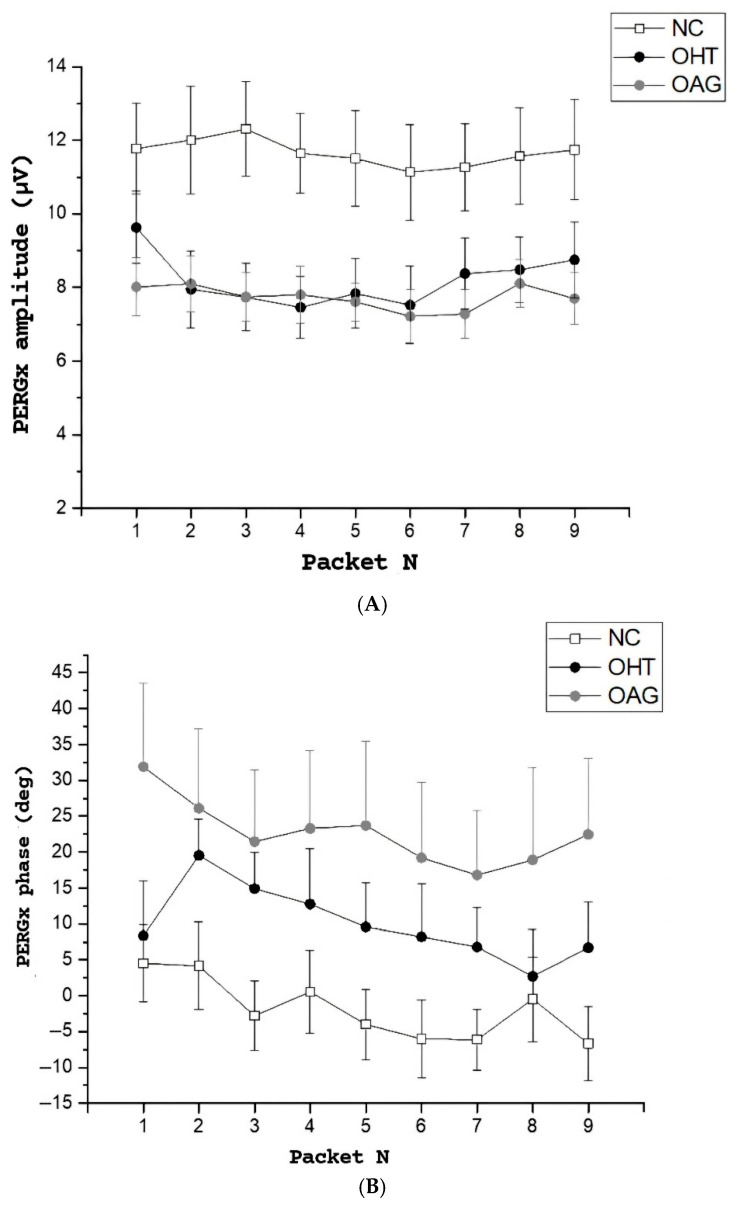 Figure 1
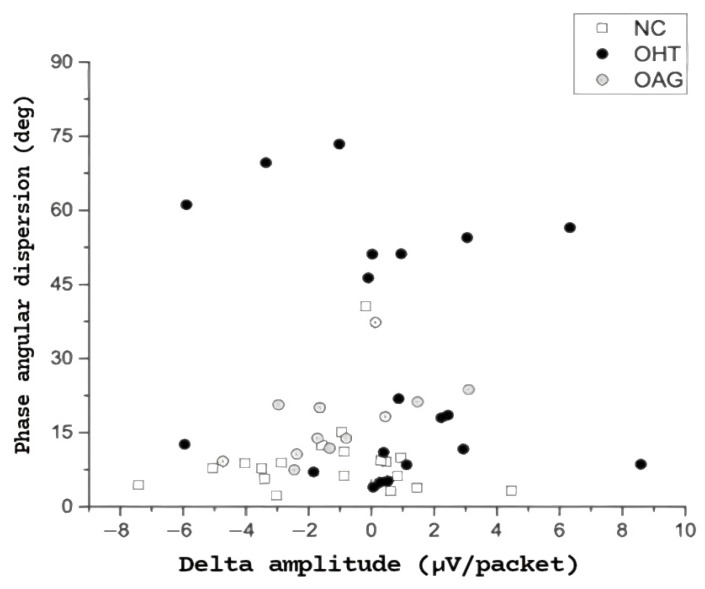 Figure 2
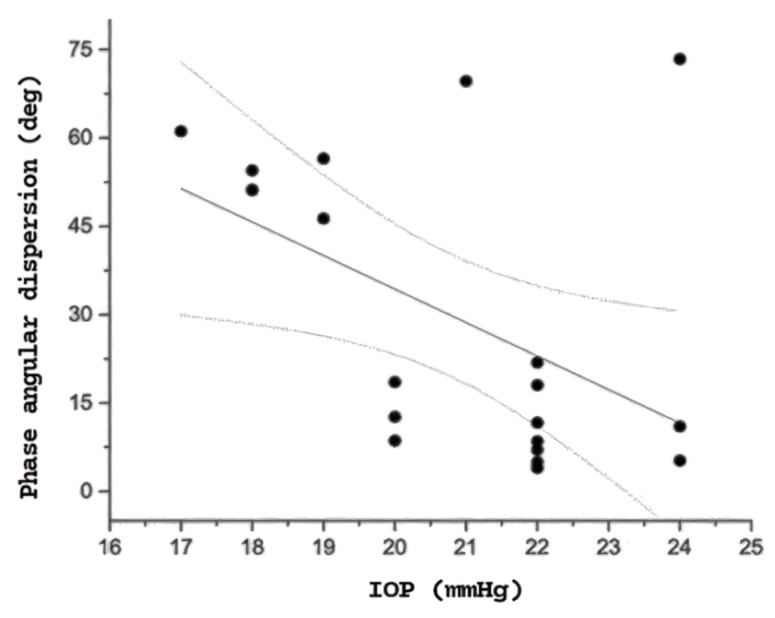 Figure 3
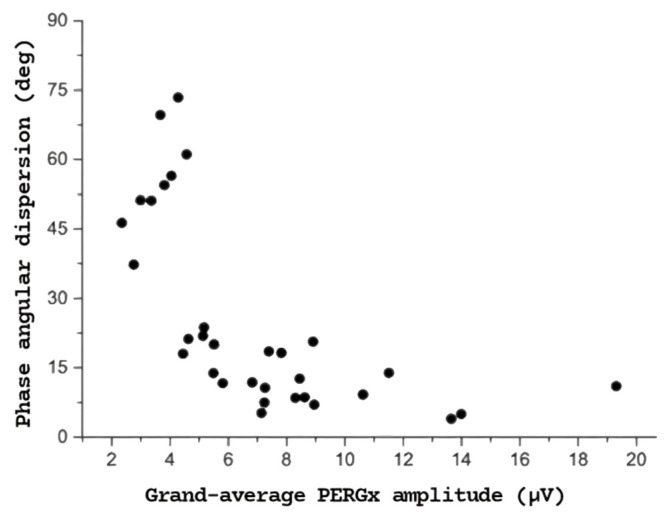 Figure 4
Peer Reviews
No public reviews on file for this paper yet. If you reviewed it on a platform where reviews are public (OpenReview, ICLR, NeurIPS, ICML), you can paste yours below so the community can read it here.
Videos
No videos yet. Explain this paper in a talk, walkthrough, or lecture? Add one.
Taxonomy
TopicsGlaucoma and retinal disorders · Retinal Development and Disorders · Retinal Diseases and Treatments