Asiatic Acid Alleviates Renal Damage by Upregulating STBD1-Mediated Glycophagy in Diabetic Kidney Disease
Lei Guo, Peili Wu, Qijian Feng, Xiaochun Lin, Yuan Wang, Minghai Wu, Feifei Cai, Jin Zhang, Chuyi Yang, Xuelin Li, Churan Wen, Yingbei Lin, Nannan Liu, Yuxuan Hu, Huiyun Wang, Xinzhao Fan, Meiping Guan

TL;DR
Asiatic acid may help treat diabetic kidney disease by boosting a protein called STBD1, which helps clear glycogen buildup in the kidneys.
Contribution
The study identifies STBD1 as a novel therapeutic target for diabetic kidney disease and shows that asiatic acid can modulate glycophagy through this pathway.
Findings
Asiatic acid reduced blood glucose and urinary albumin-to-creatinine ratio in diabetic mice.
AA reversed glycogen accumulation and restored STBD1 expression in the kidneys.
STBD1 overexpression in mice produced similar protective effects against kidney damage.
Abstract
Background/Objectives: The role of glycogen metabolism in diabetic kidney disease (DKD) remains unclear. This study investigated the therapeutic potential of asiatic acid (AA) on glycogen metabolism in DKD and its underlying mechanisms. Methods: A DKD mouse model was established using a high-fat diet and streptozotocin, followed by AA treatment for 8 weeks. Network pharmacology and molecular docking identified STBD1 as a potential target of AA, and its overexpression in mice was performed. Results: AA reduced blood glucose levels and the urinary albumin-to-creatinine ratio (UACR) and downregulated TGFβ-1, KIM-1, and PDK4. Additionally, AA treatment reversed abnormal glycogen accumulation and restored STBD1 expression. Network pharmacology and molecular docking identified STBD1 as a potential target of AA, and its overexpression in mice demonstrated similar beneficial effects. Gene…
Genes, proteins, chemicals, diseases, species, mutations and cell lines named across the full text — each resolved to its canonical identifier and authoritative record.
Click any figure to enlarge with its caption.
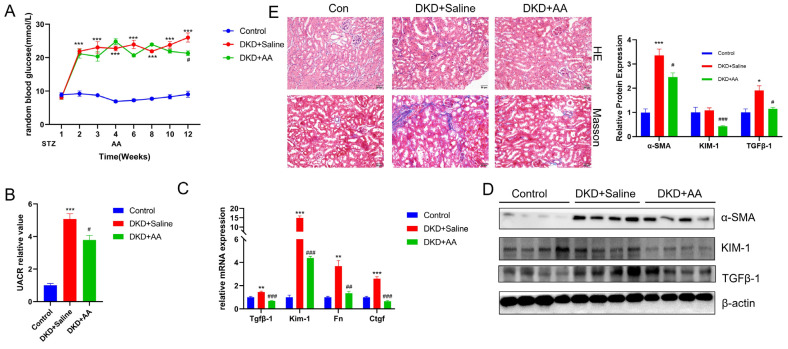 Figure 1
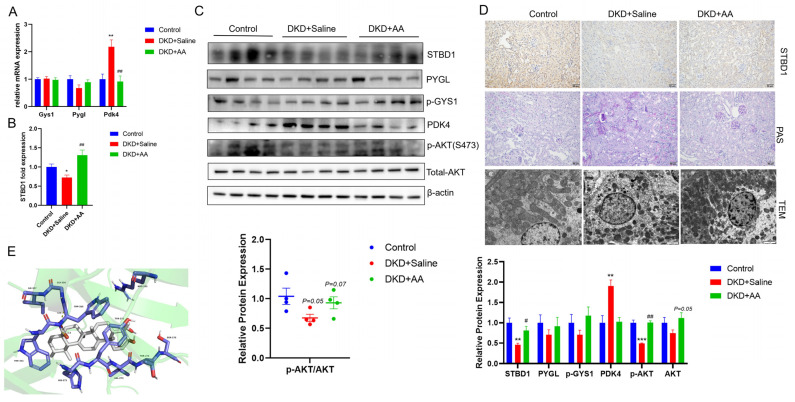 Figure 2
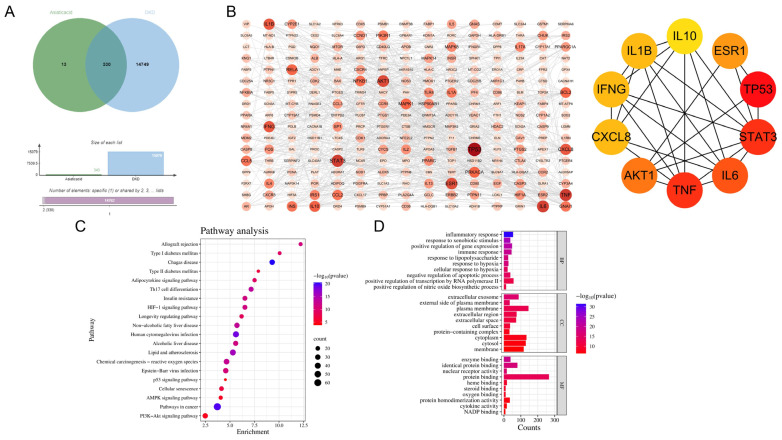 Figure 3
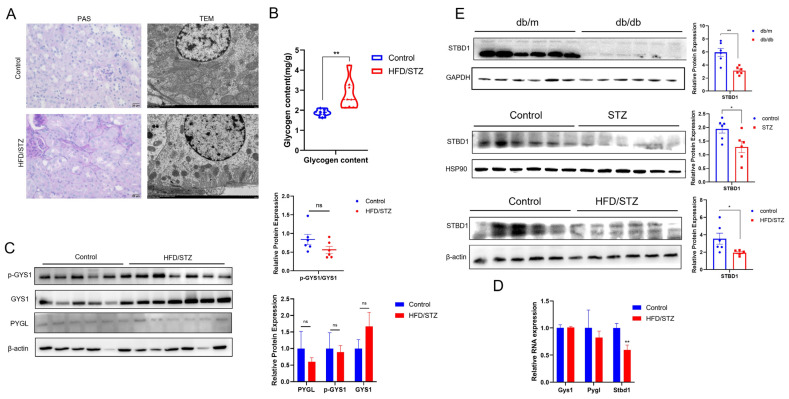 Figure 4
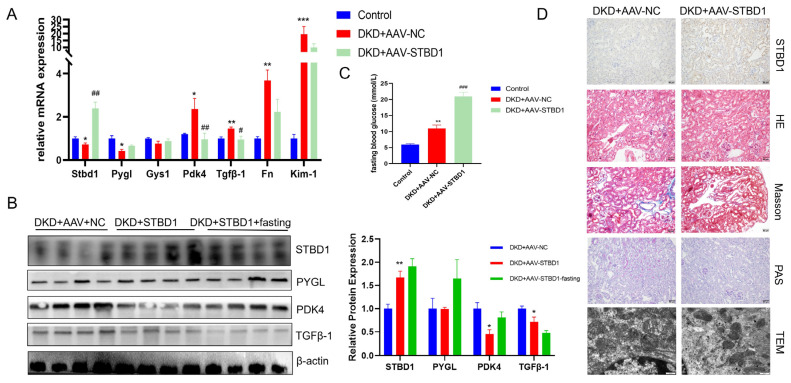 Figure 5
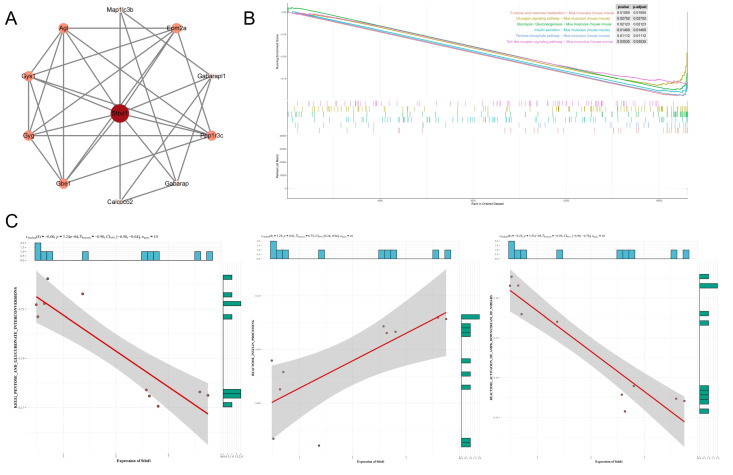 Figure 6
Peer Reviews
No public reviews on file for this paper yet. If you reviewed it on a platform where reviews are public (OpenReview, ICLR, NeurIPS, ICML), you can paste yours below so the community can read it here.
Videos
No videos yet. Explain this paper in a talk, walkthrough, or lecture? Add one.
Taxonomy
TopicsMedicinal Plants and Neuroprotection · Alzheimer's disease research and treatments · Neuroinflammation and Neurodegeneration Mechanisms