Examining Longitudinal Risk and Strengths-Based Factors Associated with Depression Symptoms Among Sexual Minority Men in Canada
Yusuf Ghauri, Graham W. Berlin, Shayna Skakoon-Sparling, Adhm Zahran, David J. Brennan, Barry D. Adam, Trevor A. Hart

TL;DR
This study explores factors that contribute to or protect against depression in Canadian men who identify as sexual minorities, highlighting the importance of social support and self-esteem.
Contribution
The study is the first to separately analyze within-person and between-person effects of risk and strengths-based factors on depression in sexual minority men.
Findings
Higher childhood physical abuse and internalized homonegativity are linked to increased depression symptoms.
Self-esteem, social support, and hope are associated with lower depression symptoms.
Social support reduces the impact of heterosexist discrimination on depression.
Abstract
Sexual minority men (SMM) experience anti-SMM stressors and have elevated rates of mental health issues compared to heterosexual men, such as depression. Importantly, strengths-based factors may directly increase wellbeing and provide a buffer against the detrimental effects of such stressors. In the present study, we integrated risk and strengths-based models to examine predictors of depression symptoms in a sample of 465 Canadian SMM across three time points using multilevel modeling. Higher scores on a measure of childhood physical abuse at baseline, and greater within-person (i.e., deviation from individual’s average) and between-person (i.e., deviation from group average) internalized homonegativity and heterosexist discrimination were associated with higher depression scores. Higher within- and between-person scores on measures of self-esteem, social support, and hope were…
Genes, proteins, chemicals, diseases, species, mutations and cell lines named across the full text — each resolved to its canonical identifier and authoritative record.
Click any figure to enlarge with its caption.
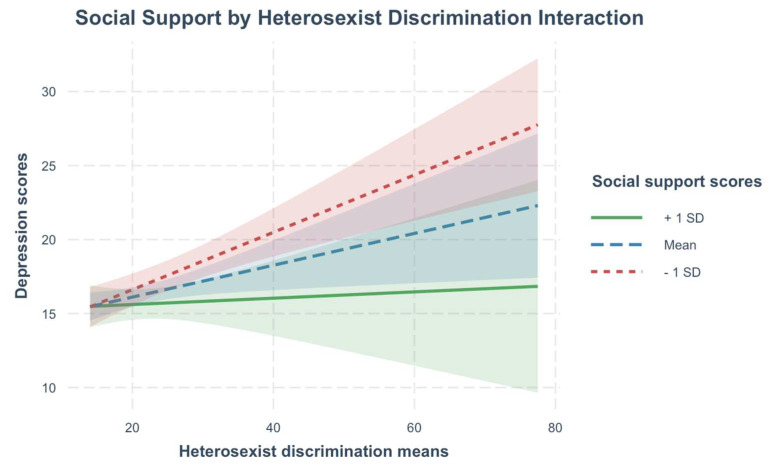 Figure 1
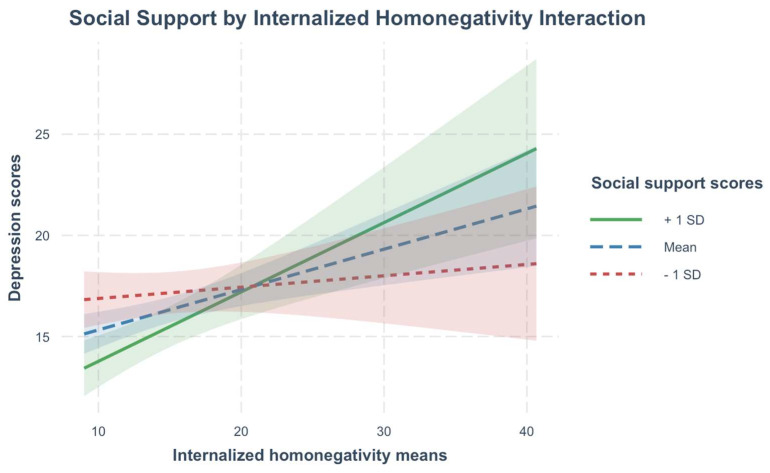 Figure 2
Peer Reviews
No public reviews on file for this paper yet. If you reviewed it on a platform where reviews are public (OpenReview, ICLR, NeurIPS, ICML), you can paste yours below so the community can read it here.
Videos
No videos yet. Explain this paper in a talk, walkthrough, or lecture? Add one.
Taxonomy
TopicsLGBTQ Health, Identity, and Policy · Gender Politics and Representation · Racial and Ethnic Identity Research