Cold Atmospheric Plasma Enhances TGF-β1, CTGF Protein Expression, and Healing in Full-Thickness Skin Burns: An Animal Study
Sahar M. Gebril, Fakhr El din M. Lasheen, Mohamed Khalaf, Amr Abdelhamed, Manal I. Bahkali, Fayez El Hossary, Mahmoud Rezk Abdelwahed Hussein

TL;DR
Cold atmospheric plasma (CAP) improves healing in severe skin burns by boosting proteins that aid tissue repair, according to an animal study.
Contribution
This study demonstrates CAP's potential as a novel therapeutic method for full-thickness skin burns by showing its pro-healing effects.
Findings
CAP treatment accelerated wound closure in animals with full-thickness skin burns.
CAP enhanced regeneration of dermis and epidermis in treated animals.
CAP increased the expression of TGF-β1 and CTGF proteins, which are important for healing.
Abstract
Cold atmospheric plasma (CAP) interacts with tissues, leading to fast wound disinfection. Given the frequent global burden of burn injuries and the risks of infection associated with acute full-thickness burns (FTBs), this investigation examined CAP as a potential therapeutic method for wound healing due to its antimicrobial and pro-healing effects. Here, we examined the impacts of CAP on the healing of wounds resulting from acute FTSBs. We established an animal model that included four groups: (1) healthy control animals without burns, (2) untreated animals with acute FTSBs, (3) animals with acute FTSBs treated with CAP for 5 s per day for 21 days, and (4) animals with acute FTSBs treated with CAP for 10 s per day for 21 days. Wound healing was assessed using immunohistological methods. In animals with FTSBs, CAP therapy was accompanied by (i) accelerated wound closure, (ii) enhanced…
Genes, proteins, chemicals, diseases, species, mutations and cell lines named across the full text — each resolved to its canonical identifier and authoritative record.
Click any figure to enlarge with its caption.
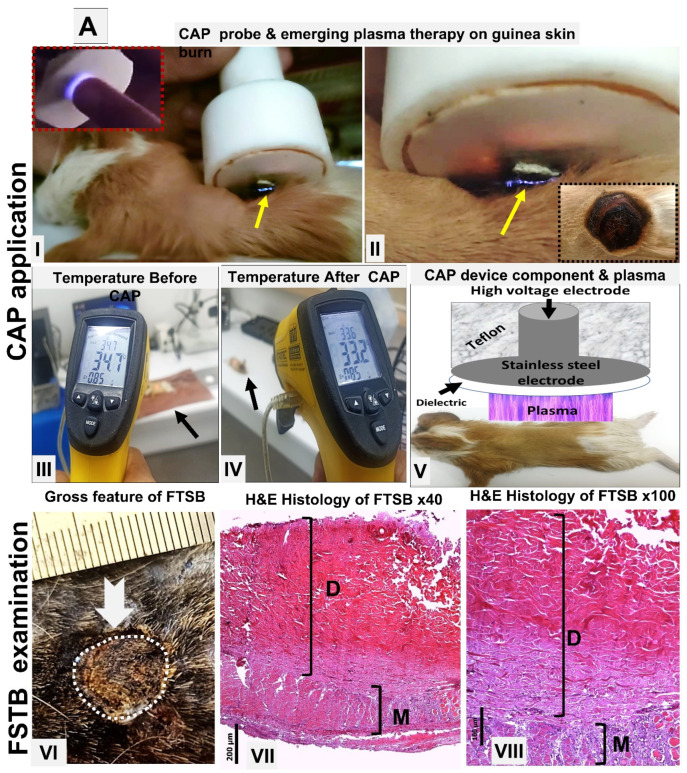 Figure 1
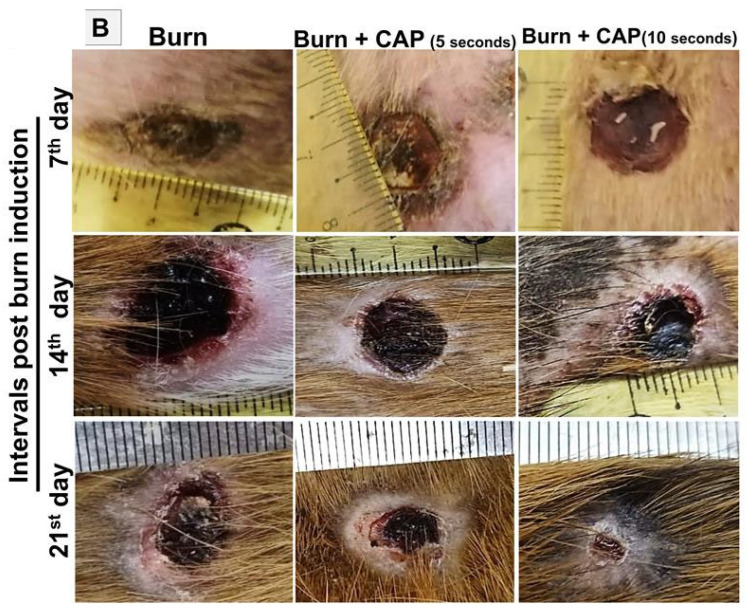 Figure 2
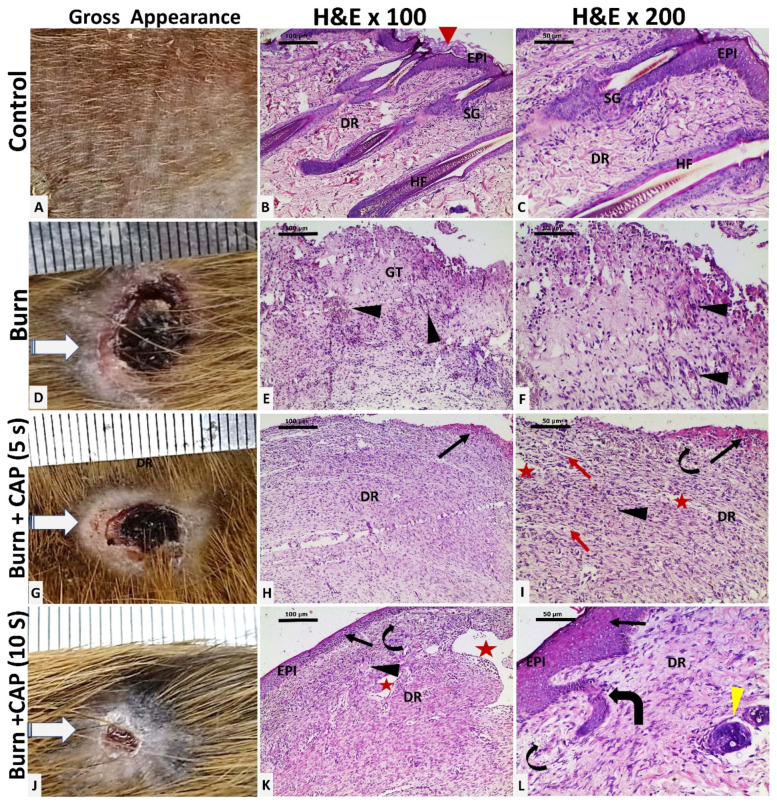 Figure 3
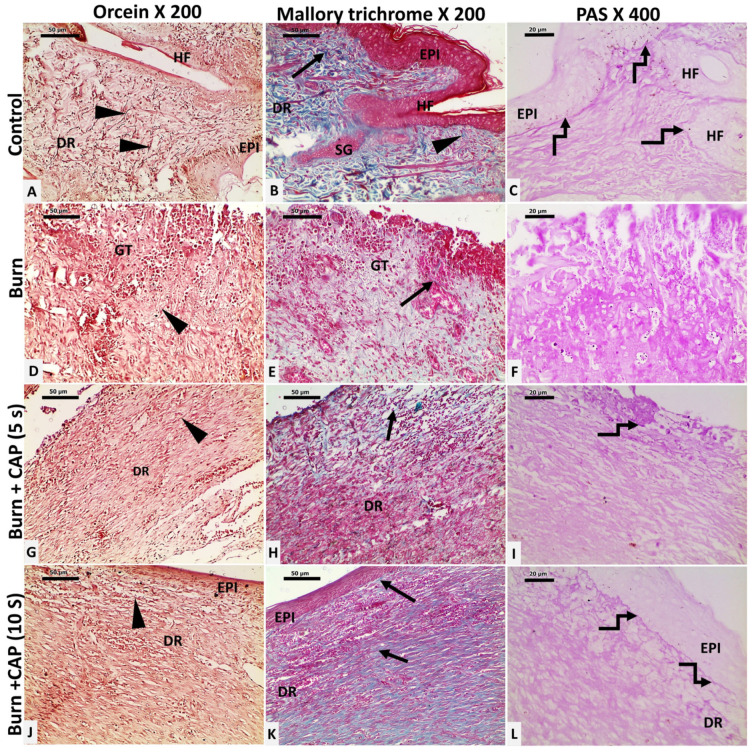 Figure 4
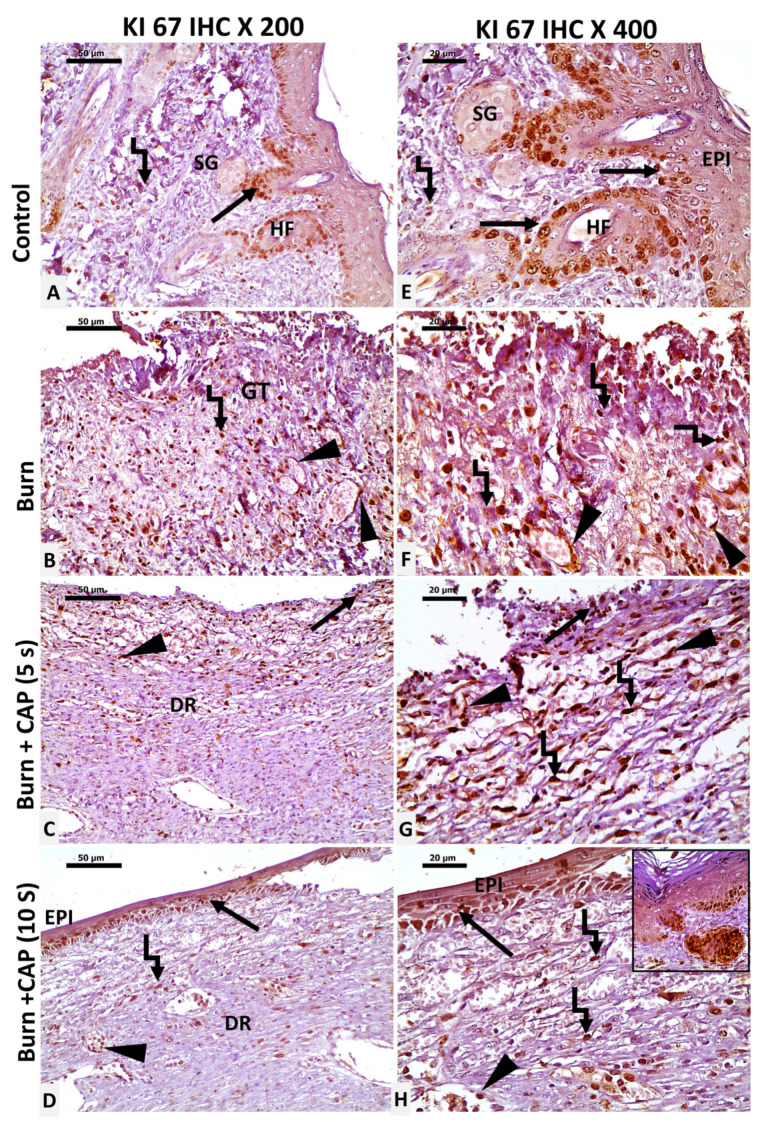 Figure 5
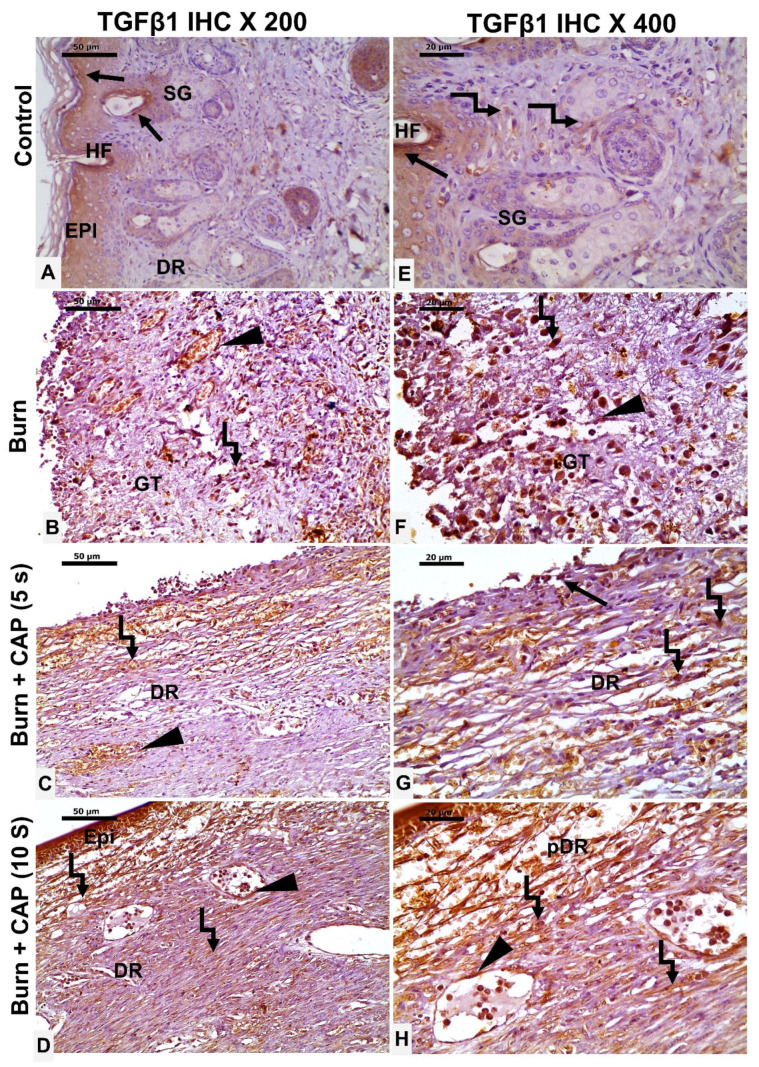 Figure 6
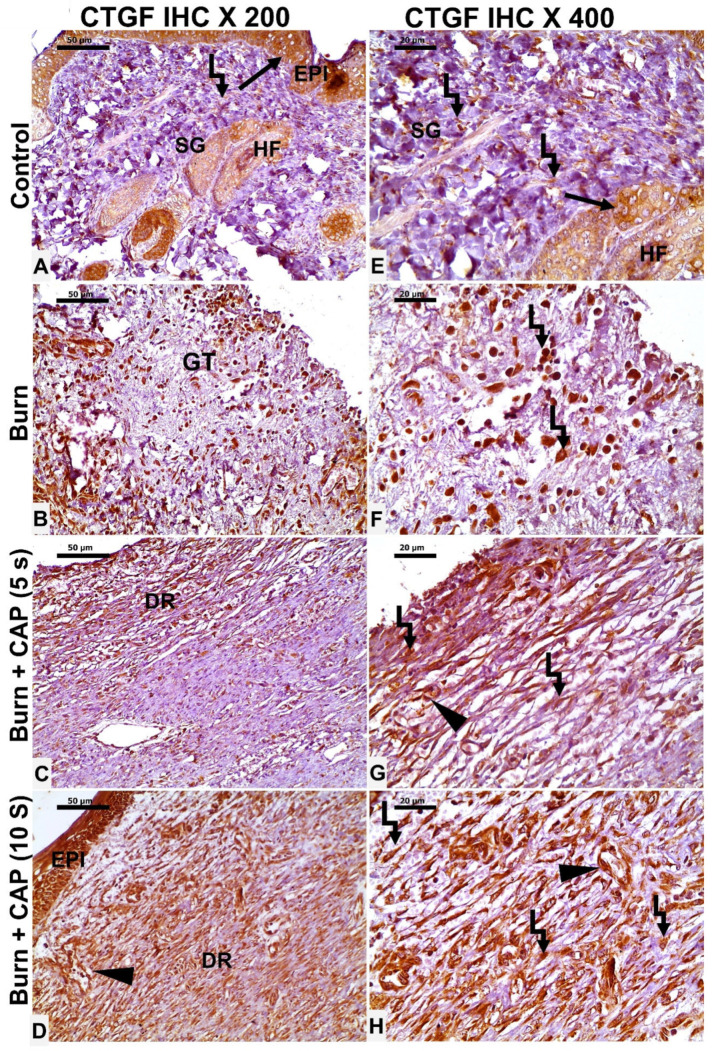 Figure 7
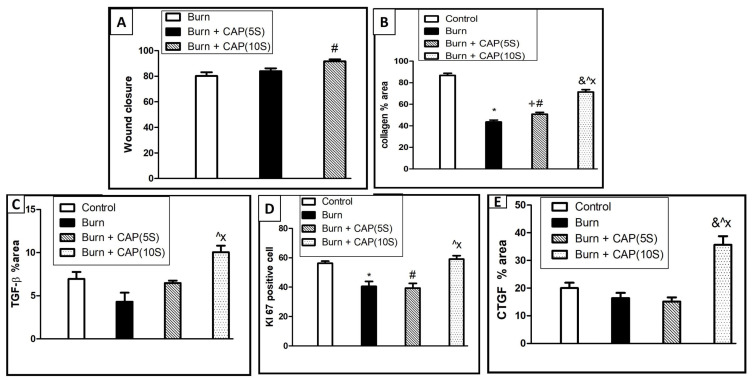 Figure 8
Peer Reviews
No public reviews on file for this paper yet. If you reviewed it on a platform where reviews are public (OpenReview, ICLR, NeurIPS, ICML), you can paste yours below so the community can read it here.
Videos
No videos yet. Explain this paper in a talk, walkthrough, or lecture? Add one.
Taxonomy
TopicsBurn Injury Management and Outcomes · Wound Healing and Treatments · Dermatologic Treatments and Research