Three-Dimensional Assessment of the Biological Periacetabular Defect Reconstruction in an Ovine Animal Model: A µ-CT Analysis
Frank Sebastian Fröschen, Thomas Martin Randau, El-Mustapha Haddouti, Jacques Dominik Müller-Broich, Frank Alexander Schildberg, Werner Götz, Dominik John, Susanne Reimann, Dieter Christian Wirtz, Sascha Gravius

TL;DR
This study evaluates how well different bone graft materials help repair hip bone defects in sheep, using detailed 3D imaging to compare new bone growth and structure.
Contribution
The study introduces a 3D µ-CT analysis of bone graft materials in an ovine model to assess biological reconstruction of acetabular defects.
Findings
NanoBone® showed the highest new bone volume and retained the most graft material.
Autologous and allogeneic bone grafts produced microstructures closer to natural bone.
NanoBone® had a significantly lower structure model index, indicating more advanced bone remodeling.
Abstract
The increasing number of acetabular revision total hip arthroplasties requires the evaluation of alternative materials in addition to established standards using a defined animal experimental defect that replicates the human acetabular revision situation as closely as possible. Defined bone defects in the load-bearing area of the acetabulum were augmented with various materials in an ovine periacetabular defect model (Group 1: NanoBone® (artificial hydroxyapatite-silicate composite; Artoss GmbH, Germany); Group 2: autologous sheep cancellous bone; Group 3: Tutoplast® (processed allogeneic sheep cancellous bone; Tutogen Medical GmbH, Germany)) and bridged with an acetabular reinforcement ring of the Ganz type. Eight months after implantation, a μ-CT examination (n = 8 animals per group) was performed. A μ-CT analysis of the contralateral acetabula (n = 8, randomly selected from all three…
Genes, proteins, chemicals, diseases, species, mutations and cell lines named across the full text — each resolved to its canonical identifier and authoritative record.
Click any figure to enlarge with its caption.
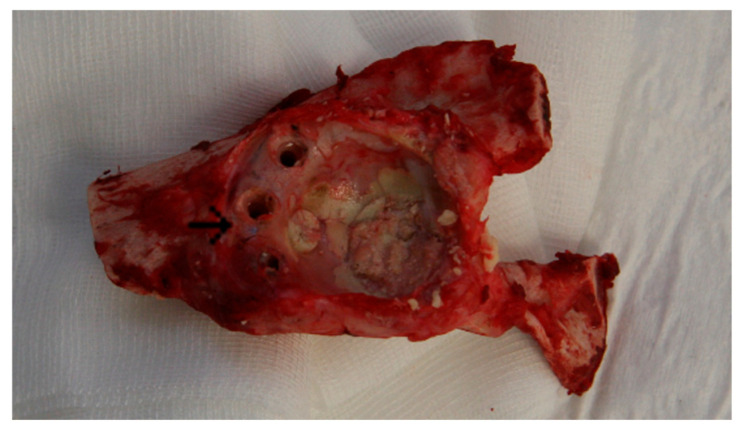 Figure 1
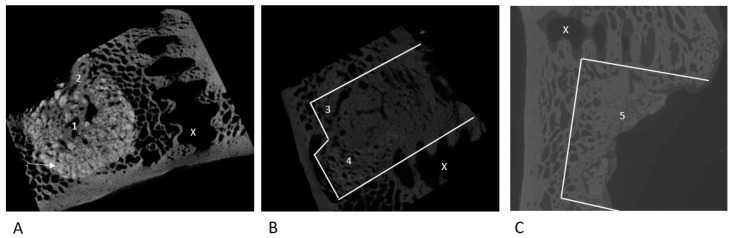 Figure 2
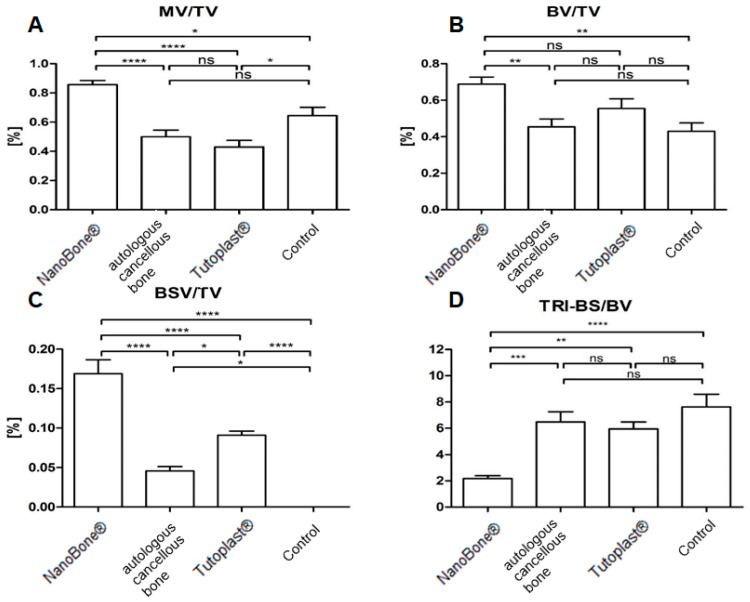 Figure 3
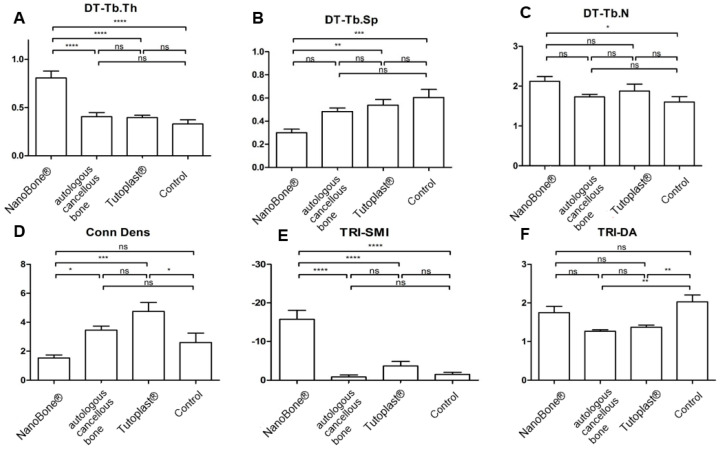 Figure 4
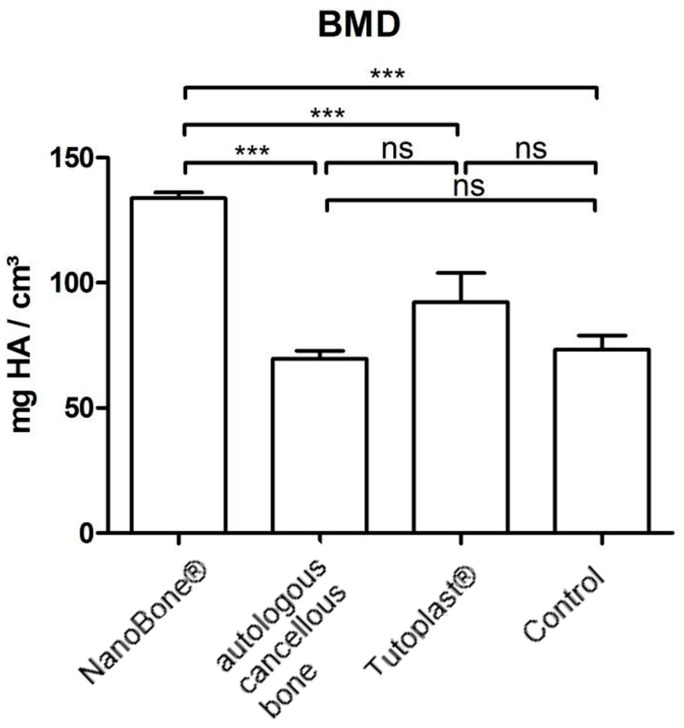 Figure 5
Peer Reviews
No public reviews on file for this paper yet. If you reviewed it on a platform where reviews are public (OpenReview, ICLR, NeurIPS, ICML), you can paste yours below so the community can read it here.
Videos
No videos yet. Explain this paper in a talk, walkthrough, or lecture? Add one.
Taxonomy
TopicsOrthopaedic implants and arthroplasty · Orthopedic Infections and Treatments · Hip disorders and treatments