Designing for Engagement in Primary Health Education Through Digital Game-Based Learning: Cross-National Behavioral Evidence from the iLearn4Health Platform
Evgenia Gkintoni, Emmanuella Magriplis, Fedra Vantaraki, Charitini-Maria Skoulidi, Panagiotis Anastassopoulos, Alexandra Cornea, Begoña Inchaurraga, Jaione Santurtun, Ainhoa de la Cruz Mancha, George Giorgakis, Kleri Kouppas, Stella Timotheou, Maria Jose Moreno Juan

TL;DR
This study examines how digital game-based learning design affects engagement in primary health education using teacher evaluations of the iLearn4Health platform across five European countries.
Contribution
The study introduces a design validation approach for DGBL platforms, distinguishing effective engagement strategies from superficial gamification.
Findings
A bimodal engagement distribution was observed, with 52.8% of teachers showing limited exploration and 35.3% demonstrating comprehensive assessment.
Initial design experience was the strongest predictor of sustained engagement (β = 0.479, p < 0.001).
Romania showed 53% higher average progress ratios than Cyprus (0.460 vs. 0.301, p < 0.01).
Abstract
This study evaluates design effectiveness in Digital Game-Based Learning (DGBL) for primary health education through systematic teacher assessment of the iLearn4Health platform. Rather than measuring educational transformation, the research investigates how DGBL design principles influence user engagement patterns and platform usability as evaluated by education professionals. The study contributes to design optimization frameworks for primary school digital health education applications by examining the distinction between DGBL and superficial gamification approaches in creating engaging educational interfaces. The iLearn4Health platform underwent comprehensive design evaluation by 337 teachers across 24 schools in five European countries (Greece, Cyprus, Romania, Poland, and Spain). Teachers served as design evaluators rather than end-users, assessing platform engagement mechanisms…
Genes, proteins, chemicals, diseases, species, mutations and cell lines named across the full text — each resolved to its canonical identifier and authoritative record.
Click any figure to enlarge with its caption.
 Figure 1
 Figure 2
 Figure 3
 Figure 4
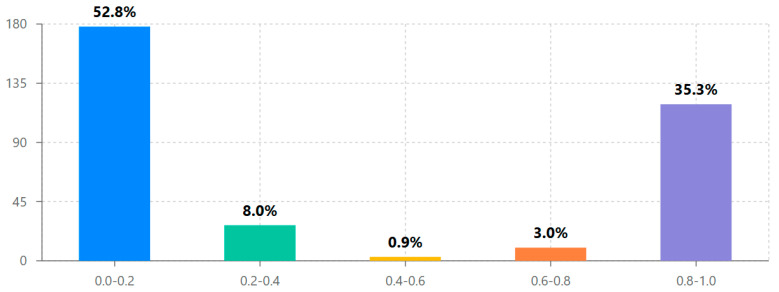 Figure 5
 Figure 6
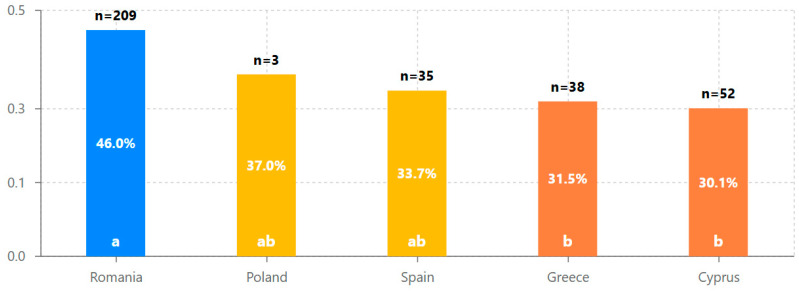 Figure 7
 Figure 8
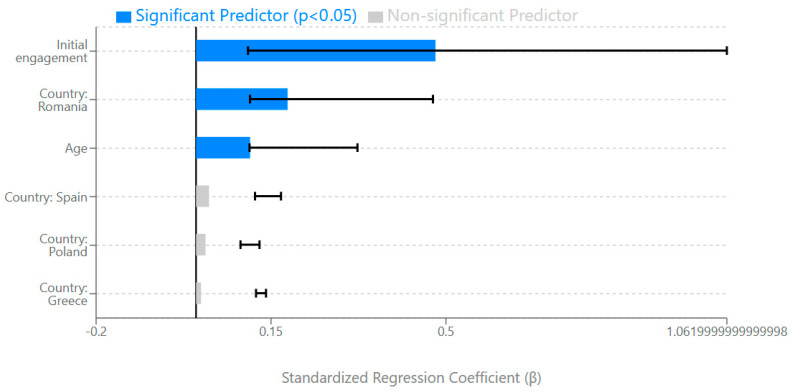 Figure 9
Peer Reviews
No public reviews on file for this paper yet. If you reviewed it on a platform where reviews are public (OpenReview, ICLR, NeurIPS, ICML), you can paste yours below so the community can read it here.
Videos
No videos yet. Explain this paper in a talk, walkthrough, or lecture? Add one.
Taxonomy
TopicsEducational Games and Gamification · Impact of Technology on Adolescents · Mobile Health and mHealth Applications