Predictions of the Chinese Forest Frog (Rana chensinensis) Distribution Pattern Under Climate Change up to 2090s
Ying Fu, Juanjuan Lu, Pinhong Yang, Jie Pi

TL;DR
This study predicts that the Chinese forest frog's habitat will shrink and shift due to climate change, offering insights for conservation planning.
Contribution
The study uses an optimized MaxEnt model to predict future habitat shifts of the Chinese forest frog under climate change scenarios.
Findings
The current most suitable habitats are in Chongqing, Sichuan, and Gansu provinces.
Future suitable habitats are projected to shift southward and westward, shrinking significantly by the 2090s.
Key factors influencing distribution include temperature, precipitation, and human activity.
Abstract
The Chinese forest frog is an amphibian of significant ecological and economic value, exhibiting a high sensitivity to environmental changes. In this study, an optimized MaxEnt model is employed to assess the current and future habitat suitability of this species under different climate scenarios. The results indicate that suitable habitats for the Chinese forest frog will gradually shrink and shift southward and westward as climate change progresses. These insights provide a reference for conservation strategies for this ecologically vulnerable species. The Chinese forest frog (Rana chensinensis) has high ecological and economic value and is an ecologically important species that is very sensitive to environmental changes. However, climate change and increasing human activity are posing growing threats to its natural habitat. To address these challenges, this study aimed to predict…
Genes, proteins, chemicals, diseases, species, mutations and cell lines named across the full text — each resolved to its canonical identifier and authoritative record.
Click any figure to enlarge with its caption.
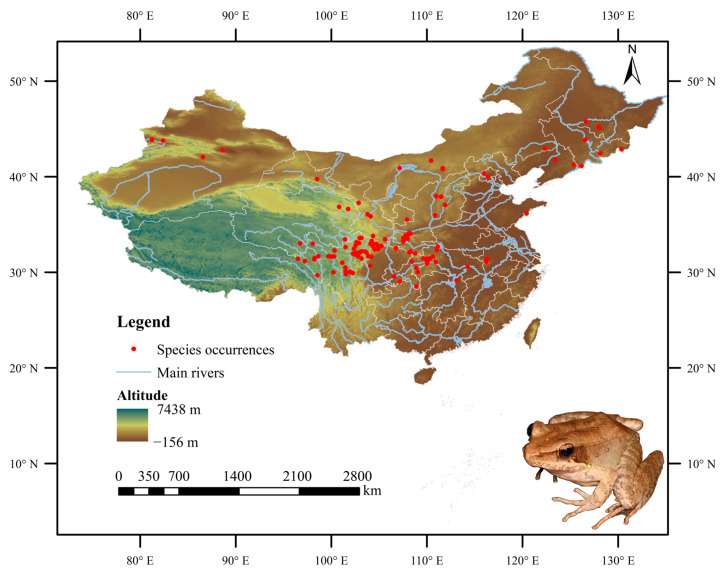 Figure 1
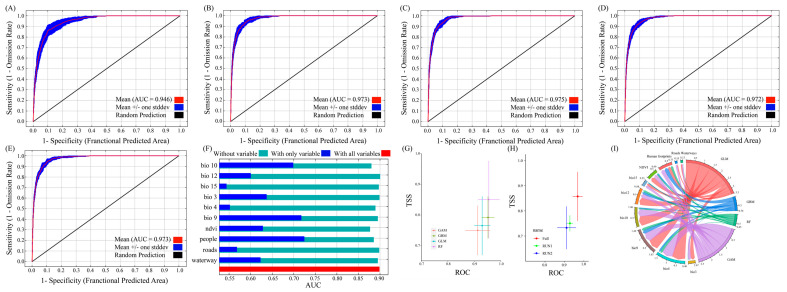 Figure 2
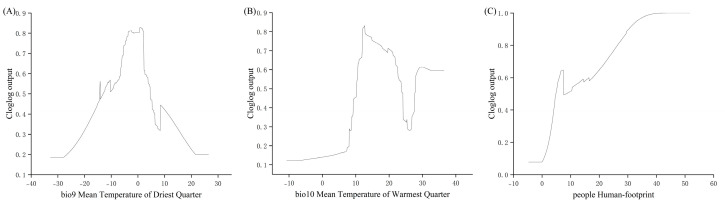 Figure 3
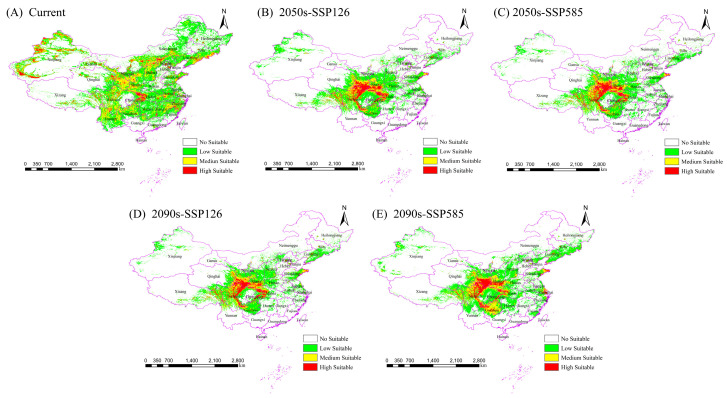 Figure 4
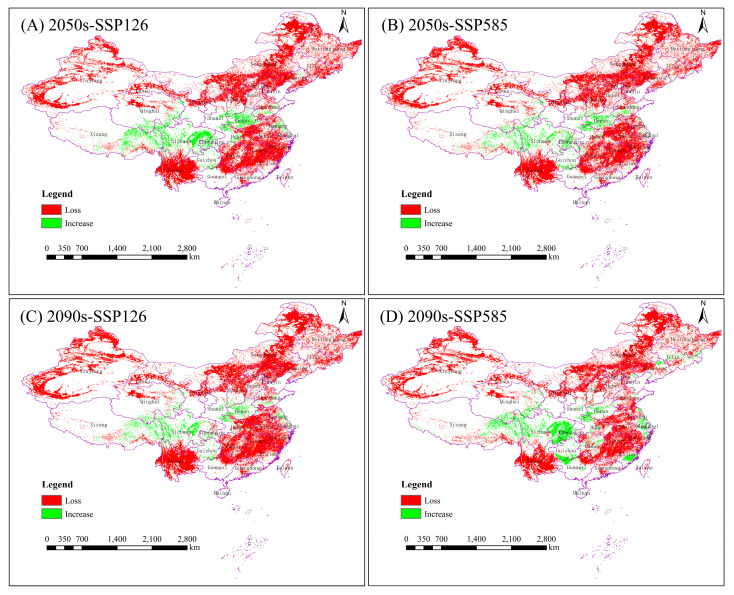 Figure 5
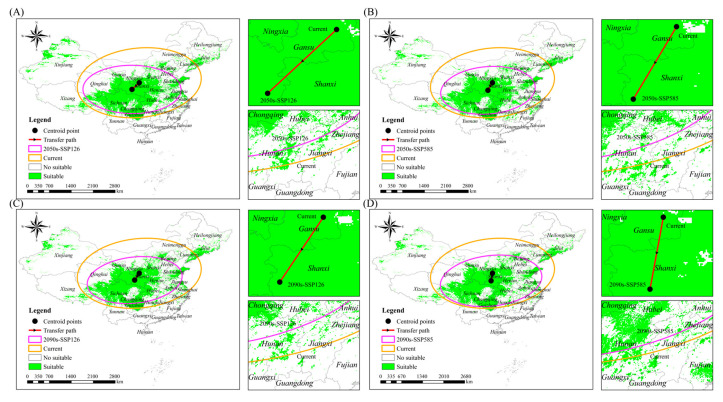 Figure 6
Peer Reviews
No public reviews on file for this paper yet. If you reviewed it on a platform where reviews are public (OpenReview, ICLR, NeurIPS, ICML), you can paste yours below so the community can read it here.
Videos
No videos yet. Explain this paper in a talk, walkthrough, or lecture? Add one.
Taxonomy
TopicsSpecies Distribution and Climate Change · Amphibian and Reptile Biology · Bat Biology and Ecology Studies