Amylin Receptor 1 Mutagenesis Revealed a Potential Role of Calcitonin Serine 29 in Receptor Interaction
Hyeseon Song, Jaehyeok Jang, Minjae Park, Junsu Yun, Jeongwoo Jin, Sangmin Lee

TL;DR
This study identifies key amino acids in the amylin receptor that are important for binding with specific peptides, suggesting ways to modify these interactions.
Contribution
The study identifies critical residues in the amylin receptor 1 extracellular domain and demonstrates how receptor modifications can influence ligand binding.
Findings
D101A and N135A mutations abolished peptide ligand binding, indicating their critical role.
N124A mutation reduced peptide binding affinity by over 8-fold.
N124D mutation restored binding affinity for salmon calcitonin but not for AC413.
Abstract
Background: The amylin receptor is a receptor for the peptide hormone amylin, and its activation is known to reduce body weight. The amylin receptor functions as a heterodimer complex that consists of the calcitonin receptor for peptide hormone calcitonin and an accessary protein. Although the structural information of amylin receptors is currently available, receptor–ligand binding studies that support the peptide binding mode for amylin receptors remain incomplete. Methods: Here, we introduced mutagenesis to the amylin receptor 1 extracellular domain and examined mutational effects on peptide binding affinity. We focused on several residues mainly from the peptide-binding pocket (D97, D101, E123, N124, and N135 of the calcitonin receptor). Two well-known peptide ligands for amylin receptors were used for this study: a salmon calcitonin fragment and an antagonist amylin analog AC413…
Genes, proteins, chemicals, diseases, species, mutations and cell lines named across the full text — each resolved to its canonical identifier and authoritative record.
Click any figure to enlarge with its caption.
 Figure 1
 Figure 2
 Figure 3
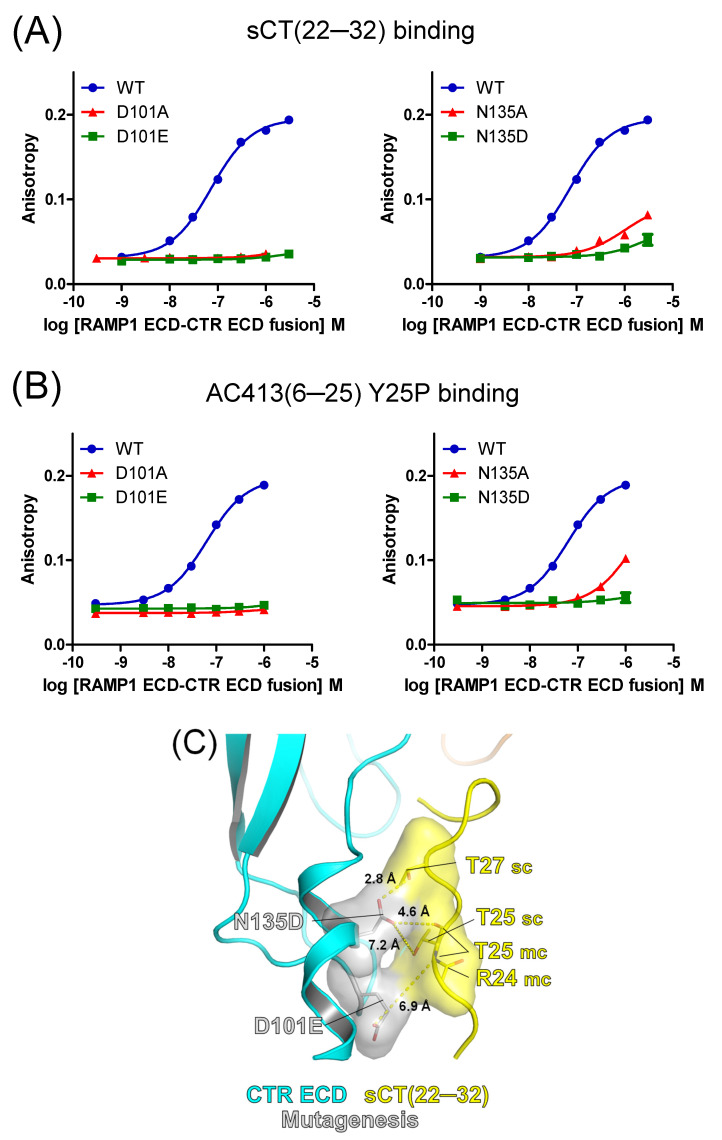 Figure 4
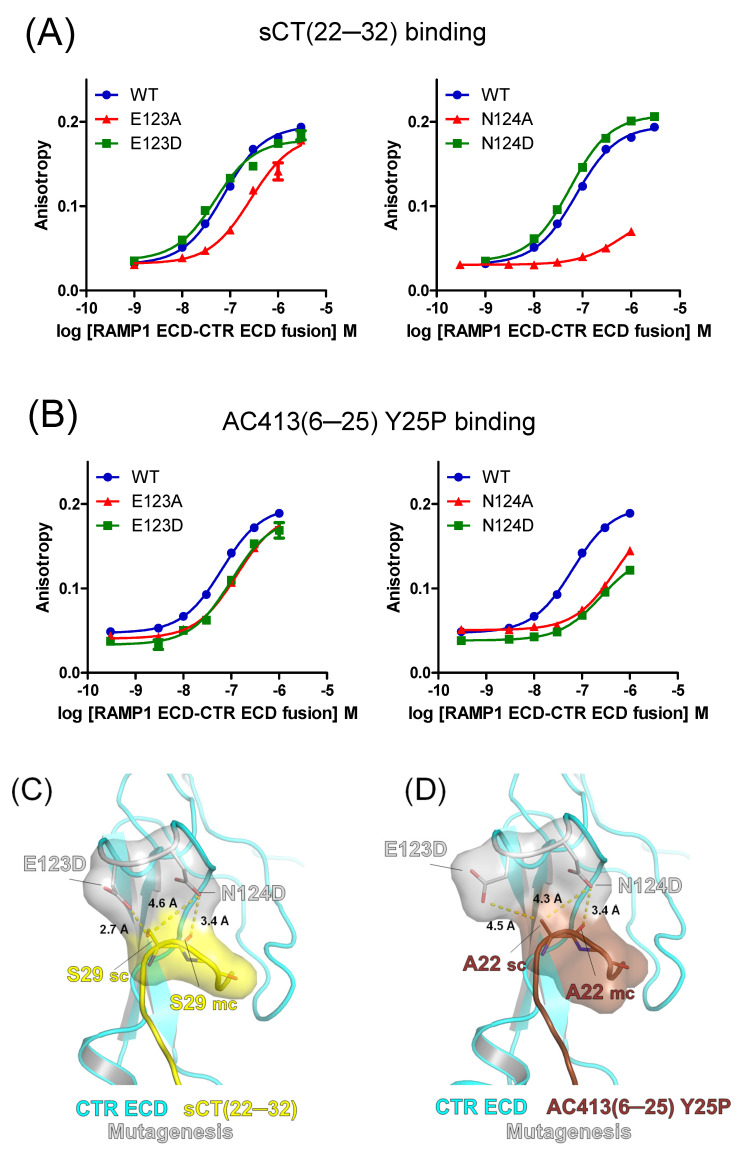 Figure 5
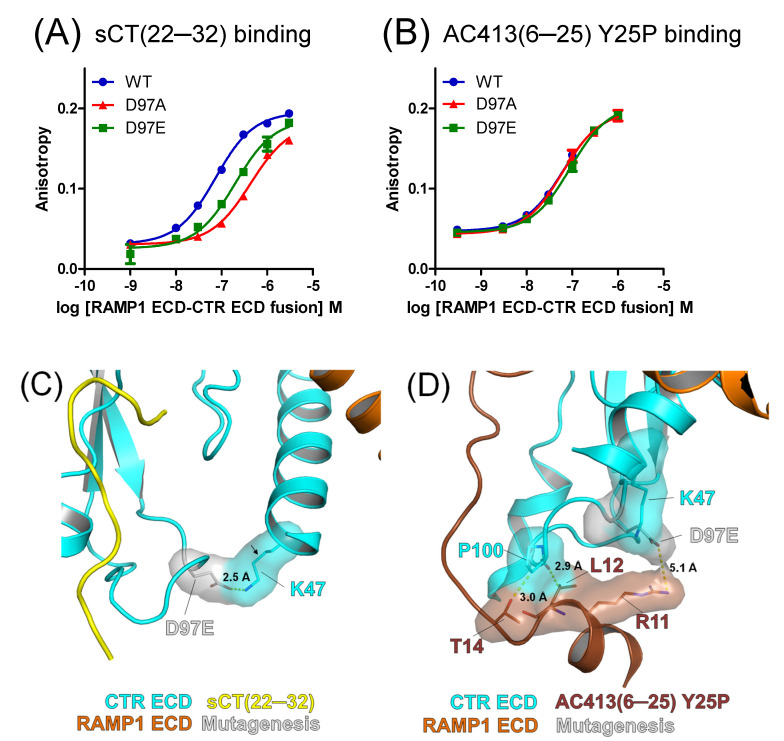 Figure 6
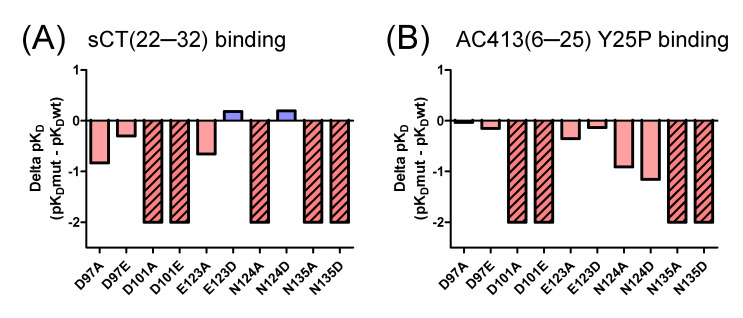 Figure 7
Peer Reviews
No public reviews on file for this paper yet. If you reviewed it on a platform where reviews are public (OpenReview, ICLR, NeurIPS, ICML), you can paste yours below so the community can read it here.
Videos
No videos yet. Explain this paper in a talk, walkthrough, or lecture? Add one.
Taxonomy
TopicsReceptor Mechanisms and Signaling · Signaling Pathways in Disease · Neuropeptides and Animal Physiology